

About the George Finlay Papers
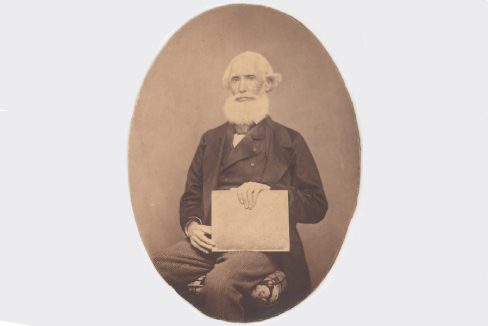
The George Finlay Papers contain materials created by and related to the British Historian and Philhellene George Finlay, his father John Finlay, Greek-American Philhellene George Jarvis, and British Philhellene Captain Frank Abney Hastings, dating from 1791 to 1949. Most of the collection consists of George Finlay’s meticulous records of his travels, personal and official correspondence, his personal expenditures, copious memoranda on strategy and on military and political organisation, journal entries, maps, facetiae, scrapbooks, personal notes on people—Greeks and others—and on revolutionary events, newspaper cuttings mainly on Greece and international affairs, as well as Finlay’s original manuscripts of the History of the Greek Revolution (1861) as well as corrected proofs of Finlay’s other published works.
Also included are the papers of Finlay’s father, John, two journals of Greek American philhellene, George Jarvis, and those of Finlay’s fellow British philhellene, Captain Frank Abney Hastings. The Hastings papers, which Finlay purchased in 1830, include personal and official correspondence, ship’s logs, notes that he took on board or ashore, as well as memoranda on strategy and on the naval organisation of the revolutionary forces. Collectively, these records reveal a great deal about the character, motivations, ideas, as well as the military and political judgements of these British individuals, as well as of many others, both British and Greek, with whom they interacted during the Greek War of Independence as well as many of Finlay's other interests, such as Classical and Byzantine history, natural history and politics.

Red mottle boards, brown calf spine, folder tied sides, top and bottom, containing loose quires and foolscap sheets, handwritten.
Equipment and conduct of certain expeditions to the West Indies.
Copies of reports on various West Indian islands, Buenos Aires, Baldivia, Chilae Islands, Valparaiso, Conception; copies of letters from commanders in the West Indies to ministers in England (ranging from 1771 to 1791).
Folder labelled 'No. 27. Chemistry' containing quires with notes on chemistry paginated pp. 1-62 and pp. 1-27.
Printed list of the members of the Royal Society for 1800 (containing Major John Finlay).
Green mottle boards, brown calf spine, 'Views in the Leeward Islands' on front cover, John Finlay's book plate (coat of arms, 'I'll be wary') inside, bound.
'Views of the Leeward Islands taken in 1790.'
Eight water-colour sketches with description opposite (St. Christophers, Antigua, Dominica, St. Lucia, Grenada).
Sketch book, sewn, 14 sheets.
Water-colour, black and white sketches of West Indies and Channel Islands.
7 loose sheets.
Water-colour, black and white sketches of West Indies and Channel Islands +2 coloured drawings of flowers.
Grey mottle boards, brown calf spine, items paginated separately.
Notes from Dr. Hope's Lectures on Botany, No. 2 (in shorthand, part of a series, pp. 175-222).
Mr. Crawford's Observations on Fire (pp. 1-12).
Pencil jottings of accounts; remains of mounted specimens of pressed flowers.
Brown calf notebook with clasp, unpaginated, handwritten, bound. Mainly notes, accounts, and recommendations concerning making of gunpowder 1791-1801.
The King's Commissions of John Finlay Gent. for various positions in the Army
30 January 1770. Lieutenant with Glasgow Regiment of Foot.
28 June 1786. Paymaster of Works at Fort George in Scotland.
28 June 1786. Storekeeper at Fort George in Scotland.
27 April 1787. Second Lieutenant in the Corps of Engineers.
1 January 1789. Inspector of the Royal Manufacturers of Gunpowder.
12 June 1790. First Lieutenant in the Corps of Royal Engineers.
1 May 1794. Captain in the Army.
2 July 1794. Captain Commandant of the Volunteer Companies in the Royal Powder Mills at Faversham and Waltham Abbey.
31 December 1795. Captain Lieutenant in the Royal Corps of Engineers.
5 December 1798. Major Commandant of the Volunteer Companies in the Royal Powder Mills at Faversham and Waltham Abbey.
Personal advertisements section, The Times, 1984 (previously loose in Official Catalogue of the Great Exhibition . . ., London, 1851,).
Newspaper clipping on gold coins of Philippi. In Greek. (loose in M. Pinder and J. Friedlander, Die Munzen Justinians, Berlin, 1843).
Note on ancient weights (previously loose in An Essay on the Ancient Weights and Money, by Robert Hussey, Oxford, 1836).
Clipping on 'Antiquities from Cyprus,' The Times, 14 December 1872 (previously loose in by Charles Newton, Travels and discoveries in the Levant, vol. I, London, 1865)
Stephanos A. Kumanudes to George Finlay, 8 June 1872. Requests a copy of an article on his sepulchral inscriptions. (previously loose in Αττικής επιγραφαί επιτύμβιοι, Athens, 1871)
George Finlay's own library is at present split: certain works have been placed in the main library of the British School at Athens and the rest are housed (together with a number of modern works) in the students' common room or in the archive room. Items in this section can be identified only by the title of the book and the shelf-mark and as far as possible they are arranged here chronologically. 'George Finlay' after the present shelf-mark indicates that the book has not been transferred to the main library. This is an interim report: the collection is so widely dispersed and neither this nor the School Library has yet been professionally catalogued so that it is possible that some letters in books may have been overlooked.
The library shelf numbers of the books where the items were found are listed in the 'Library Shelf Number' field.
Please note that Joan Hussey listed the letters in chronological order in the FIN/GF/B/09 series. This means that letters with different dates but found in the same book can appear separately in the series.
Book by Lord Byron (Complete Works of Lord Byron) (same as FIN/GF/B/9/95). Contains one letter (apparent fascimile) dated 27 April 1812, inserted between the introduction and p. 1 (FIN/GF/B/9/1/1). Left facing note has been written in pencil (by Hussey?), saying 'The letter opposite is said by the British Museum to be a copy.' There are two other letters (also apparent fascimiles) which Hussey has not included, one between pp. 2 and 3, and another between pp. 122-123 (another fascimile). Newspaper clippings have been pasted on four pages in the front and on one page in the back, with one clippping inserted between pp. 164-165. Also includes eight newspaper clippings of letters to the times, with dates handwritten by George Finlay (previously loose in book, now loose and stored in archive) (FIN/GF/B/9/95/1).
Lord Byron to Editor of Galignani's Messenger. Venice, 27 April 1812.
Denies that he is author of The Vampyre; facsimile stuck on p. xxxiii of H. L. Bulwer (ed.), Complete Works of Lord Byron, Paris, 1835.
Book by Leicester Stanhope (Greece in 1823 and 1824), contains two letters published within the book (pp. 510-519 and 519-529) dated 31 May 1824 and June 1824, with original Finlay annotations accompanying both. Finlay annotations found throughout the book. There are also six letters (fascimiles) bound in the back of the book, not included by Hussey.
George Finlay to Leicester Fitzgerald Charles. Argos, 31 May 1824. Two of George Finlay's letters, including his reminiscences of Lord Byron, are printed in Leicester F. Stanhope, Greece in 1823 and 1824. . ., London, 1825, pp. 510-19. F. Stanhope's visiting card pasted inside the front cover.
George Finlay to Leicester Fitzgerald Charles. Tripolitza, June 1824. Two of George Finlay's letters, including his reminiscences of Lord Byron, are printed in Leicester F. Stanhope, Greece in 1823 and 1824. . ., London, 1825, pp. 519 - 529.
Book by Julius Milligen (Memoirs of the Affairs of Greece) (same as FIN/GF/B/9/28). Contains a letter (original) pasted on the flyleaf, dated 16 October 1824 (FIN/GF/B/9/3/1). Also contains annotations in pencil from Finlay throughout the book and a green ribbon in between pp. 148-149. Also present is "extract from the Diario dell' Asedio di Navarino memorie di Giacinto Collegno p. 86" bound after the last page (p. 338) (not included by Hussey) and a letter pasted on the back cover dated 19 September 1853 (FIN/GF/B/9/28/1).
Julius Millingen to George Finlay at Zante. Mesolonghi, 16 October 1824.
M's own illness. Complaints about Bruno's accusations and discussion of Byron's last illness (stuck on front flyleaf of Julius Millengen, Memoirs of the Affairs of Greece. . ., London, 1831; this book contains a number of pencilled additions by George Finlay and some reference to himself).
Book by John Anderson (Scenes and Stories from the History of the Church of Scotland). Contains a letter (original), dated 22 April 1837, previously loose in the front of the book, now loose and stored in archvie.
John Anderson to George Finlay. Helensburgh, 22 April 1837.
Congratulates George Finlay on his history; asks for news of Greece; sends work of H. Miller (previously loose in front of J. A., Scenes and Stories from the History of the Church of Scotland..., Edinburgh, 1849, now loose and stored in archive).
Book by W. R. Wilde (Narrative of a Voyage, vol. 1). Contains two letters (originals), previously loose at the end of the book (oversize, now stored loose and separate in archive) dated 13 June 1839 and 22 March 1840. Also contains a handwritten note on the first page from the author bestowing this book on Finlay and three newspaper clippings (now loose and stored in archive), and an envelope addressed to George Finlay (now loose and stored in archive). The book has been rebound (no date).
Sir William Robert Wilde to George Finlay. 199 Great Brunswick St., Dublin, 13 June 1839. Varieties of murex found in Elis. Geological discussion of fossils of animals found by George Finlay in Marathon. State of Greece (previously loose, in bad condition, at end of W. R. Wilde, Narrative of a Voyage . . ., vol. 1, Dublin, 1840, now loose and stored in archive). Includes envelope addressed to George Finlay.
W. R. Wilde to George Finlay. 199 Great Brunswick St., Dublin, 22 March 1840. To introduce Mr. and Mrs. Harvey Pine who are visiting Athens; they bring George Finlay a copy of W's Narrative. . ., 2 vols., Dublin, 1840. Requests information on present condition of Greece and Otho, also casts of ancient Greek heads taken out of tumuli or tombs (previously loose at end of book, now loose and stored in archive).
Book by Christopher Wordsworth (Athens and Attica). Contains a letter (original) glued to the front flyleaf dated 17 August 1840. Also contains George Finlay's signature and the date 1837 on the front flyleaf (original, handwritten) as well as Finlay's annotations in pencil throughout the book.
Christopher Wordsworth to George Finlay. Harvard, 17 August 1840. Thanks for gift of George Finlay's work on topography of Oropia and Diacria (stuck on front flyleaf of C. W., Athens and Attica, London, 1836). Glued inside front of book.
Book published by The Religious Tract Society (The Picture Bible for the Young). Contains a letter (original) dated 25 December 1838, originally loose in the book (now loose, stored in archive). A photocopy of the letter has been placed in the book. Also contains a handwritten dedication note to Helena Finlay (apparent original) pasted on one of the front flyleaves.
The Revd. Henry D. Leeves to Helen Finlay. 25 December 1838. Sends The Picture Bible for the Young, London, 1834, as Christmas present to Helena (sic) Finlay (previously loose in book, now loose and stored in archive).
Book, Transactions of the Royal Society of Literature of the United Kingdom. Contains three letters, dated 8/20 January 1840, 20 January 1840, 18 October 1841 (originally stuck on front flyleaf, now loose and stored in archive). Photocopies of the letters have been placed in the book. Also contains three hand-drawn maps (previously loose in the book, now loose and stored in archive).
The Revd. John H. Hill to George Finlay. Athens, 8/20 January 1840. Thanks for George Finlay's present; praises his research (previously stuck on front flyleaf of Trans. Roy. Soc. Lit. of the United Kingdom, vol. 3, London, 1839, now loose and stored in archive. Contains several published papers by George Finlay).
? to George Finlay. Athens, 20 January 1840. Thanks for George Finlay's paper On the Battle of Marathon (previously stuck on front flyleaf of Trans. Roy. Soc. etc. (see above R. 9. 2), now loose and stored in archive).
? to George Finlay. Athens, 19 October 1841. Thanks for receipt of pamphlet; appreciation of George Finlay's work on Greece (previously stuck on front flyleaf of Trans. Roy. Soc. of the United Kingdom, vol. 3, London, 1839, now loose and stored in archive).
Hand-drawn map of the plain of Eleusis and the Sacred Way (previously loose in Trans. Roy. Soc. of the United Kingdom, vol. 3, London, 1839, now loose and stored in archive).
Hand-drawn map of Eleusis (previously loose in Trans. Roy. Soc. of the United Kingdom, vol. 3, London, 1839, now loose and stored in archive).
Hand-drawn map of Marathon (previously loose in Trans. Roy. Soc. of the United Kingdom, vol. 3, London, 1839, now loose and stored in archive).
Book by Philippe le Bas (Monuments d'Antiquité figurée: recueillis en Grèce par la commission de Morée). Contains a letter in French (apparent original) dated 26 October 1842 (attached to front flyleaf). Also includes a handwritten dedication note in French from the author to Finlay (original). Two pages towards the end of the book depict the handwritten name 'M. Finlay.' Some handwritten notes in pencil towards the back of the book by Finlay.
(Attic above) Philippe Le Bas to George Finlay. 26 October 1842. Is sending his book Monuments d'Antiquité figurée . . . de Morée, Paris, 1837 to George Finlay and to Col. Leake (in French; letter attached to front flyleaf).
Book by Aubrey de Vere (The Waldenses). Contains a letter (original) dated 24 August 1843 (attached to front flyleaf). Also contains a handwritten dedication note from the author to Finlay on the title page, dated August 24 1843.