
About the John Pendlebury Family Papers
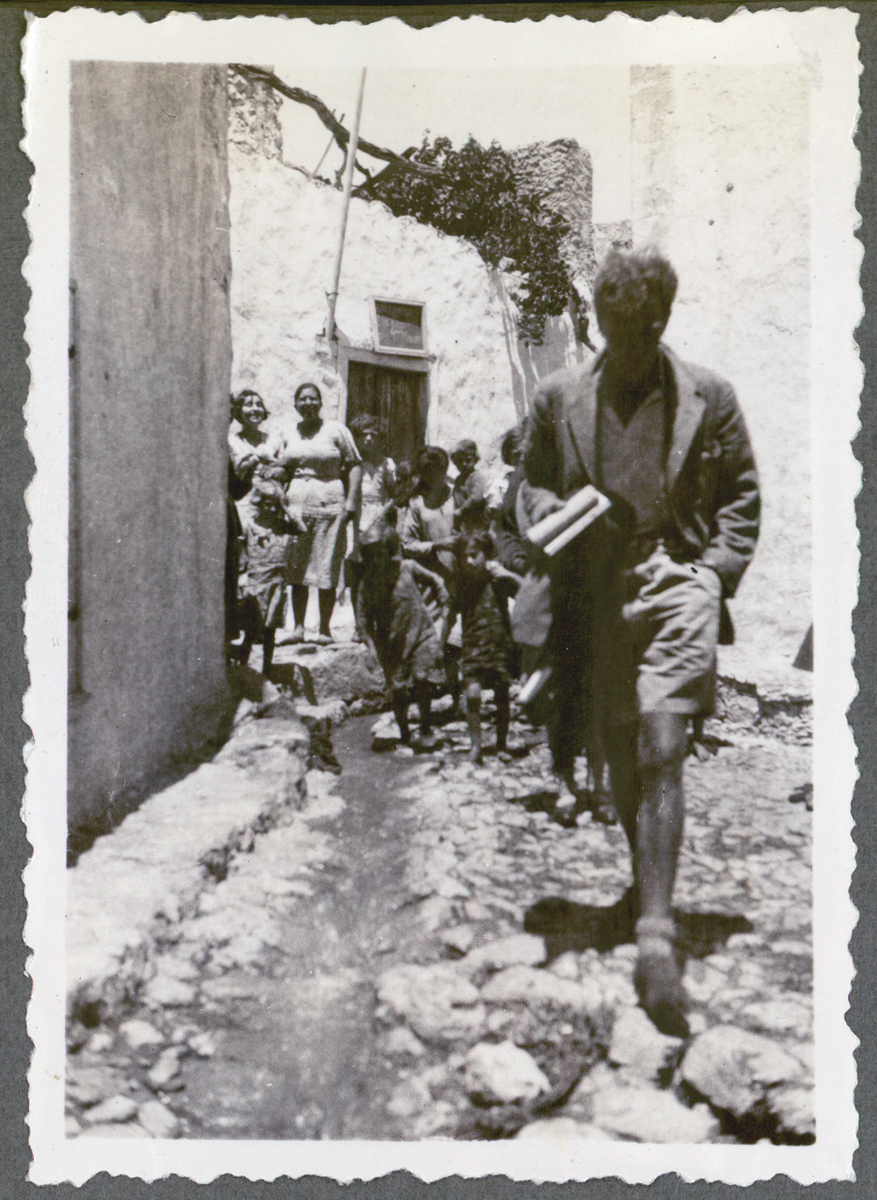
The John Pendlebury Family Papers cover the period from 1913 to 1964 and document the life of archaeologist and WWII hero John Devitt Stringfellow Pendlebury, his wife Hilda and their family.
Congratulating John on a good school report [from Beaudesert Park School, Henley-in-Arden]; asking John to tell his mother that “the old men” (Doctors Sing, Powels and Kachbas) had enjoyed that evening with Herbert Pendlebury; mentioning that he would be having supper with Doctor Sing in order to meet Doctor and Mrs McCaskie; and commenting on his complexion. The letter was sent from 44 Brook Street, Grosvenor Square [London] to John who was staying with his mother at Herbert and Violet [Mitchell’s] house (Holly Bank, Bradford, Yorkshire). Herbert Pendlebury refers to the Mitchell’s as “Aunt Violet and Uncle H”.
Comprises a typescript copy of a letter from Carter [archaeologist who discovered tomb of Tutankhamen], thanking the Editor for sending him a letter from John Pendlebury about discoveries at El Amarna [Amarna, Egypt], and commenting on John’s finds of sculpture at Amarna.
Originally sent from Heraklion [Iráklion] to Tell el Amarna [Amarna] Egypt, then forwarded to 31 Barrow Road, Cambridge, United Kingdom.
Consists of a typed copy of a letter which mentions John’s work as Curator at Knossos and in Tell el-Amarna [Amarna]. No addressee.
Consists of a typed copy of a letter from Wace (Laurence Professor of Classical Archaeology and Fellow of Pembroke College, Cambridge) which mentions Pendlebury’s undergraduate studies in Cambridge, archaeological work in Knossos and Egypt, publications, travel and archaeological work in the “Near East”, and personal attributes which meant he could work well with others and take on responsibility. No addressee.
Consists of a typed copy of a letter from Frankfort (Research Professor of Oriental Archaeology and Field-Director in Iraq of the Oriental Institute, University of Chicago; Extraordinary Professor for the History and Archaeology of the Ancient Near East in the University of Amsterdam; Correspondent of the Royal Dutch Academy of Sciences). The letter mentions that Pendlebury had been Frankfort’s assistant at Armant and Tell-el-Amarna [Amarna] in Egypt in 1928-29, Pendlebury’s personal attributes, his work at Amarna and publications. No addressee.
Consists of a typed copy of a letter from Last (Honorary Treasurer, Egypt Exploration Society) which mentions Pendlebury’s work for the Egypt Exploration Society and personal attributes. No addressee.
Consists of a typed copy of a letter from the Reverend H E Wynn (Tutor of Pembroke College, Cambridge) outlining Pendlebury’s activities as a student at Cambridge. No addressee.
Consists of a typed copy of a letter from Cook (Vice-President of Queens’ College, formerly Fellow of Trinity College, Emeritus Professor of Classical Archaeology, Cambridge) outlining Pendlebury’s archaeological career, experience and personal qualities which would make him suitable for the Directorship. No addressee.
Consists of a typed copy of a letter from [Monty] Rendall (former Headmaster of Winchester College) to the Appointment Board for the Director of Antiquities in Palestine, outlining Pendlebury’s achievements and conduct at Winchester and Rendall’s experience of Pendlebury when he visited Knossos in 1935.
Thanking Pendlebury for sending an advance copy of [‘The Archaeology of Crete’] and inviting him to Queens’ [College, Cambridge].
Thanking Pendlebury for a copy of his book [‘The Archaeology of Crete’], congratulating him on it, commenting on plates of Cretan mountain landscapes, mentioning that he wants Pendlebury to produce another book at some point, and commenting on meeting [Mercy] Money-Coutts.
Congratulating Pendlebury on [‘The Archaeology of Crete’], thanking him for a copy, and commenting on the contents. Also includes mention of a grant from the Craven [fund] for work in Lasithi [Lasíthi, Crete] in 1939, and on the future of the fund.
Thanking Pendlebury for a copy of ‘The Archaeology of Crete’ book.
Thanking Pendlebury for a copy of [‘The Archaeology of Crete’], sharing news of John Ward Perkins being appointed as Professor of Archaeology in Crete and plans to appoint an English Director [of Archaeology] in Cyprus, and inviting Pendlebury to visit him in Woodbridge, Suffolk.
Comprises a pro forma letter acknowledging receipt and expressing thanks for a copy of ‘The Archaeology of Crete’, signed by Edith Clay (Secretary).
Thanking Pendlebury for a copy of ‘The Archaeology of Crete’ and complimenting him on the book.
Thanking Pendlebury for a copy of ‘The Archaeology of Crete’, complimenting him on the book, stating that he had written an article about ‘The Archaeology of Crete’ for the local newspaper and sending Pendlebury a copy.
Thanking Pendlebury for a copy of [‘The Archaeology of Crete’] and mentioning his work in planning a new civic centre in Coventry.
Comprises a letter discussing issues and asking questions relating to ‘The Archaeology of Crete’ which Forbes had just read, about: the Praesos inscriptions and origins of language there; dating of Theseus and the end of Minoan culture; and Dicyts Cretensis’ account of the Trojan period.
Thanking Pendlebury for a copy of ‘The Archaeology of Crete’, stating it would become his guide to Crete "after this new Hitler war", and returning a photograph that was inside the volume.
Thanking Pendlebury for sending proofs [of ‘The Archaeology of Crete’], complimenting Pendlebury on the book and giving advice on [referencing the ‘Palace of Minos’ book].
Comprises a pro forma letter acknowledging receipt and expressing thanks for a copy of ‘The Archaeology of Crete’, signed by Lucas on behalf of the Malvern Public Library Committee.
Conveying special thanks for ‘The Archaeology of Crete’ on behalf of the Library Committee, and mentioning that the library had bought a copy of ‘The Palace of Minos’.
Thanking Pendlebury for a copy of ‘The Archaeology of Crete’, and asking for his help in buying copies of later volumes of ‘The Palace at Minos’ by Arthur Evans for the library.
Thanking Pendlebury for a copy of [‘The Archaeology of Crete’], praising the book, and mentioning that he was looking forward to seeing Pendlebury on the 16th [of February].
Comprises a pro forma postcard acknowledging receipt and expressing thanks for a copy of ‘The Archaeology of Crete’, signed by Arthur J Hawkes (Chief Librarian, Central Library, Wigan Public Libraries). Stamped as received and answered, 9 Feb.
Comprises a pro forma letter thanking Pendlebury for a copy of ‘The Archaeology of Crete’, signed by Arthur J Hawkes (Borough Librarian) on behalf of the Public Libraries Committee, Wigan.
Congratulating Pendlebury on ‘The Archaeology of Crete’, thanking him for a copy, and praising the contents.
Comprises a pro forma letter thanking [Pendlebury] for a copy of ‘The Archaeology of Crete’, signed by A J B Wace (Laurence Professor of Classical Archaeology) on behalf of the Committee of Museum of Classical Archaeology.
Thanking Pendlebury for a copy of ‘The Archaeology of Crete’, discussing a Russian friend with an interest in Aegean civilisations, and mentioning that he was looking forward to seeing Pendlebury on Wednesday evening [15th Feb].
Thanking Pendlebury for a copy of ‘The Archaeology of Crete’ and praising the contents. Evans also mentions that [Mercy] Money-Coutts had been arranging a Minoan Room [in an exhibition or museum].
Thanking Pendlebury for sending a copy of his book [‘The Archaeology of Crete’] from the publisher, and commenting on the geographical plates and lists of sites.
Commenting on [‘The Archaeology of Crete’] and thanking Pendlebury for him sending a copy.
Sent from Villa Ariadne. Thanking Pendlebury for a copy of [‘The Archaeology of Crete’], commenting on the book, forwarding a letter for Pendlebury that he had accidentally opened, and mentioning that he would see Pendlebury in April and would like to have his comments on “our Tholos” [perhaps tholos tombs on the southern slopes of Koprana, near Karphi, Crete].
Thanking Pendlebury for a copy of [‘The Archaeology of Crete’] and mentioning that he had seen Pendlebury at [a Pembroke College] feast after he had received the book.
Congratulating Pendlebury on [‘The Archaeology of Crete’] and suggesting illustrations which could be included.
Comprises a letter from Methuen & Co Ltd publishers to John Pendlebury, annotated with names of journals or newspapers crossed out and ticked off.
Comprises a pro forma letter acknowledging and thanking Pendlebury for a donation of copy of ‘The Archaeology of Crete’ given to the Library of the Oxford and Cambridge club, signed by V. Bailey (Librarian).
Comprises a pro forma letter thanking Pendlebury for a donation of copy of ‘The Archaeology of Crete’ given to the Library of the Oxford and Cambridge club, signed by V. Bailey (Librarian).
Thanking Pendlebury, on behalf of Malvern College, for a copy of [‘The Archaeology of Crete’], stating that it will be a valuable addition to the Grundy Library and will remind people of a talk that Pendlebury had given at the College a few weeks ago.
Thanking Pendlebury for sending a copy of [‘The Archaeology of Crete’] and complimenting him on it, and commenting that he had hoped Pendlebury would already be back in Crete.
Thanking Pendlebury for a copy of [‘The Archaeology of Crete’], commenting on the contents and that his wife [Harriet Hawes] also liked the book.
Comprises a pro forma letter thanking Pendlebury for a copy of ‘The Archaeology of Crete’, signed by [Hugh Sadler Kingsford], Assistant-Secretary of the Society.
Thanking Pendlebury for a copy of [‘The Archaeology of Crete’] sent from the publisher, discussing preparing a review of ‘The Swedish Messenia Expedition’ by [M Natan] Valmin, Heurtley’s own book being published, inviting Pendlebury to visit him, and mentioning that he had heard about Pendlebury’s last excavation from Mercy Money-Coutts.
Thanking Pendlebury for a copy of [‘The Archaeology of Crete’] and for a letter, mentioning that he had been in touch with Dr Johnson and that "things are moving, I am afraid slowly, but I hope surely", wishing John a good journey back to Athens and hoping that a new edition of ‘The City of Akhenaten II’ would be waiting for him.
Thanking Pendlebury for a copy of [‘The Archaeology of Crete’] and reminiscing about Pendlebury taking part in the high jump at Winchester College.
Addressed as from "Lianokhladi and onward" [Lianokládhion]. Includes descriptions of the journey and of John’s companions (Radford, [Sylvia Benton], Mrs Hett) and their behaviour, giving his address in Salonika [Thessaloniki] and details of Heurtley's excavation (at Molyvropyrgos, Macedonia).
On headed paper from the School of Oriental Studies Union Society, University of London. Sending Hilda a document (relating to their forthcoming marriage), telling her he had bought camp beds [for their honeymoon] and asking her to get sleeping bags and a torch, asking her to decipher [hieroglyphs] and promising to "behave in and/or on the sea".
With additional annotations [in Hilda’s writing]. Subjects include: thanking Hilda for a telegram and letter; recounting walks in Eastern Crete whilst staying at, Tsermiada [Tzermiado], Neapolis [Neápolis] and Psychro [Psychron] (walks around [Mount] Oxa, Vrakhas [Vrakhásion], Trapeza Cave, Erganos, Viano [Archavianos], Amira, Arvi, Embaros); tales of John’s companions (Old George, Manoli, Mercy [Money-Coutts], the Squire [R W Hutchinson], Mrs Hutchinson, the Wolf, "the witch of Endor", Kosti and [Sylvia] Benton); Khronis [Bardakis’] mule; asking Hilda to get a review of the Tell el-Amarna [Amarna, Egypt] excavation translated from Dutch, and to run errands including getting glass eyes; John damaging his ankle; a trip to Dhia [Día, Nísos]; forwarding letters from Mohammed Awad and Hussein [at Amarna?]; plans to go to Mount Ida; pleasure that "the brats" [David and Joan Pendlebury] were well; a letter that John had received from "Little Arthur"; and asking if Miss Jones had plans back from Lovat Dickson and if arrangements were going well for an exhibition in September.