

About the 1936 Exhibition Collection
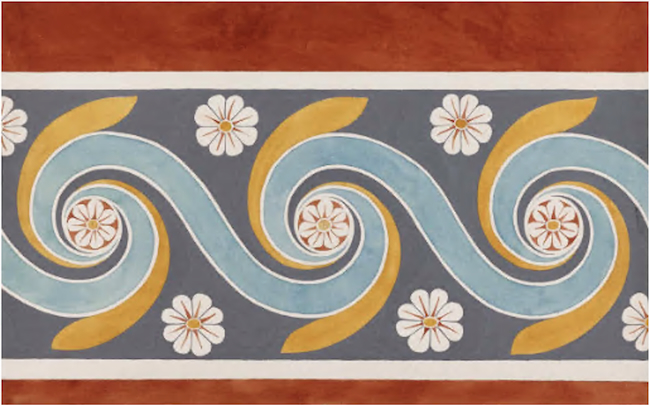
The British School at Athens celebrated its 50th anniversary in 1936 with a large public exhibition at Burlington House at the Royal Academy of Arts in London. The exhibition, British Archaeological Discoveries in Greece and Crete 1886-1936, consisted of a special display of Minoan culture related to the discoveries at Knossos by Sir Arthur Evans as well as the excavations of the School including: Phylakopi, Kamares Cave, Palaikastro, Mycenae, Sparta, Perachora, Thessaly, Macedonia, Lesbos, Cyprus, Ithaca, and Megalopolis (Arcadia). It also included displays of Travels and Studies in Greece and Asia Minor, the Genose in the Levant, Monasteries in Athos, Byzantine Music, Byzantine Architecture and Decorative Arts, Greek Island Embroideries, Special Studies of Greek Pottery and Sculpture, Restoration of Ancient Monuments, Studies of Modern Greek Life and the School buildings and officers.
Since original ancient artifacts could not be transported to the exhibition in London, the displays consisted of replicas of ancient artifacts, modern ethnographic artifacts and illustrative panels with original watercolour drawings, many of which were done by Émile Gilliéron and Piet de Jong, and photographs.
The 1936 Exhibition Collection contains the surviving panels with original artwork from this exhibition.

A print of an illustration of a mirror comprised of a textured circle with a decorated handle at the bottom. The image has been cut from a larger image; in some places the edges of the image are visible. The original description in the catalogue reads: "Bronze mirrors with (b) carved ivory handles, from the woman's grave in the entrance passage of the "Tomb of Clytemnestra," L.H. III (1400-1100 B.C.)."
A print of an illustration of a detail from 1936/01/04/01, showing the part of the handle where it attaches to the mirror itself. The original description in the catalogue reads: "Bronze mirrors with (b) carved ivory handles, from the woman's grave in the entrance passage of the "Tomb of Clytemnestra," L.H. III (1400-1100 B.C.)."
An illustration of a plaque showing two lions standing on their hind legs with there forelegs on a higher object. It is mostly a line drawing showing reconstruction, the only more detailed parts are the tail and right leg of the left-hand lion and the tail of the right-hand lion. The original description in the catalogue reads: "Fragments of ivory plaque (restored drawing), showing guardian lions in heraldic posture, from "Tomb of Aegisthus," L.H. II (1500-1400 B.C.)."
This series contains items associated with the exhibition but not displayed as part of the exhibition
The catalogue of exhibition. viii, 114 pages.
The exhibits in this room were divided into two main sections: Phylakopi and Excavations, Travels, and Studies of Sites and Monuments
The collection contains panels made out of board or paper, some of which were wall-mounted, as part of the BSA 50th anniversary exhibtion in 1936 at Burlington House, London. The panels are made up of black-and-white photographs, original ink and watercolour illustrations, and some prints. There were also two photo albums specially made for the exhibition.
BRF 01/01/07/246. Ink and pencil illustration of the elevation of a church. Title in upper left reads "Church of S. Panteleemon: Thessalonica" ; below "Panteleemon" is written "(the All Merciful)" in pencil. Smaller title in lower centre reads "South west elevation." "No 6" is written in ink in the upper left corner. There are two scale bars, one for feet on the lower left and one for metres on the lower right. To the upper right of the right-hand scale bar is a Byzantine Research Fund copyright stamp with the original archive number written in. There are some pencil annotations visible on the right edge. The original description in the catalogue reads: "The Church of St. Panteleëmon. - 561-2. Elevations: … 562, south-west."
Card base with three illustrations attached. The number 12 is pasted in the lower and upper left corners, and the images are labelled with the pasted letters b, c, and a. To the right of image b (1936/01/01/08/01), and below the other two images, are later annotations in biro giving bibliographic references. The original description in the catalogue reads: "Ivory signet ring (a), illustrating religious ritual: a woman in a flounced skirt worships at a horned altar, among palm-like foliage: subject and style are alike reminiscent of Minoan Crete. Wall-paintings: (b) a seated man in Minoan dress and bracelets raises a drapery with one hand; his nails are stained red. c Design of lilies, reconstructed by Theodore Fyfe."
A watercolour illustration of fresco fragments showing what appears to be a seated or kneeling person holding a piece of textile. The original description in the catalogue reads: "(b) a seated man in Minoan dress and bracelets raises a drapery with one hand; his nails are stained red."
A black-and white watercolour illustration of four lilies in a repeating motif, with plain bands beneath. The original description in the catalogue reads: "c Design of lilies, reconstructed by Theodore Fyfe."
An ink illustration of the front and side view of a ring, the front shows a woman with a large skirt in front of an altar with some fern-like plants behind her. Underneath the side view is written "2/1". The original description in the catalogue reads: "Ivory signet ring (a), illustrating religious ritual: a woman in a flounced skirt worships at a horned altar, among palm-like foliage: subject and style are alike reminiscent of Minoan Crete."
A watercolour illustration of a terracotta figure of a woman, in buff with red stripes. The erased number 25 is visible beneath the illustration. The original description in the catalogue reads: "Terracotta figures of women...; from tombs 504, 513, 524. L.H. III (1400-1100 B.C.)."
A watercolour illustration of a terracotta figure of a woman, in buff with red stripes. The original description in the catalogue reads: "Terracotta figures of women...; from tombs 504, 513, 524. L.H. III (1400-1100 B.C.)."
A watercolour illustration of a terracotta figure of a woman, in buff with red stripes. The erased number 27 is visible beneath the illustration. The original description in the catalogue reads: "Terracotta figures of women...; from tombs 504, 513, 524. L.H. III (1400-1100 B.C.)."
A watercolour illustration of a terracotta figure of a woman, in buff with red stripes. The original description in the catalogue reads: "Terracotta figures of women...; from tombs 504, 513, 524. L.H. III (1400-1100 B.C.)."
A watercolour illustration of a terracotta figure of a woman, in buff with red stripes. The original description in the catalogue reads: "Terracotta figures of women...; from tombs 504, 513, 524. L.H. III (1400-1100 B.C.)."
A watercolour illustration of a terracotta figure of a ox in buff with black stripes, and a a decorated piece of terracotta connecting the head and tail. The original description in the catalogue reads: "Terracotta figures of ... oxen; from tombs 504, 513, 524. L.H. III (1400-1100 B.C.)."
A watercolour illustration of a terracotta figure of a ox in buff with red stripes. The erased number 7 is visible between the legs, and 15 next to the cut edge above the back. The original description in the catalogue reads: "Terracotta figures of ... oxen; from tombs 504, 513, 524. L.H. III (1400-1100 B.C.)."
A watercolour illustration of a terracotta figure of a ox in buff with black stripes, and a a decorated piece of terracotta connecting the head and tail. The original description in the catalogue reads: "Terracotta figures of ... oxen; from tombs 504, 513, 524. L.H. III (1400-1100 B.C.)."
A watercolour illustration of a bronze blade, with a pencil sketch to the left. The original description in the catalogue reads: "Bronze dagger and knives, with wooden and ivory handles and bronze tweezers, from Tombs 518 and 529, L.H. II, (1500-1400 B.C.)."
A watercolour illustration showing eleven bronze objects: six wide blades of various sizes, two of which have parts of the handles remaining; three thinner blades, one of which has part of the handle remaining; one fragment of handle; and tweezers. The original description in the catalogue reads: "Bronze dagger and knives, with wooden and ivory handles and bronze tweezers, from Tombs 518 and 529, L.H. II, (1500-1400 B.C.)."
A watercolour illustration of a bronze spearhead. To the left of the illustration is some erased writing at a ninety degree angle, including the letter A: this was likely for another publication. The original description in the catalogue reads: "Bronze spearhead from the Citadel, M.H. to L.H. (c. 1600 B.C.)."
A watercolour illustration of twelve sherds, labelled with painted a-l from a previous publication. The number 105 has been written in pencil in the upper right corner and later erased. The original description in the catalogue reads: "the fragments at the top, 2800-2000 B.C., except (e) which is Middle Helladic, are Early Helladic."
A watercolour illustration of three sherds, labelled with painted m-o from a previous publication. The number 105 has been written in pencil in the lower right corner. The original description in the catalogue reads: "the fragments at the top, 2800-2000 B.C., except (e) which is Middle Helladic, are Early Helladic."
A watercolour illustration of nine sherds, labelled with painted a-i from a previous publication. The number 105 has been written in pencil in the upper right corner. The original description in the catalogue reads: "The patterned pieces were found by Stamatakes in 1877, rediscovered by the British School in the cellar of the Nauplia Museum, and identified by the Greek letters written on them in pencil."
A watercolour illustration of a series of sherds that have been reconstructed, showing the rim of a bowl with the image of a bird in flight underneath. The number 105 has been written in pencil in the upper right corner and later erased. Some erased writing in lower left corner. The original description in the catalogue reads: "The piece of a bowl with a flight of birds is Middle Helladic, shortly before 1600 B.C."
A watercolour illustration of three sherds. The number 105? has been written in pencil in the upper right corner and later erased. The original description in the catalogue reads: "Three pieces below are Middle Helladic, but somewhat earlier."
A watercolour illustration of a pot with three handles and a spout, in white with black leaf decoration. Some erased writing is partly visible. The original description in the catalogue reads: "Late Helladic I and II. From Kalkani Cemetery, Tombs 516 and 518, with characteristic designs of Late Helladic I (1600-1500 B.C.) except (f), which is Late Helladic II (1500-1400 B.C.)."
A watercolour illustration of a small vase with one handle, in white with black decoration. Some erased writing is partly visible. The original description in the catalogue reads: "Late Helladic I and II. From Kalkani Cemetery, Tombs 516 and 518, with characteristic designs of Late Helladic I (1600-1500 B.C.) except (f), which is Late Helladic II (1500-1400 B.C.)."
A watercolour illustration of a jug with a handle and spout, in white with decoration in black and red, including double-axes. The original description in the catalogue reads: "Late Helladic I and II. From Kalkani Cemetery, Tombs 516 and 518, with characteristic designs of Late Helladic I (1600-1500 B.C.) except (f), which is Late Helladic II (1500-1400 B.C.)."
A watercolour illustration of a cup with one handle, in white with black decoration of double-axes. The original description in the catalogue reads: "Late Helladic I and II. From Kalkani Cemetery, Tombs 516 and 518, with characteristic designs of Late Helladic I (1600-1500 B.C.) except (f), which is Late Helladic II (1500-1400 B.C.)."
A watercolour illustration of a pot with three handles, i white with black decoration. Both the top and the underside are shown. The original description in the catalogue reads: "Late Helladic I and II. From Kalkani Cemetery, Tombs 516 and 518, with characteristic designs of Late Helladic I (1600-1500 B.C.) except (f), which is Late Helladic II (1500-1400 B.C.)."
A watercolour illustration of a pot with three handles, in white with black decoration. The original description in the catalogue reads: "Late Helladic I and II. From Kalkani Cemetery, Tombs 516 and 518, with characteristic designs of Late Helladic I (1600-1500 B.C.) except (f), which is Late Helladic II (1500-1400 B.C.)."
A watercolour illustration of a pot with one handle, decorated in a checked pattern. The original description in the catalogue reads: "Late Helladic I and II. From Kalkani Cemetery, Tombs 516 and 518, with characteristic designs of Late Helladic I (1600-1500 B.C.) except (f), which is Late Helladic II (1500-1400 B.C.)."
Seven illustrations which originally formed a single panel. Items 1936/01/04/07/01 and 02 are attached to a piece of base card, with the number 107 written in pencil in the upper right corner. Items 1936/01/04/07/04, 05, and 07 are attached to a piece of base card. The original description in the catalogue reads: "Late Helladic I and II. From the Palace (below the floor of the Grand Staircase Lobby), and from Kalkani Cemetery, 517, 518, 529. Late Helladic (1600-1500 B.C.)."
A watercolour illustration of a cup with a handle, in buff with decoration in red, brown, and white. The original description in the catalogue reads: "Late Helladic I and II. From the Palace (below the floor of the Grand Staircase Lobby), and from Kalkani Cemetery, 517, 518, 529. Late Helladic (1600-1500 B.C.)."
A watercolour illustration of a cup with a handle, in buff with brown decoration. At the top the cup is shown from a high angle, underneath is shown the underside of the cup. The original description in the catalogue reads: "Late Helladic I and II. From the Palace (below the floor of the Grand Staircase Lobby), and from Kalkani Cemetery, 517, 518, 529. Late Helladic (1600-1500 B.C.)."
A watercolour illustration of a cup with a handle, in buff with decoration in red-brown and white. The letter a is painted to the lower right of the illustration, relating to a publication. Some parts are painted in paler colours, indicating that they have been recreated. The original pencil sketch can be seen in various places, notably around the handle where the placement was changed. The original description in the catalogue reads: "Late Helladic I and II. From the Palace (below the floor of the Grand Staircase Lobby), and from Kalkani Cemetery, 517, 518, 529. Late Helladic (1600-1500 B.C.)."
A watercolour illustration of a vase with a pointed bottom, in buff with decoration in red and white. The original description in the catalogue reads: "Late Helladic I and II. From the Palace (below the floor of the Grand Staircase Lobby), and from Kalkani Cemetery, 517, 518, 529. Late Helladic (1600-1500 B.C.)."
A watercolour illustration of a large vase with a handle, in buff with decoration of swirls and leaves in red. The original description in the catalogue reads: "Late Helladic I and II. From the Palace (below the floor of the Grand Staircase Lobby), and from Kalkani Cemetery, 517, 518, 529. Late Helladic (1600-1500 B.C.)."
A watercolour illustration of a cup, in buff with decoration in red. The letter b is painted to the right of the illustration, related to a publication. Some parts are painted in paler colours, indicating that they have been recreated. The original description in the catalogue reads: "Late Helladic I and II. From the Palace (below the floor of the Grand Staircase Lobby), and from Kalkani Cemetery, 517, 518, 529. Late Helladic (1600-1500 B.C.)."
A watercolour illustration of a pan-shaped pot with a wide rim and a long handle. In red with decoration in white. The original description in the catalogue reads: "Late Helladic I and II. From the Palace (below the floor of the Grand Staircase Lobby), and from Kalkani Cemetery, 517, 518, 529. Late Helladic (1600-1500 B.C.)."
Card base with 11 illustrations of pots and potsherds attached. The number 108 is painted in the lower left corner. The letters b, f, and i have been pasted beside 1936/01/04/08/02,06, and 08 respectively. 1936/01/04/08/05,06,08,09,11 have later annotations in pencil beside them, giving bibliographic references. The original description in the catalogue reads: "Late Helladic I and II. From the Palace, "Tomb of Aegisthus," and Kalkani Cemetery (515); Late Helladic II (1500-1400 B.C.), except (b, f, i) which are Late Helladic I."
A watercolour illustration of a potsherd in black on buff, showing three dish. To the upper right of the image is an upside-down printed c which has been crossed out in pencil and replaced with a d. In the lower right corner is written in pencil upside-down 'top left 2'. In the top left corner, sideways, is written in pencil '108?'. The original description in the catalogue reads: "Late Helladic I and II. From the Palace, "Tomb of Aegisthus," and Kalkani Cemetery (515); Late Helladic II (1500-1400 B.C.), except (b, f, i) which are Late Helladic I."
A watercolour illustration of a jar in black on buff, with a pattern of dots and large double aces. In the top right corner is written in pencil '108?'. Below this is written in pencil 'Reduce to 1/3 linear'. Underneath the illustration is written in pencil 'g' and ; Bottom right'. The original description in the catalogue reads: "Late Helladic I and II. From the Palace, "Tomb of Aegisthus," and Kalkani Cemetery (515); Late Helladic II (1500-1400 B.C.), except (b, f, i) which are Late Helladic I."
A watercolour illustration of a potsherd in black on buff. To the upper left of the image is printed the letter 'e'. In the top left corner is written in pencil 'Top Right 3'. The original description in the catalogue reads: "Late Helladic I and II. From the Palace, "Tomb of Aegisthus," and Kalkani Cemetery (515); Late Helladic II (1500-1400 B.C.), except (b, f, i) which are Late Helladic I."
A watercolour illustration of a potsherd in black on buff. Below the image is printed the letter 'g'. In the top left corner is written in pencil 'Top Right 4'.The original description in the catalogue reads: "Late Helladic I and II. From the Palace, "Tomb of Aegisthus," and Kalkani Cemetery (515); Late Helladic II (1500-1400 B.C.), except (b, f, i) which are Late Helladic I."
A watercolour illustration of a bowl in black on buff. Some parts are painted paler, indicating which sections were imagined by the painter from the surviving fragments. The original description in the catalogue reads: "Late Helladic I and II. From the Palace, "Tomb of Aegisthus," and Kalkani Cemetery (515); Late Helladic II (1500-1400 B.C.), except (b, f, i) which are Late Helladic I."
A watercolour illustration of two small sherds; the upper is black and white on buff and the lower black on buff. In the lower right corner is written in pencil 'f'. The original description in the catalogue reads: "Late Helladic I and II. From the Palace, "Tomb of Aegisthus," and Kalkani Cemetery (515); Late Helladic II (1500-1400 B.C.), except (b, i) which are Late Helladic I."