

About the 1936 Exhibition Collection
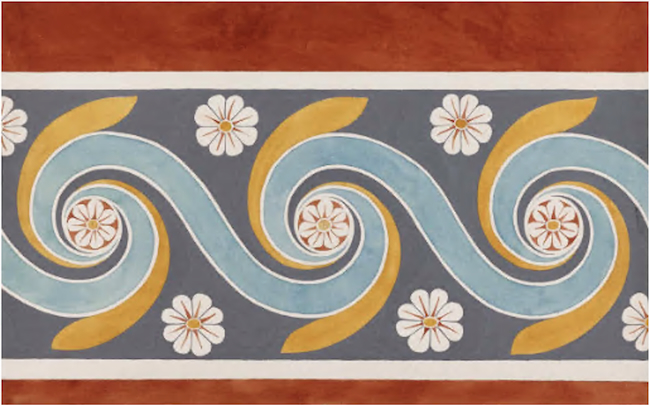
The British School at Athens celebrated its 50th anniversary in 1936 with a large public exhibition at Burlington House at the Royal Academy of Arts in London. The exhibition, British Archaeological Discoveries in Greece and Crete 1886-1936, consisted of a special display of Minoan culture related to the discoveries at Knossos by Sir Arthur Evans as well as the excavations of the School including: Phylakopi, Kamares Cave, Palaikastro, Mycenae, Sparta, Perachora, Thessaly, Macedonia, Lesbos, Cyprus, Ithaca, and Megalopolis (Arcadia). It also included displays of Travels and Studies in Greece and Asia Minor, the Genose in the Levant, Monasteries in Athos, Byzantine Music, Byzantine Architecture and Decorative Arts, Greek Island Embroideries, Special Studies of Greek Pottery and Sculpture, Restoration of Ancient Monuments, Studies of Modern Greek Life and the School buildings and officers.
Since original ancient artifacts could not be transported to the exhibition in London, the displays consisted of replicas of ancient artifacts, modern ethnographic artifacts and illustrative panels with original watercolour drawings, many of which were done by Émile Gilliéron and Piet de Jong, and photographs.
The 1936 Exhibition Collection contains the surviving panels with original artwork from this exhibition.

The original description in the catalogue reads: "Attic Pottery...: (600-500 B.C.). Fragments of cups."
The original description in the catalogue reads: "Attic Pottery...: (600-500 B.C.). Fragments of cups."
The original description in the catalogue reads: "Attic Pottery...: (600-500 B.C.)… small flask (horseman pursuing fleeing warrior)."
The original description in the catalogue reads: "Attic Pottery...: (600-500 B.C.)… small flask (horseman pursuing fleeing warrior)."
The original description in the catalogue reads: "Attic Pottery...: (600-500 B.C.). Fragments of cups."
The original description in the catalogue reads: "Attic Pottery...: (600-500 B.C.). Fragments of cups."
The original description in the catalogue reads: "Attic Pottery...: (600-500 B.C.). Fragments of cups."
The original description in the catalogue reads: "Attic Pottery...: (600-500 B.C.). Fragments of cups."
The original description in the catalogue reads: "Statuettes in faïence and paste, of Egyptian manufacture."
The original description in the catalogue reads: "Scarabs from Egypt."
The original description in the catalogue reads: "Scarabs from Egypt."
The original description in the catalogue reads: "Egyptian mirror, with hieroglyphic inscription: Scene in a temple with deity and votary: XXII-XXVI Dynasties (1000-690 B.C.)."
The original description in the catalogue reads: "Clay tablets: (a) siren, and the prow of Odysseus's ship."
The original description in the catalogue reads: "Lid of a toilet-box."
The original description in the catalogue reads: "Scent-vases: (d) griffin."
The original description in the catalogue reads: "Flat handle-plate of a large bowl."
The original description in the catalogue reads: "Herakles and the hydra, from a cup."
The original description in the catalogue reads: "Terracotta figurines and vases: Protocorinthian and Corinthian… Before 700 B.C.; one of the earliest of Corinthian figures."
The original description in the catalogue reads: "Terracotta figurines and vases: Protocorinthian and Corinthian… Before 700 B.C.; one of the earliest of Corinthian figures."
The original description in the catalogue reads: "Terracotta figurines and vases: Protocorinthian and Corinthian… Protocorinthian: note the painted patterns on the dresses."
The original description in the catalogue reads: "Terracotta figurines and vases: Protocorinthian and Corinthian… Protocorinthian: note the painted patterns on the dresses."
The original description in the catalogue reads: "Terracotta figurines and vases: Protocorinthian and Corinthian… Corinthian."
The original description in the catalogue reads: "Terracotta figurines and vases: Protocorinthian and Corinthian… Corinthian."
The original description in the catalogue reads: "Terracotta figurines and vases: Protocorinthian and Corinthian… Protocorinthian: note the painted patterns on the dresses."
The original description in the catalogue reads: "Terracotta figurines and vases: Protocorinthian and Corinthian… Protocorinthian: note the painted patterns on the dresses."
The original description in the catalogue reads: "Terracotta figurines and vases: Protocorinthian and Corinthian… Protocorinthian: note the painted patterns on the dresses."
The original description in the catalogue reads: "Terracotta figurines and vases: Protocorinthian and Corinthian… Protocorinthian: note the painted patterns on the dresses."
The original description in the catalogue reads: "Terracotta figurines and vases: Protocorinthian and Corinthian… Corinthian."
The original description in the catalogue reads: "Terracotta figurines and vases: Protocorinthian and Corinthian… Corinthian."
The original description in the catalogue reads: "Terracotta figurines and vases: Protocorinthian and Corinthian… Corinthian."
The original description in the catalogue reads: "Terracotta figurines and vases: Protocorinthian and Corinthian… Vases in the shape of a pomegranate crowned by a lion's head (625-600 B.C.)."
The original description in the catalogue reads: "Terracotta figurines and vases: Protocorinthian and Corinthian… Head of a plastic vase in the shape of a Siren (cf. 234): (600-575 B.C.)."
The original description in the catalogue reads: "Terracotta figurines and vases: Protocorinthian and Corinthian… Head of a plastic vase in the shape of a Siren (cf. 234): (600-575 B.C.)."
The original description in the catalogue reads: "Terracotta figurines and vases: Protocorinthian and Corinthian… Vases in the shape of a pomegranate crowned by a lion's head (625-600 B.C.)."
The original description in the catalogue reads: "Terracotta figurines and vases: Protocorinthian and Corinthian… Top of a plastic vase in the shape of a snake (c. 650 B.C.)."
The original description in the catalogue reads: "Terracotta heads...: a-c. East Greek (600-500 B.C.)."
The original description in the catalogue reads: "Terracotta heads...: a-c. East Greek (600-500 B.C.)."
The original description in the catalogue reads: "Terracotta heads...: a-c. East Greek (600-500 B.C.)."
The original description in the catalogue reads: "Terracotta heads...: a-c. East Greek (600-500 B.C.)."
The original description in the catalogue reads: "Terracotta heads...: a-c. East Greek (600-500 B.C.)."
The original description in the catalogue reads: "Terracotta heads...: a-c. East Greek (600-500 B.C.)."
The original description in the catalogue reads: "Vase in the shape of a sandalled foot (East Greek)."
The original description in the catalogue reads: "Vase in the shape of a sandalled foot (East Greek)."
The original description in the catalogue reads: "Terracotta heads ... e-h. Argive (600-500 B.C.)."
The original description in the catalogue reads: "Terracotta heads ... e-h. Argive (600-500 B.C.)."
The original description in the catalogue reads: "Terracotta heads ... e-h. Argive (600-500 B.C.)."
The original description in the catalogue reads: "Terracotta heads ... e-h. Argive (600-500 B.C.)."
The original description in the catalogue reads: "Terracotta heads ... e-h. Argive (600-500 B.C.)."
The original description in the catalogue reads: "Terracotta heads ... e-h. Argive (600-500 B.C.)."
The original description in the catalogue reads: "Terracotta heads ... e-h. Argive (600-500 B.C.)."