

About the George Finlay Papers
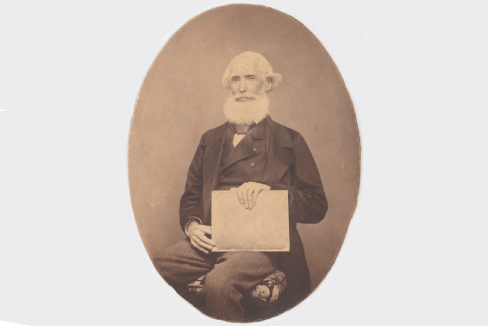
The George Finlay Papers contain materials created by and related to the British Historian and Philhellene George Finlay, his father John Finlay, Greek-American Philhellene George Jarvis, and British Philhellene Captain Frank Abney Hastings, dating from 1791 to 1949. Most of the collection consists of George Finlay’s meticulous records of his travels, personal and official correspondence, his personal expenditures, copious memoranda on strategy and on military and political organisation, journal entries, maps, facetiae, scrapbooks, personal notes on people—Greeks and others—and on revolutionary events, newspaper cuttings mainly on Greece and international affairs, as well as Finlay’s original manuscripts of the History of the Greek Revolution (1861) as well as corrected proofs of Finlay’s other published works.
Also included are the papers of Finlay’s father, John, two journals of Greek American philhellene, George Jarvis, and those of Finlay’s fellow British philhellene, Captain Frank Abney Hastings. The Hastings papers, which Finlay purchased in 1830, include personal and official correspondence, ship’s logs, notes that he took on board or ashore, as well as memoranda on strategy and on the naval organisation of the revolutionary forces. Collectively, these records reveal a great deal about the character, motivations, ideas, as well as the military and political judgements of these British individuals, as well as of many others, both British and Greek, with whom they interacted during the Greek War of Independence as well as many of Finlay's other interests, such as Classical and Byzantine history, natural history and politics.

Henry Bayle to his niece Bessie (Masson). 5 Levin Square, Bath, 28 February 1859. Information on St. Spyridon and his festival at Corfu (stuck on p. 14 of Richard Monckton Milnes, Memorials of a Tour . . . in Greece, London, 1834, illustrations added 1860). Extensive handwritten notes near the beginning of the book, not in Finlay's hand. Illustrations include: 'pencil sketch of the author by a lady' (1848); 'Tempi di Pesto,' painting (5 x 10 cm); 'Psorarus of Corfu' painting (18 x 26 cm); 'Costume of Sinardes,' painting (18 x 26 cm); double-sided drawing of 'Turkish tombs,' pencil sketch 'by William Gell, and overleaf 'Rhodes' in pen and pencil by Gell (13 x 24 cm); double-sided drawing of pencil sketch of 'Church, now mosque' by Gell, and overleaf pencil sketch by Gell of Palace of the Grand Master (13 x 24 cm); 'Souliots,' coloured drawing by Gell of (7 x 13 cm), 'Via Mala,' hand-painted engraving (18 x 21 cm), newspaper cutting 1st Jan 1866 pasted in re: kidnapping by brigands (14 x 18 cm); 'Pnyx,' pencil drawing by Gell (13 x 18 cm); 'Athens,' watercolour by Gell (22 x 34 cm); news cutting on excavations at Athens.
Newspaper clipping on Crete (previously loose in Richard Monckton Milnes, Memorials of a Tour . . . in Greece, London, 1834, illustrations added 1860). Extensive handwritten notes near the beginning of the book, not in Finlay's hand. Illustrations include: 'pencil sketch of the author by a lady' (1848); 'Tempi di Pesto,' painting (5 x 10 cm); 'Psorarus of Corfu' painting (18 x 26 cm); 'Costume of Sinardes,' painting (18 x 26 cm); double-sided drawing of 'Turkish tombs,' pencil sketch 'by William Gell, and overleaf 'Rhodes' in pen and pencil by Gell (13 x 24 cm); double-sided drawing of pencil sketch of 'Church, now mosque' by Gell, and overleaf pencil sketch by Gell of Palace of the Grand Master (13 x 24 cm); 'Souliots,' coloured drawing by Gell of (7 x 13 cm), 'Via Mala,' hand-painted engraving (18 x 21 cm), newspaper cutting 1st Jan 1866 pasted in re: kidnapping by brigands (14 x 18 cm); 'Pnyx,' pencil drawing by Gell (13 x 18 cm); 'Athens,' watercolour by Gell (22 x 34 cm); news cutting on excavations at Athens.
A. R. Rangabes to Sir Thomas Wyse. Athens, 1/13 April 1859. Sends W statistical tables of criminals published by Ministry of Justice in 1853 (loose in front of A. R. R., Ἀπομνημονεύματα, vol. 1 and 2, Athens, 1894)
Dom Ellis Colnagh to George Finlay. Athens, 27 April 1860. Thanks for volume of Strabo sent by George Finlay (stuck on front flyleaf of Strabo, Γεωγραφια, vol. 1, Paris, 1815).
John Stuart Mill to George Finlay. Blackheath Park, Kent, 15 September 1861. Thanks George Finlay for information; will come with tent via Ancona and Corfu arriving Athens in March. Hopes to resume 'those interesting conversations' with George Finlay. Leaves for Avignon on 23 September (stuck on front flyleaf of J. S. M., On Liberty, London, 1859).
Adolf Ellissen to George Finlay. Göttingen, 15 September 1861. On publishing problems in connection with E's German translation of George Finlay, Griechenland unter den Römem, Leipzig, 1861 (in German, attached to front flyleaf).
Herman Merivale to George Finlay. India Office, Westminster, 12 November 1861. Sends George Finlay copy of J. P. Bellaire, Précis des opérations générales de la division française du Levant . . ., Paris, 1805, re defence of Ionian Isles and Ali Pasha (letter attached to front flyleaf of book).
Herman Merivale to George Finlay. Hotel d'Archi?, no date. Returns a book lent by George Finlay. (previously loose in J. P. Bellaire, Précis des opérations générales de la division française du Levant . . ., Paris, 1805,.
Label written by Herman Merivale with George Finlay's address (previously loose in J. P. Bellaire, Précis des opérations générales de la division française du Levant . . ., Paris, 1805.
Carl Boetticher to George Finlay. Tempelhofer-Ufer 37, Berlin, 1 July 1862. Sends George Finlay his Der Baumkultus der Hellenen, Berlin, 1856; mention of B's discoveries on Acropolis. Thanks George Finlay for hospitality during his stay at Athens (previously loose in front of B's book).
Population, Statistics, Taxation in G. Britain and Ireland
Sir William R. Wilde to George Finlay. 1 Merrion Square, Dublin, 7 March 1863. Thanks George Finlay for statistical information on Greece; is sending book requested by George Finlay; personal news (stuck on back flyleaf of printed papers on Population, Statistics, Taxation in G. Britain and Ireland, with loose newspaper cuttings and notes by George Finlay).
Ferdinand Keller to George Finlay. Zürich, January 1864. re recent discoveries of palaeolithic bones, fossils, and paintings in Switzerland (in French ; stuck on front flyleaf of Anzeiger für Schweizerische Altertumskunde, 5, 1872).
Carl C. Rafn, Secretary of the Royal Society of Northern Antiquaries to George Finlay. Copenhagen, 14 May 1864. On activity of Society; request for a communication from George Finlay (stuck in front of collection of archaeological pamphlets, see British School at Athens catalogue under Prehistory, vol. 1).
Baron Anton von Prokesch-Osten to George Finlay. Büyükdere, 2 September 1864. Deplores fatal destiny of Greece so ill served by the protecting Powers. Understands George Finlay's longing for 'the mountains of Argyllshire and the grey hills of Arran'. Praises George Finlay's pioneer work for Greek history particularly 'les espaces presqu'inconnues de I'époque byzantine' (in French, attached to front flyleaf of A. von P.-O., Geschichte des Abfalls der Griechen . . ., vol. 1, Vienna, 1867).
Eric Farquhar to George Finlay. 20 April 1865. Would like to delay visit to Rusopoulos's collection of vases (previously stuck on front flyleaf of J. Y. Ackerman, A Descriptive Catalogue . . . of Roman Coins, vol. 2, London, 1834).
G. Constantine (United States Vice-Consul) to George Finlay. Athens, 11 August 1865. Offers a copy of Diplomatic Correspondence of the U.S.from the Year 1864 (previously stuck on front flyleaf of Papers Relating to Foreign Affairs . . ., pt. I, Washington, 1865).
Book by Baron Richard Monckton Milnes owned by George Finlay. The book includes original drawings by William Gell and a handwritten letter to Philip Gell dated 10 November 1865 (?)
Admiral Gell to Philip Gell, Hopton, Wirksworth, Derbyshire. 10 November 1865. Personal news (extract) (stuck on p. 124 of R. M. Milnes, Memorials of a Tour . . . in Greece, London, 1834, illustrations added 1860). Corrections made 14.04.2007 M. Stanley comments that p. 136 sketch of Aegina is misidentified as Sounion. Extensive handwritten notes near the beginning of the book, not in Finlay's hand. Illustrations include: 'pencil sketch of the author by a lady' (1848); 'Tempi di Pesto,' painting (5 x 10 cm); 'Psorarus of Corfu' painting (18 x 26 cm); 'Costume of Sinardes,' painting (18 x 26 cm); double-sided drawing of 'Turkish tombs,' pencil sketch 'by William Gell, and overleaf 'Rhodes' in pen and pencil by Gell (13 x 24 cm); double-sided drawing of pencil sketch of 'Church, now mosque' by Gell, and overleaf pencil sketch by Gell of Palace of the Grand Master (13 x 24 cm); 'Souliots,' coloured drawing by Gell of (7 x 13 cm), 'Via Mala,' hand-painted engraving (18 x 21 cm), newspaper cutting 1st Jan 1866 pasted in re: kidnapping by brigands (14 x 18 cm); 'Pnyx,' pencil drawing by Gell (13 x 18 cm); 'Athens,' watercolour by Gell (22 x 34 cm); news cutting on excavations at Athens.
Gustave Deville to George Finlay. Athens, 30 May 1866. Has sent George Finlay copy of his book on the Tzaconian dialect (in French, stuck on front flyleaf of Return: Ionian Islands, 11 March 1853, Blue Book 226).
John Stuart Blackie to George Finlay. Edinburgh, 14 June 1866. Thanks George Finlay for his paper on Achaian coins. Discusses his own work on Homer; wishes to dedicate it to George Finlay as 'the most scholarly Scot' he knows; has abandoned his interest in Greek politics (unfinished ; stuck on p. (i) of J. S. B., Homer and the Iliad, vol. 1, Edinburgh, 1866).
Hahn (Austrian Consul for western Greece). Open letter. Syra, 21 April 1867. On the system of lighthouses in the Cyclades (printed in French; loose at back of Greek Papers: Finance and Statistics, vol. ii, 1858-68).
Gregorius G. Pappadopoulos to George Finlay. Athens, 1 October 1867. Comments on de Cigalla's list of literary publications after 1860 (in French; stuck on back flyleaf of J. de Cigalla, Σχεδίασμα κατόπτρου τῆς νεοελληνικῆς φιλολογιας, Hermoupolis, 1846).
G. C. Bolanachi to George Finlay. Geneva, 12 February 1869. Sends him a copy of the first part of his Précis de l'histoire de Crete . . ., Paris, 1869 (in French, bound into the volume).
G. C. Bolanachi to George Finlay. Geneva, 12 February 1869. Thanks George Finlay for brochure; sends second part of his book on Crete (in French, bound into the volume).
Constantinos Loucas to George Finlay. re rent owed (in Greek, previously stuck on front flyleaf of R. Walpole, Travels . . ., London, 1820). Also part of front of envelope, with Finlay's name.
The Revd. Alexander Napier to Fanny Potterill. Holkham Vicarage, Wells, Norfolk, 8 June 1871 Requests her good offices in asking George Finlay for information on Lord Byron's last days in Greece with view to publishing translation and new edition of Karl Elze's Life of Byron (previously loose in J. Kennedy, Conversations on Religion with Lord Byron . . ., London, 1830).
Fanny Potterill to George Finlay. 26 Bedford Gardens, Kensington, 12 June 1871. Asks if George Finlay will help A. Napier whose letter (FIN/GF/B/9/50/1) is enclosed (previously loose in J. Kennedy, Conversations on Religion with Lord Byron . . ., London, 1830).
Sir John Lubbock to George Finlay. 15 Lombard St., London, 28 November 1871. Thanks for prehistoric specimens; sends his paper on 'Relationship'; asks George Finlay for communication for Anthropological Institute (previously stuck on front flyleaf of J. L., Prehistoric Times . . ., London, 1865).
Press cutting on 'the wit and humour of the South-Sea Islanders' (previously loose in J. L., Prehistoric Times . . ., London, 1865).