

About the George Finlay Papers
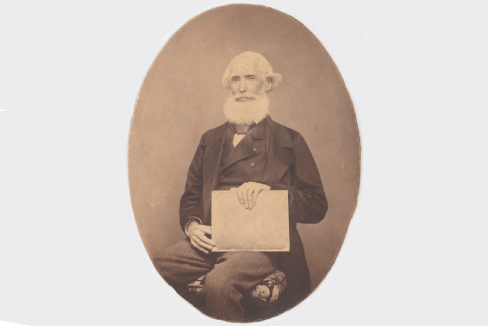
The George Finlay Papers contain materials created by and related to the British Historian and Philhellene George Finlay, his father John Finlay, Greek-American Philhellene George Jarvis, and British Philhellene Captain Frank Abney Hastings, dating from 1791 to 1949. Most of the collection consists of George Finlay’s meticulous records of his travels, personal and official correspondence, his personal expenditures, copious memoranda on strategy and on military and political organisation, journal entries, maps, facetiae, scrapbooks, personal notes on people—Greeks and others—and on revolutionary events, newspaper cuttings mainly on Greece and international affairs, as well as Finlay’s original manuscripts of the History of the Greek Revolution (1861) as well as corrected proofs of Finlay’s other published works.
Also included are the papers of Finlay’s father, John, two journals of Greek American philhellene, George Jarvis, and those of Finlay’s fellow British philhellene, Captain Frank Abney Hastings. The Hastings papers, which Finlay purchased in 1830, include personal and official correspondence, ship’s logs, notes that he took on board or ashore, as well as memoranda on strategy and on the naval organisation of the revolutionary forces. Collectively, these records reveal a great deal about the character, motivations, ideas, as well as the military and political judgements of these British individuals, as well as of many others, both British and Greek, with whom they interacted during the Greek War of Independence as well as many of Finlay's other interests, such as Classical and Byzantine history, natural history and politics.
Athens, 20 October [1847]. This is a first draft of 25 and has been wrongly dated '1844'. It mentions L's Thoughts on the Degradation of Science in England, 1847, and his Peloponnesiaca, 1846.
20 October 1847. Arrival of Middleton; his observations on inscriptions of Mavrodhilissi and site of Amphiaireion; difficulty of visiting this because of bandits in the area 'where I am a landed proprietor'. British policy in Greece even worse since 1843. Defects of constitution of Greece, especially representative chamber and senate. Palmerston's unfortunate policy. Progress of university library; England has done little. Establishment of the French Archaeological School at Athens. Regrets L's Peloponnesiaca has not yet reached him, probably owing to his dispute with the British Consul Green. Is working on Basil II Bulgaroctonus. Penrose's discoveries. Need for scholars to have personal knowledge of Greece; Grote's neglect in this respect.
Athens, 19 June 1848. Bandits near Liossia prevent George Finlay's visit to Mavrodhilissi to copy inscriptions for L. Sends copy of vase-handles; comments on arrowheads found in Cyclades. Approval of Stratford Canning's visit and criticism of Lyons. Failure of British policy in Greece.
Athens, 6 August 1848. Gratitude for L's Peloponnesiaca. Criticism of Consul Green's conduct in connection with bank. Is sending L Sanscrit, translated into Greek. Criticism of Palmerston. Stratford Canning's break with Lyons during his visit to Athens.
Athens, 27 February 1849. Agrees with L on site of Amphiareion. Activity of bandits in Attica. Recall of Lyons and his reactionary and unpopular diplomacy. Comments on Greek political situation and unfortunate state of English consulates in Greece. Criticism of Grote's History; his failure to visit Greece. Wishes to dedicate his History of Greece under the Romans to L. Asks for information on value of Byzantine money.
Athens, 28 January 1850. Wyse's moderation in Don Pacifico and Finlay affairs mistaken by Otho for Palmerston's timidity. Otho refuses to yield and relies on Thouvenel. Terrible snow. Storm and great loss of sheep partly caused by want of cattle sheds and roads. King, government, Bavarians, and Three Powers have disgracefully neglected agriculture which is in a much worse state than in Turkey, though Athens is as civilized as any small European town in Italy or Germany, university respectable, and court balls brilliant though rather disorderly.
Athens, 8 March 1850. Claims to islands off Peloponnese, Sapienza, Cervi, etc., and comments of Palmerston. Greek court hostile to England. Spanish Chargé d'affaires Las Navas and Don Pacifico. George Finlay's own claim. Acknowledges L's Notes on Syracuse.
Athens, 28 March 1850. Thanks L for his letters to English newspapers and on affair of islands [see (30)]. The Times rather severe towards George Finlay and he has sent it a statement of his position; copy enclosed (FIN/GF/B/6, no. 51, 28 March 1850). Hopes for satisfactory settlement of his claim. Criticism of Palmerston's bombastic handling of Pacifico and George Finlay affair. If desired can purchase casts of western frieze of Parthenon for a museum. With note predating Joan Hussey on the placement of two letters from Leake to Finlay, and later writing by Hussey.
Athens, 28 April 1850. Greek government's settlement of indemnity for George Finlay and Don Pacifico. Absurdity of English claims to Sapienza and Cervi. Palmerston's geography as shaky as his statesmanship. Appreciation of L's notes on Syracuse. George Finlay's collection of Greek and Byzantine coins.
Athens, 18 May 1850. Acknowledges L's pamphlet on islands. Comparison of Wyse and Lyons. Renunciation to Bavarian succession to be discussed. Favourable moment for England to intervene. Has finished his work on the Greek nation under Byzantine, Frankish, and Trebizuntine rule. Is going to visit Trebizond and Nicaea and probably Reveniko.
Constantinople, 15 June 1850. Is in process of visiting Thessalonica, Nicaea, Trebizond, and Constantinople. Will arrange to send casts of western frieze of Parthenon to England. Recent conversation with Stratford Canning on Greek political affairs; folly of Lyons's policy in Greece. Sir S. C.'s views reasonable. George Finlay's attempts to give true account of Greek affairs in his Blackwood articles. L's pamphlet on islands translated and published in Athens. George Finlay's satisfaction at treatment of his indemnity claim in both Greek and English presses.
Athens, 28 July 1850. Visit to Trebizond fruitful for both topography and the Chronicle of Panaretos. Further details of arrangements to send casts of western frieze of Parthenon to England (in bad condition, part missing).
Athens, 8 October 1850. Regrets that casts of western frieze of Parthenon have now been purchased by Danish government. Criticism of Palmerston' s policy re islands. Suggests ceding certain islands to Greek government. Corfu, Malta, and Gibraltar ought to send deputies to Imperial parliament. Last four volumes of Grote en route to him. Regrets errors in earlier volumes due to lack of personal knowledge of terrain. Plans for a volume on Greece 1204-1566 with Trebizond; would supplement Gibbon. Assassination of Korphiotakis; nomination of Mavrocordatos, Metaxas, and Tricoupis as ambassadors to Paris, Constantinople, and London respectively. Criticism of Tricoupis as 'greedy miserable time server'.
Athens, 18 December 1850. A 10-drachma piece of old Athenian type is for sale. Is sending a cast to L as British Museum might wish to purchase. Desire to dedicate his history of period from 1204 to 1566 to L and suggests form of wording. Information on population of Greece and Ionian islands; marked lack of public works, roads, or any attempt to foster agriculture and commerce; heavy taxation. Comments on topography of Battle of Pharsala; criticism of views of Merivale. Grote's history has 'a very scholastic air but I like his Athenian politics better than those of any of his predecessors. I am afraid however that Cleon was no better than Colletti (sic)'. Comments on Turkish political situation.
Athens, 28 February 1851. Has not so far found rare and unpublished types of coins for sale, but is on alert and has enlisted aid of von Prokesch-Osten who has an excellent collection of Athenian coins. Details of George Finlay's coins and manubria. Praises L's Travels in Northern Greece as 'the geographical monument of our century'. Is authorized to purchase decadrachm for 1,000 fr. if genuine. Disgraceful state of English consular department. Has obtained complete copy of archaeological journal of Athens.
Athens, 28 March 1851. Sends copies of inscriptions collated by George Finlay and Mr. Chrysides. Damage done by government to current trade and silk production. Students attack American missionary Mr. King after his service and sermon in Greek. Bigots had used discussions in the Senate on Kaïris to excite the passions of the theologians.
Athens, 27 April 1851. Reference to Ross's paper on temple of Theseus, and to Pittakis's siting of the Metroon. Pittakis's discovery of inscriptions concerning Bouleuterion. P's reluctance to allow copies to be made before he has published them.
Athens, 8 May 1851. Letter enclosed for Athenaeum containing all that George Finlay has been able to gather about Pittakis' recent find of inscriptions. Impossible to get any leading Greek paper to publish a translation of L's Greece. Psyllas who is an honest politician may print it as a separate pamphlet (end missing; mutilated).
Athens, 17 December 1851. George Finlay's experiences in Florence and Rome. L's memoir on Pharsala presented to Mr. Wyse, Mr. Lyons, and garrison library at Malta. Comments on Minerva Medica of the Justiniani collection in Vatican. Is copying his Byzantine history from 716 to 1204 and then to 1453; will need at least 2 volumes if 'Franks are to be given a correct idea of Byzantine Society and Government'. Is having it printed at own expense.
Leake to George Finlay. Queen Anne St., London, 2 January 1852. Sends maps missing from George Finlay's copy of L's paper on Pharsala. Comments on George Finlay's experiences in the medal room at Florence; considers the missing grandis massa was never there 'for Reiske is no great authority'. The coup d'etat in Paris.
Leake to George Finlay. Queen Anne St., London, 3 July [1852]. Is returning George Finlay's Thiersch. Criticism of T's views on the Tsakonians ('very ingenious but very German in its prolixity and ultra criticism'). Regrets George Finlay is having to print his history at his own expense.

Meteorological notes and cuttings. Includes old paper envelope with label.
One portrait of George Finlay with medals by Numa Blanc. This portrait reappears pasted into FIN/GF/A/20.
Visiting cards of Etienne Dragoumis; Mr. N. Senior; Lady Sebright, Baroness d'Everton; Rigas Palamides; Petros Mavromichalis; Leon Heuzey (Membre de l'Ecole Française d'Athènes).
George Finlay's own library is at present split: certain works have been placed in the main library of the British School at Athens and the rest are housed (together with a number of modern works) in the students' common room or in the archive room. Items in this section can be identified only by the title of the book and the shelf-mark and as far as possible they are arranged here chronologically. 'George Finlay' after the present shelf-mark indicates that the book has not been transferred to the main library. This is an interim report: the collection is so widely dispersed and neither this nor the School Library has yet been professionally catalogued so that it is possible that some letters in books may have been overlooked.
The library shelf numbers of the books where the items were found are listed in the 'Library Shelf Number' field.
Please note that Joan Hussey listed the letters in chronological order in the FIN/GF/B/09 series. This means that letters with different dates but found in the same book can appear separately in the series.
Lord Byron to Editor of Galignani's Messenger. Venice, 27 April 1812.
Denies that he is author of The Vampyre; facsimile stuck on p. xxxiii of H. L. Bulwer (ed.), Complete Works of Lord Byron, Paris, 1835.
George Finlay to Leicester Fitzgerald Charles. Argos, 31 May 1824
Two of George Finlay's letters, including his reminiscences of Lord Byron, are printed in Leicester F. Stanhope, Greece in 1823 and 1824 . . ., London, 1825, pp. 510-19. F. Stanhope's visiting card pasted inside the front cover.
George Finlay to Leicester Fitzgerald Charles. Tripolitza, June 1824.
Two of George Finlay's letters, including his reminiscences of Lord Byron, are printed in Leicester
F. Stanhope, Greece in 1823 and 1824 . . ., London, 1825, pp 519 - 529
Julius Millingen to George Finlay at Zante. Mesolonghi, 16 October 1824.
M's own illness. Complaints about Bruno's accusations and discussion of Byron's last illness (stuck on front flyleaf of Julius Millengen, Memoirs of the Affairs of Greece . . ., London, 1831; this book contains a number of pencilled additions by George Finlay and some reference to himself).
John Anderson to George Finlay. Helensburgh, 22 April 1837.
Congratulates George Finlay on his history; asks for news of Greece; sends work of H. Miller (previously loose in front of J. A., Scenes and Stories from the History of the Church of Scotland ..., Edinburgh, 1849).
Sir William Robert Wilde to George Finlay. 199 Great Brunswick St., Dublin, 13 June 1839.
Varieties of murex found in Elis. Geological discussion of fossils of animals found by George Finlay in Marathon. State of Greece (loose, in bad condition, at end of W. R. Wilde, Narrative of a Voyage . . ., vol. 1, Dublin, 1840).
W. R. Wilde to George Finlay. 199 Great Brunswick St., Dublin, 22 March 1840.
To introduce Mr. and Mrs. Harvey Pine who are visiting Athens; they bring George Finlay a copy of W's Narrative . . ., 2 vols., Dublin, 1840. Requests information on present condition of Greece and Otho, also casts of ancient Greek heads taken out of tumuli or tombs (loose at end of book +loose newspaper cuttings on Sir William Wilde).
Christopher Wordsworth, Athens and Attica, London, 1836
Christopher Wordsworth to George Finlay. Harvard, 17 August 1840.
Thanks for gift of George Finlay's work on topography of Oropia and Diacria (stuck on front flyleaf of C. W., Athens and Attica, London, 1836). Glued inside front of book.
The Revd. Henry D. Leeves to Helen Finlay. 25 December 1838.
Sends The Picture Bible for the Young, London, 1834, as Christmas present to Helena (sic) Finlay (letter loose in book).
The Revd. John H. Hill to George Finlay. Athens, 8/20 January 1840.
Thanks for George Finlay's present; praises his research (stuck on front flyleaf of Trans. Roy. Soc. Lit. of the United Kingdom, vol. 3, London, 1839, containing several papers by George Finlay).
? to George Finlay. Athens, 20 January 1840. Thanks for George Finlay's paper On the Battle of Marathon (stuck on front flyleaf of Trans. Roy. Soc. etc. see above R. 9. 2).
? to George Finlay. Athens, 19 October 1841. Thanks for receipt of pamphlet; appreciation of George Finlay's work on Greece (stuck on front flyleaf of Trans. Roy. Soc. of the United Kingdom, vol. 3, London, 1839).
Hand-drawn map of the plain of Eleusis and the Sacred Way (previously loose in Trans. Roy. Soc. of the United Kingdom, vol. 3, London, 1839).
Hand-drawn map of Eleusis (previously loose in Trans. Roy. Soc. of the United Kingdom, vol. 3, London, 1839).
Hand-drawn map of Marathon (previously loose in Trans. Roy. Soc. of the United Kingdom, vol. 3, London, 1839).