

About the George Finlay Papers
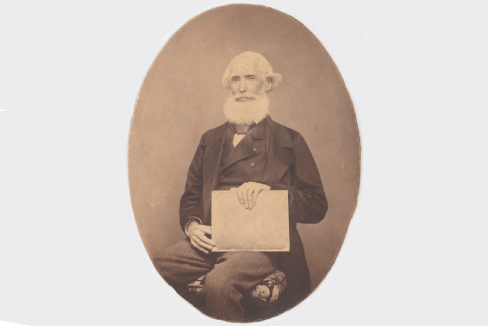
The George Finlay Papers contain materials created by and related to the British Historian and Philhellene George Finlay, his father John Finlay, Greek-American Philhellene George Jarvis, and British Philhellene Captain Frank Abney Hastings, dating from 1791 to 1949. Most of the collection consists of George Finlay’s meticulous records of his travels, personal and official correspondence, his personal expenditures, copious memoranda on strategy and on military and political organisation, journal entries, maps, facetiae, scrapbooks, personal notes on people—Greeks and others—and on revolutionary events, newspaper cuttings mainly on Greece and international affairs, as well as Finlay’s original manuscripts of the History of the Greek Revolution (1861) as well as corrected proofs of Finlay’s other published works.
Also included are the papers of Finlay’s father, John, two journals of Greek American philhellene, George Jarvis, and those of Finlay’s fellow British philhellene, Captain Frank Abney Hastings. The Hastings papers, which Finlay purchased in 1830, include personal and official correspondence, ship’s logs, notes that he took on board or ashore, as well as memoranda on strategy and on the naval organisation of the revolutionary forces. Collectively, these records reveal a great deal about the character, motivations, ideas, as well as the military and political judgements of these British individuals, as well as of many others, both British and Greek, with whom they interacted during the Greek War of Independence as well as many of Finlay's other interests, such as Classical and Byzantine history, natural history and politics.
George Middleton to George Finlay. Hotel d'Angleterre. n.d. Asks George Finlay to visit his friend who is ill (Mr. David, Hotel d'Angleterre, pencilled in George Finlay's hand).
Alice Noel to George Finlay. n.d. Frank Noel and the Greek brigand affair.
L. R. Packard to George Finlay. 24 December n.y. Asks George Finlay to lend him Ernst Curtius's book on Piraeus.
Walter Pater to George Finlay. n.d. Regrets George Finlay's toothache. Accepts dinner invitation. With old enclosure.
Andrew A. Paton to George Finlay. Mesolonghi, 4 June n.y. Remarks on political state of Greece.
Sophie Duchesse de Plaisance to George Finlay. n.d. Thanks for gift of George Finlay's essay on state of Greece. Hopes to meet George Finlay (in French). With old enclosure.
Baron A. von Prokesch-Osten to George Finlay. n.d. Proposes to visit grotto of Archidamus [Vari Cave] and desires to borrow C. Wordsworth's work and William M. Leake's work on Attic demes.
Raoul Rochette to George Finlay. 27 May n.y. Asks George Finlay to deliver letter and pamphlet to Prokesch; requests drawing of Aristocles stele by architect Hansen (in French). With old enclosure.
Baron Rouen (Ministre Plénipotentiaire de France en Grèce) to George Finlay. [? 1 September 1852.] Returns book with George Finlay's name found in Legation (in French). With old paper enclosure.
N. Senior to George Finlay. Athens. n.d. Suggests meeting for a walk.
N. Senior to George Finlay. n.d. Leaves Athens. Books lent left with Sir Thomas [Wyse].
N. Senior to George Finlay. Paris, 19 April n.y. To introduce French consul passing through Athens en route for Monastir.
N. Senior to George Finlay. n.d. To introduce his relations Miss Hampden and her two brothers visiting Athens.
James H. Skene to George Finlay. n.d. Asks George Finlay to lend him books on vases and museum catalogues.
James H. Skene to George Finlay. Oxford, 14 November n.y. Requests George Finlay's assistance for the Revd. H. Coxe on his archaeological mission. (Cf. no. 81.)
J. L. Stoddart to George Finlay. Athens, 18 April n.y. Requests delivery of dispatch of Col. Rose to bearer or through Health Office (with visiting card).
John S. Stuart-Glennie to George Finlay. n.d. Proposes to visit Marathon but will be back by 5 p.m.
Sir Charles Trevelyan to George Finlay. Hotel des Etrangers, n.d. [? 1871 or 1872]. Regrets postponement of visit (with 2 cuttings from The Times, 14 November 1871, of letter on 'Indian Mussulmans' by C. E. Trevelyan, taken from Spectator, 12 Dec 1860).
Sir Charles Trevelyan to George Finlay. n.d. Announces time of visit to George Finlay.
David Urquhart to George Finlay. 14 Ledbury Terrace, Bayswater, n.d. [? 1851 or later]. Critical of George Finlay's views on medieval Byzantium and Bulgaria. Urges him to rouse himself to think for himself.
David Urquhart to George Finlay. Pera, 6 January n.y. To introduce Mr. Regaldi.
M. A. Wyly to Mrs. F. n.d. Returns book lent (Dodwell).
Sir Thomas Wyse to George Finlay. n.d. Thanks for present received. Invites George Finlay, Mrs. F, and Miss Grocott to dinner. With old paper enclosure.
G. Knowles to George Finlay. n.d. Accepts invitation to meet George Finlay after bathing in Piraeus.
Hepworth Dixon, Athenaeum Office, London, to George Finlay
Letters loose mostly from George Finlay to William M. Leake. See also George Finlay's copy of John Howard Marsden's Memoir of Leake with letters bound in (FIN/GF/A/42.).
1-2 April 1829. Topographical and archaeological notes made while travelling between Mesolonghi and Livadia.
Nottingham Place, London. Athens, 18 October 1833. Details of Gropius's archaeological work on antiquities of Acropolis and old city. Ross's work in Boeotia. Present policy concerning national land. Other land at present on market. George Finlay's property in Attica. Government distribution of land to 'the Captains'. An extract (in Greek) from the Minister of Finance Mavrocordatos defining national property.
n.d. His copy of L's recent work on Morea not yet arrived but has glanced at copy of British Minister at Agos and sends Tzakonian itineraries which seem missing (Argos-Astros-Lenidi-Palaeocastro-Paleomonembasia) with sketch map.
Athens, 20 April 1835. Ross's archaeological activity. Inscriptions found in and near George Finlay's house. Government building in Athens. Col. Gordon is to draw plan of Athens. The Cephissos and the system of irrigation round Athens. George Finlay's views on battle of Marathon and on temple of Egina. Legend of cavern near Kiapha in Morea.
Loidoriki, 23 July 1835. Took part in General Gordon's expedition against klefts of northern Aetolia and sends notes on itinerary-Chalcis to Martini via the coast, with geographical, topographical, and archaeological details. Copies of inscriptions. Incompetence of the Germans. Caustic criticism of Armansperg; all civil affairs in provinces are in confusion.
Ross to L. Athens, 16/28 October 1835. Acknowledges receipt of L's inscriptions from northern Greece and Thessaly, looks forward to these areas. Grateful for copy of L's topography of Athens. Sends 60 copies of this inscription to London and he would like books in exchange. His excavations on Acropolis; discovery of temple of Victory and of some of Parthenon sculpture. Report of his excavations published in Kunstblatt (1835) and Morgenblatt. Discovery of two Herms on Mount Malevo and ruins of temple of Artemis Limnotis. Sends copy of inscription found at Sparta (1834). WIth old paper enclosure.
28 November 1835. Memorandum (sent by courtesy of Sir Edmund Lyons) on George Finlay's itinerary: Loidoriki to Navpactos and Vrachori to Karpenisi. Reference to monastery of Broussa, to list of mountains, and to inscriptions in mosque at Patradjic and Aghios Nikolaos (with copy of inscriptions).
Athens, 28 November 1835. Has sent geographical notes on Aetolia by courtesy of Sir Edmund Lyons. Conjectures whether Vardousi or Ghiona could be identified as Korax. Visit planned to Artotina, Thermos, etc. Gordon winters in Morea and has been succeeded by Pisa. George Finlay cannot visit Acarnania as volunteer as philhellenes are in disrepute and regarded as raving republicans. Armansperg and Frey know nothing of Greek people. Land not cultivated. Essential to establish local government (with sketch map of mountains). With a later note asking if this isn't FIN/GF/B/7/7 displaced in the 'repairing.'
Athens, 18 July 1836. Sends a plan of Hieron of Juno [Temple of Hera] near Mycenae made by Robertson, General Gordon's secretary. Armansperg's plans for reorganizing army. His use of frontier klefts as captains; they now shake hands with A, an honour George Finlay never had, though a major, 'which is not my fault as I have twice sent my resignation which the king will not accept'. Increased taxes and discontented peasantry.
Athens, 26 September 1836. Will attempt to visit Diacria and send itinerary to Oropos and description of plain of Messogeia. Site of Amphiareion and inscription found by George Finlay at Karala. George Finlay seldom visits property at Liossia; unfair taxation on oak-trees and oppression of purchasers of Turkish estates. Folly of failing to use what is in Greece. George Finlay a conservative in Greece. Antiquities suffer same fate as politics. Ross's resignation because he was refused permission to communicate inscriptions before they were published in Athens. No information available on Pittakis's inscriptions; his integrity questioned. George Finlay intends to write history of modern Greece.
Athens, 16 December 1836. Itineraries in Attica with topographical and archaeological details: plain of Messogeia to Marathon-Liossia-Oropos, and from Kalamos to Liossia-Decelia-Athens. Possible site of temple of Artemis; Amphiareion; inscriptions; Byzantine and post-Byzantine churches; on the ancient demes (Halimus, Aghios Cosmas, etc.). Notes temple on the hill called Pani above Trachones.
Ross to L. Athens, 20 December 1836. Ross criticizes L's siting of Pythium temple near Oenoe between Eleusis and Marathon; Finlay's views on inscription at Kharvati and possibility of a temple of Athena in neighbourhood (written as an appendix to no. 11).
Athens, 23 April 1837. Thanks for offering to read or publish George Finlay's communication through the Royal Society of Literature. Corrigenda to his notes on topography and inscriptions. Further itineraries in Attica. Tumulus on his property near Aphidna. Hopes to form society like that of Institute at Rome. Appends copies of inscriptions found in Messogeia. With note by Joan Hussey.

Transcription of inscriptions found in a late town. Originally from FIN/GF/B/7/13, but with a note from Joan Hussey suggesting the records may belong to FIN/GF/B/7/11.
Athens, 18 October 1837. (Note added 'Read before the Royal Society 14 December 1838'.) Archaeological and topographical details of George Finlay's tour in Cyclades. Critical comments on increasing Austrian influence on Greek policy. List of islands visited in Cyclades with population and taxes paid.
Athens, 31 July 1839. Criticism of Otho; constitutional party persecuted by faked attacks on their property; George Finlay has suffered. Ross sends copies of his publication. Forchhammer is here but has 'a fit of Bavarianism'. Scandalous episode when three of Otho's ministers were said to have signed a certificate in 1835 declaring King incapable of governing. This smoothed over but Otho will have to go. George Finlay's historical work moves slowly.
Athens, 30 September 1839. Criticism of difficult postal communications. Encloses French map of most of Attica (incomplete by reason of German 'shabbiness'). Suggests English architect Pennethorne may give Leake levelling and elevation of all buildings on Acropolis. King's fall imminent. Gropius's views on this. Scandalous attitude of Bavarians to building of University by subscription. Generosity of Greeks in Egypt. Otho refuses to subscribe, also his father. Count Saporta sends 14 drachmae which is returned with note saying that it would not cover expenses of inscribing his name and titles on the marble tablet of donors. Deliberate damage to George Finlay's acorn-crop (valonia).
Athens, 19 March 1841. Recall of Mavrocordatos as Foreign Secretary. Unfortunate return of Tricoupi to London. Otho's machinations do not deceive Sir Edmund Lyons (unfinished).
Athens, 5 April 1841. Draws L's attention to Cretan cause; details of Cretan problem. Tricoupi's apparent volte-face; essential changes avoided. Need for Greek and not a European constitution with representative assembly. 'The Greeks may be rogues but they are not fools, the Germans in Greece have been both.'
Athens, 8 June 1841. Appreciation of L's support for Cretans. Present situation in Crete. English intervention essential.
Athens, 22 July 1841. Gratitude for L's efforts on behalf of Cretan cause. Support in Greece but avarice of Hydriot ship owners. Lord Ponsonby's absurd attitude (influenced by Urquhart). Mavrocordatos on the road to ruin. Includes clipping on news in Crete.
Athens, 31 July 1841. Failure of Cretan insurrection. Criticism of pro-Turk conduct of 'Ponsonby Pasha'. English and French ships assist Cretans to emigrate. Deterioration in Greek political situation; rapacity of Bavarian officials. Civil war or formation of national assembly imminent.
Athens, 27 August 1841. Reasons for failure of Cretan insurrection. Criticism of Mavrocordatos as minister; prevalent anarchy; court and constitutionalists. Story of Mavrocordatos's resignation. French influence in new ministry.
n.d. [1844]. The national assembly. Otho's policy since revolution. George Finlay ridicules Otho, Germans, and Austrians for accepting Fallmerayer's theory ('this balderdash'). Otho's reception of deputies; his only remark 'Has it rained in your provinces?'.