

About the George Finlay Papers
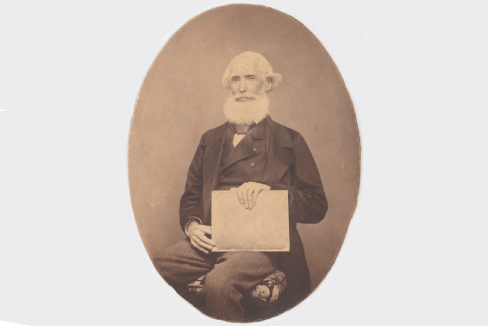
The George Finlay Papers contain materials created by and related to the British Historian and Philhellene George Finlay, his father John Finlay, Greek-American Philhellene George Jarvis, and British Philhellene Captain Frank Abney Hastings, dating from 1791 to 1949. Most of the collection consists of George Finlay’s meticulous records of his travels, personal and official correspondence, his personal expenditures, copious memoranda on strategy and on military and political organisation, journal entries, maps, facetiae, scrapbooks, personal notes on people—Greeks and others—and on revolutionary events, newspaper cuttings mainly on Greece and international affairs, as well as Finlay’s original manuscripts of the History of the Greek Revolution (1861) as well as corrected proofs of Finlay’s other published works.
Also included are the papers of Finlay’s father, John, two journals of Greek American philhellene, George Jarvis, and those of Finlay’s fellow British philhellene, Captain Frank Abney Hastings. The Hastings papers, which Finlay purchased in 1830, include personal and official correspondence, ship’s logs, notes that he took on board or ashore, as well as memoranda on strategy and on the naval organisation of the revolutionary forces. Collectively, these records reveal a great deal about the character, motivations, ideas, as well as the military and political judgements of these British individuals, as well as of many others, both British and Greek, with whom they interacted during the Greek War of Independence as well as many of Finlay's other interests, such as Classical and Byzantine history, natural history and politics.
Charles Thomas Newton to George Finlay. Hôtel des Etrangers, Athens, 19 December 1863. Thanks George Finlay for his kindness and returns books lent (with a copy of lamps and a bronze plate with inscription).
Miss Winifred M. Wyse (niece of Sir Thomas Wyse) to George Finlay. Bray, Co. Wicklow, 15 June 1864. Account of her Peloponnesian travels now in the press. Messages to Miss Grocott. Can George Finlay send her name of German scholar who opened theatre of Dionysos in 1862? George Finlay's kindness to her in Athens. State of Greece.
Charles Thomas Newton to George Finlay. British Museum, 22 July 1864. Re possible publication of Hahn's memoir on Troy in Transactions of the Royal Society of Literature. Discussion about payment of N's subscription to the Greek Ελπις. Is glad to hear of Hahn's discoveries at Bournabashi but does not believe this to be Troy.
George Finlay to G. Deville, Membre de l'Ecole Française à Athènes. Athens, 30 August 1864 'Carbon' copy requesting D to forward George Finlay's letter re book lent to J. Armingaud.
George Finlay to J. Armingaud, Membre de l'Ecole Française d'Athènes [sent to 17, rue Cassette, Paris, by G. Deville]. Athens, 30 August 1864. Requests return of his copy of Pt. I of Thomas and Tafel which A failed to send back before he left Greece 'otherwise I shall feel it a duty to take every measure in my power for obtaining justice. My arms and name are pasted in the volume'. Paper label with M. Armingaud's name and address, attached to same sheet as G. Deville (see above).
Jean-Jacques-Marc Armingaud to George Finlay. Paris, . . . 1864. The book has now been returned. Delay due to his illness in Greece when volume packed in error in his baggage. Apologizes.
Edward A. Freeman to George Finlay. 25 September 1864. Regrets any offence he may have caused by publishing George Finlay's letter in Daily News. Comments on new Greek constitution. Is reviewing Palgrave. Queries on English in Byzantine imperial guard. With old paper enclosure.
Charles Thomas Newton to George Finlay. British Museum, London, 25 November 1864. Decision of Royal Society of Literature to publish van Hahn's paper in its Transactions. Thanks George Finlay for political news.
George Finlay to Cooke. Athens, 22 December 1864. Orders for continuation of Illustrated London News, Athenaeum, Saturday Review, and Punch, and subscription to Athenaeum Club. The Times and four weekly papers from England with one from France are now sufficient (incomplete).
Sir Patrick Colquhoun to George Finlay. 3 Stratford Place, Cavendish Sq., W., 4 January 1865. C complains that he has been unjustly accused by dishonest late regent Poffandi of having caused damage to residence and grounds at St. Pantaleone. Description of renovations and improvements made by C.
Sir Patrick Colquhoun to George Finlay. 3 Stratford Pl., Cavendish Sq., W., 5 January 1865. Requests that Erskine shall present a formal complaint against Poffandi.
Johann Georg von Hahn to George Finlay. Syra, 10 January 1865. Discussion re Pergamos and Gergis. Comment on Calvert's work on Gergis (in German).
Johann Georg von Hahn to George Finlay. Syra, 17 January 1865. Discussion re Pasigraphic system from Bachmayer to Baron Testa; numerical cipher system (in German).
Johann Georg von Hahn to George Finlay. Syra, 29 January 1865. H is finishing chorographic part of his Albanian journey. Discussion of Skanderbeg's poetry and legend; topography of via Egnatia; criticism of Leake (in German).
Louis Agassiz to George Finlay. Cambridge, Mass., 20 February 1865. Requests George Finlay to send him copies or extracts from his correspondence with the late Cornelius Conway Felton, as he proposes to write memoir of F (his brother-in-law).
Charles Thomas Newton to George Finlay. British Museum, 5 March 1865. To introduce General Fox who is revisiting the Levant. 1 p.
The Revd. John Henry Hill to George Finlay. 17 April 1865. Thanks George Finlay for his two notes which he will place with his collection of 'Good Things' in his private drawer.
Johann Georg von Hahn to George Finlay. Syra, 18 August 1865. H's work; his Albanian journey now finished (in German).
John Leicester Warren to George Finlay. 32A Brook St., London, W., 1 November 1865. Discussion on coins of Achaean League. See also nos. 133, 134, 135, 138, 141, 144, and C. 17(1).
John Leicester Warren to George Finlay. 32A Upper Brook St., London, W. 1, 28 November 1865. Discussion on coins of Achaean League.
John Leicester Warren to George Finlay. 32A Upper Brook St., London, W., 5 December 1865. Discussion on coins of Achaean League.
George Finlay to Charles Thomas Newton. 7 December 1865. Discovery of Attic amphora on the road to Sounion with inscription and figure of Athena Pronoia. Detailed description, sending a sketch. Political affairs in Greece; failure to put law into execution; need for communal institutions and expenditure of revenue on objects of public utility. With old paper enclosure.
John Leicester Warren to George Finlay. Tabley, Knutsford, 12 January 1866. Discussion on coins of Achaean League.
George Finlay to Mowbray Morris. Athens, 18 January 1866. Arrangement for payment for George Finlay's letters inserted in The Times. Comment on violation of Greek constitution and administrative incapacity.
George Finlay to J. Stuart Mill. Athens, 1 February 1866. Effect of Otho's dethronement. Position of agricultural classes. Constitution of 1864 (copy incomplete).
Auguste Choisy to George Finlay. Paris, 8 February 1866. Sends a brief note on Acropolis. Gratitude for George Finlay's help during his first visit to Athens (in French). With old paper enclosure.
George Finlay to C. Veselovsky, Perpetual Secretary of the Imperial Academy of Sciences of St. Petersburg. Athens, 29 January/ 10 February 1866. Expresses appreciation of his election as Corresponding Member of the historical section of the Imperial Academy of Sciences of St. Petersburg and praises the Academy's work for Byzantine history (copy with a French translation).
Johann Georg von Hahn to George Finlay. Syra, 18 April 1866. To introduce 26-year-old Baron Seebach, Professor of Geology at Tübingen ('eine Perle unserer Jugend') (in German).
John Leicester Warren to George Finlay. 32A Brook St., Grosvenor Sq., London, W., 16 May 1866. Critical comments on the editors of Numismatic Chronicle; George Finlay's 'Thoughts on the Coinage of the Achaean League'; Freeman and the Chair [of Modern History] at Oxford.
George Finlay to Noel. Athens, 24 May 1866. Asks him if possible to purchase in London two gold coins (Caracalla and Constantine the Great), and Byzantine silver coins.
George Finlay to Mowbray Morris. 31 May 1866. Arrangements for payments due to George Finlay. Leonidas Bulgares imprisoned by Turks; Greek brigandage; governmental anarchy in Greece.
John Leicester Warren to George Finlay. 32A Brook St., London, W., 18 June [1866]. Dispatch of offprints to George Finlay's article on coinage of the Achaean League. Freeman and Chair at Oxford. 'Poor Lord Stratford's fatuity in turning poet in his extreme old age.'
Johann Georg von Hahn to George Finlay. Syra, 15 July 1866. Appreciation of Max Muller's book on philology which reads 'wie ein Roman' (in German).
Extract from Miss Blackler to Miss Cathcart. Florence, 17 July 1866. Request to obtain George Finlay's autograph for Mrs. Alexander of Boston now living in Florence who is wildly envious of what B has. 'His photograph nearly drives her mad although I have assured her it does not look like him.'
John Leicester Warren to George Finlay. Knutsford, Cheshire, 8 September 1866. Apologizes for delay in writing caused by de Salis's absence in 'the desert of the Scilly Islands'. Reluctance of de Salis to commit himself to paper. Freeman fails to get the Oxford Chair. Unsatisfactory political state of England due to Tories being 'so pig-headed about reform'.
George Finlay to Freeman. Athens, 27 September 1866. Asks F to get Count de Gobineau's letter stating his views on cuneiform writing published in Macmillan's Magazine. This was originally sent to Fraser's Magazine but did not appear, possibly through the influence of Col. Rawlinson whose views differ from those of G.
Johann Georg von Hahn to George Finlay. Syra, 21 October 1866. Letter to introduce Herr C. Blondel member of the Ecole Française in Athens who is returning from Bosporus. H struggles against his growing interest in philosophy (in German).
John Leicester Warren to George Finlay. 32A Brook St., London, W., 14 April 1867. Discusses George Finlay's numismatic paper with de Salis who is sending George Finlay a series of notes when the Blacas and Ramsay collections are arranged. Freeman in Normandy; vol. i of his Norman Conquest well received. In the Pall Mall Gazette Stratford praises George Finlay's letters from Athens.
John E. Hilary Skinner to George Finlay. Mylopotamo, Crete, 19 August 1868. Lands during blockade; description of Sphakia; strength of insurrection; some hospital relief given.
Wilhelm Vischer to George Finlay. Basle, 6 October 1868. Hopes to meet George Finlay next year in Switzerland. With old paper enclosure.
Ernest Renan to George Finlay. Paris, 29 April 1869. Regrets delay in publishing Brue's work submitted by George Finlay. Editor of the Journal of the Société Asiatique hesitates. Is sending George Finlay his work on St. Paul; his appreciation of assistance given by George Finlay's library in Athens (in French).
C. M. Cuhine (?) to George Finlay. Corfu, 10 June 1869. Thanks for George Finlay's pamphlet on prehistoric archaeology. Frank Noel's case. Greek policy towards Ionian Islands. Hopes that George Finlay will visit him on his way through Corfu.
Albert Dumont to George Finlay. rue Jacob 50, Paris, 15 June 1869. Re possibility of publishing B. Brue's journal on the campaign of 1715 in Morea. George Finlay's article on Stone Age in the Revue archéologique (in French).
Charles Thomas Newton to George Finlay. British Museum, 6 July 1869. Asks whether Ephemeris Archailologike came out from 1859 to 1862 and was continued from 1863; would like a complete set, also any other publications of the Archaeological Society. Reference to a seventeenth-century MS. containing description of Chios and the Giustiniani in possession of the Bishop of St. Davids.
Albert Dumont to George Finlay. rue Jacob 50, Paris, 6 August 1869. Further discussion of problems connected with printing Brue (see no. 156).
Albert Dumont to George Finlay. rue Jacob 50, Paris, 20 September [1868]. Has written a short preface to Brue and asks George Finlay to correct it. George Finlay's article on Stone Age will appear in the October Revue archéologique.
Albert Dumont to George Finlay. rue Jacob 50, Paris, 29 September [1869]. Details of Brue volume.
Admiral Spratt to George Finlay. Athenaeum, 23 October 1869. Praises George Finlay's correspondence in The Times. Refers to his own book on Crete; asks George Finlay to review it in The Times. Includes old paper enclosure.
Albert Dumont to George Finlay. rue Jacob 50, Paris, 29 October [1869]. Asks for information on provenance of Brue MS.
Albert Dumont to George Finlay. rue Jacob 39, Paris, 30 December 1869. Publication of Brue; number of copies.