

About the George Finlay Papers
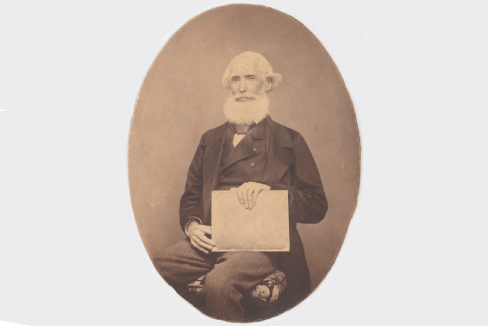
The George Finlay Papers contain materials created by and related to the British Historian and Philhellene George Finlay, his father John Finlay, Greek-American Philhellene George Jarvis, and British Philhellene Captain Frank Abney Hastings, dating from 1791 to 1949. Most of the collection consists of George Finlay’s meticulous records of his travels, personal and official correspondence, his personal expenditures, copious memoranda on strategy and on military and political organisation, journal entries, maps, facetiae, scrapbooks, personal notes on people—Greeks and others—and on revolutionary events, newspaper cuttings mainly on Greece and international affairs, as well as Finlay’s original manuscripts of the History of the Greek Revolution (1861) as well as corrected proofs of Finlay’s other published works.
Also included are the papers of Finlay’s father, John, two journals of Greek American philhellene, George Jarvis, and those of Finlay’s fellow British philhellene, Captain Frank Abney Hastings. The Hastings papers, which Finlay purchased in 1830, include personal and official correspondence, ship’s logs, notes that he took on board or ashore, as well as memoranda on strategy and on the naval organisation of the revolutionary forces. Collectively, these records reveal a great deal about the character, motivations, ideas, as well as the military and political judgements of these British individuals, as well as of many others, both British and Greek, with whom they interacted during the Greek War of Independence as well as many of Finlay's other interests, such as Classical and Byzantine history, natural history and politics.
George Finlay to Charles Thomas Newton. Athens, 4 October 1842. Details on excavations by Beulé of the Ecole Française at the entrance of the Propylea. Thiersch's excavations at temple of Athena Polias. Thiersch's views on Greek need for oxen from Asia Minor and for agricultural development rather than salaries and uniforms for officials and generals.
Col. William Mure to George Finlay. Burlington Hotel, London, 19 April 1853. Introducing Professor Blackie of University of Edinburgh.
George Finlay to Sir Thomas Wyse, H.M. Minister Plenipotentiary in Greece. Athens, 16 December 1853. Sends copy of letter from Noel of Achmetaga in Euboea re Greek government complaint against N for violation of quarantine and custom-house regulations.
James Clyde to George Finlay. Ancona, 10 February 1854. C's experiences in Italy where he was suspect to papal and Austrian authorities by reason of rusty black garments and fiery beard and was taken for either a missonary or a Mazzinist. Returns to Scotland shortly.
R. Wilkinson to Charles L. Merlin. Syra, 28 April 1854. Extract from letter referring to Consular Agent for the United States, Evangelidis, and his debts.
Extract from Mr. Hill's letter to J. Sculudi. 10/22 August 1854. Dissatisfaction with present Greek admininistration; unfortunate attitude of Turkey.
George Grote to George Finlay. 12 Saville Row, London, 23 August 1854. Acknowledges receipt of letter with article to be submitted to Editor of Edinburgh Review (with stamped envelope addressed to George Finlay, South Lawn, Southport, Lancs., containing Grote's visiting card).
George Grote to George Finlay. East Burnham, Maidenhead, 13 September 1854. Is about to submit George Finlay's MS. to Editor of Edinburgh Review.
George Grote to George Finlay. East Burnham, Maidenhead, 17 September 1854. Reports that Editor of Edinburgh Review does not think George Finlay's article is written in attractive style but materials are authentic. He will accept it if George Finlay does not insist on immediate publication.
George Grote to George Finlay. 12 Saville Row, London, 23 November 1854. To introduce his friend John Stuart Mill who is to visit Athens.
Professor John Stuart Blackie to George Finlay. 43 Castle St., Edinburgh, 6 March 1855. Re copies of Clyde's book, with cuttings of letter on 'too bookish character' of modern education by Blackie to The Times, 5 April 1858.
Charles Thomas Newton to George Finlay. Mytilene, 3 April 1855. Acknowledges receipt of new volume of George Finlay's Byzantine History and comments on this. N's excavations at Calymnos; discovery of a bronze group; invites Finlays to visit him. With an old paper enclosure.
William George Clark to George Finlay. Trinity College, Cambridge, 3 May 1855. Wishes to know whether a MS. of the Gospels of 480 has been found in Athens. Hopes to visit Greece again. Is publishing book on the Peloponnese. British politics.

List of coins sent to Felton on 3 September 1855.
Hepworth Dixon to George Finlay. Athenaeum Office, London, 26 September 1855. Announces impending visit to Athens.
George Finlay to Professor Cornelius Conway Felton, Cambridge, Massachusetts, U.S.A. Athens, 20 November 1855. Criticism of Lord Carlyle's diary. King Otho's extravagant household expenditure. Progress of George Finlay's History of Greece. Weakness of Otho's character and government; Greek loss of ground in east Mediterranean.
John Stuart Blackie to George Finlay. Edinburgh, 17 May 1856. Discusses recent work on philosophy; criticizes effect of Locke on English thought. Comments on George Finlay's Greek history.
William George Clark to George Finlay. London, 22 December 1856. Introduces H. O. Coxe, Sub-Librarian of Bodleian, who is making tour in East.
George Finlay to Sir Thomas Wyse. Athens, 25 February 1857. Requests similar postal arrangements for printed papers sent from England to Greece as between England and Turkey.
Francis C. Penrose to George Finlay. Office: Cathedral Surveyor's Office, St. Pauls House, 23 Albany Street, N.W. London, 11 May 1857. To introduce Mr. W. Burges, architect of Memorial Church at Constantinople, who is visiting Athens. Travels of R. Church and P in the Morea.
Professor John Stuart Blackie to George Finlay. 29 May 1857. Criticism of Grote's History of Greece. Comments on ancient Greek history and philosophy. Criticism of previous narrow-minded outlook at Oxford though now slightly less so. Plans to visit Heidelberg. Comment on Bunsen.
Baron A. von Prokesch-Osten to George Finlay. 29 May 1857. Appreciation of George Finlay's History of Greece. Comments on modern developments (in French).
George Finlay to J. P. Schilizzi, Liverpool. Athens, 23 July 1857. Has sent parcel of his old clothes for Liverpool firm to copy and asks S to arrange this.
Baron A. von Prokesch-Osten to George Finlay. 17 August 1857. Agrees with George Finlay's views on authenticity of the Holy Sepulchre. Praises George Finlay's publications on Roman coins and on Greece under the Ottomans and Venetians (in French; with visiting card).
George Finlay to Alexander S. Finlay, M.P., Castle Toward, Argyllshire. Athens, 19 November 1857. 'Carbon' copy of a letter to his cousin A.S.F. entitled 'On the principle of the permanent domination of Great Britain in the Indian empire'.
Jessie Finlay Cobbe to George Finlay. Newbridge House, Malahide, Co. Dublin, 24 November 1857. Introduces her cousin Miss [F: P.] Cobbe who intends to visit Athens.
George Finlay to Alexander Finlay. Athens, 21 January 1858. George Finlay's further opinions on the rule of the law in India. A 'carbon' copy (unfinished) replying to George Finlay's of 6 January giving George Finlay's further views on administration of justice in India. Powers not based on law will result in civil rebellion, as in the case of the American colonies.
Bayard Taylor to George Finlay. Athens, 21 January 1858. Returns George Finlay's papers with thanks for loan. With an old paper enclosure.
Frances Power Cobbe to George Finlay. Newbridge House, Malahide, Co. Dublin, 8 November 1858. Gratitude for kindnesses received in Athens. Spent summer in Florence with 'the nice literary people there', Brownings, Trollopes, etc. With an old paper enclosure.
Frances Power Cobbe to George Finlay. Red Lodge House, Bristol, 7 April 1859. Personal news. Discussion of parliamentary reform.
Professor John S. Blackie to George Finlay. 43 Castle St., Edinburgh, 28 April [1859]. University reform; Whig and Tory policies and Reform Bills. B's publication last year [1858] On Beauty; superficial attitude of present generation towards learning and 'John Bull naturally holds all philosophy in abhorrence'. European politics.
Johann Georg von Hahn to George Finlay. Syros, 12 June 1859. Thanks him for letter from Constantinople (in German, Gothic script).
Charles Eynard Eynard to George Finlay. Beaulieu, 6 August 1859. Invitation to visit him and arrangements to meet him (in French).
James Clyde to George Finlay. Ayr, 26 August 1859. To introduce Mr. Malcolm C. Taylor who is visiting Athens. C has become Foreign Master in Dollar Institution. With an old paper enclosure.
Sir Patrick Colquhoun to George Finlay. Corfu, 26 December 1859. Arranges to support George Finlay's membership of Athenaeum. Criticism of lonian assembly and Dandolo, 'a more barefaced and thorough blackguard does not exist; he knows no Greek and no grammar, translates literally from the Italian . . .'.
George Finlay to Achille Postolakas. Athens, 27 December 1859. 'Carbon' copy of letter asking for genuine medallions shown here in place of a false one sent him.
Abijah Keith to George Finlay. Monpelier, U.S.A., 15 April ? 1860. re Byron's sword, purchased by his father-in-law, Col. J. P. Miller, now in his possession; asks George Finlay if he knows of existence of second sword. With old paper enclosure.
Charles Thomas Newton to George Finlay. Rome, 6 May 1860. Incomplete state of index of Corpus of Byzantine authors; can find no reference to Halicarnassus Museum or Cnidus. Can George Finlay supply information on Caria in Byzantine authors?
William W. Lloyd to George Finlay. 77 Snow Hill, London, E.G., 16 May 1860. Met George Finlay last autumn in Lucerne. Informs him of two restorations made by him in the eastern pediment of the Parthenon (figure of Night or Selene, charioteer of horses) and in the east pediment (statute of Nike).
Reference to Cockerell's work on temples of Aegina and Phigaleia, with appendix by L on system of proportion used in their design.
24 September 1860. Baron von Prokesch-Osten's daughter's wedding (printed). With old paper enclosure.
William George Clark to George Finlay. Trinity College, Cambridge, 11 November 1860. Introduces the Revd. H. A. Munro who is making a tour of Greece. With original envelope.
H. A. Munro to George Finlay. Constantinople, 23 April 1861. Description of M's itinerary from Athens to Constantinople through Greek mainland. Stays with Noel in Euboea and Colquhoun in Corfu. Visit to Troy and criticism of Leake's views. Impression of Constantinople.
Sir Richard Church to George Finlay. 20 (? 29) November 1861. C declines further discussion of list of heroes of Greek Revolution proposed by George Finlay. With old paper enclosure and copied inscription.
Lord Dufferin to George Finlay. Blenheim Palace, Woodstock, 4 December 1861. Expresses thanks for promised picture and for receipt of George Finlay's History of the Greek Revolution. With old paper enclosure.
George Finlay to (? Foreign Office). Athens, 8 December 1861. On behalf of Mrs. Leeves, George Finlay points out mis-statement in Foreign Office List concerning the late Revd. Henry D. Leeves, first chaplain of British Legation in Greece.
Strack to George Finlay. 19 May 1862. 'Mr. S. has the honour to communicate to Mr. George Finlay the successful delivery of his friend Lady Athens by a little temple in the neighbourhood of the theatre of Dionysos this morning the 19th May.' With old paper enclosure.
Carl Wescher to George Finlay. Avenue de la Bourdonnais, 75, Paris, 31 August 1863. Regrets failure to return Buondelmonte and second volume of Hamilton due to unexpected departure from Athens. Will bring them with him in October (in French).
Charles Thomas Newton to George Finlay. British Museum, 2 September 1863. Regrets cannot furnish Hopf with medieval inscriptions of Mytilene. Sir Frederic Madden knows of no copy of capitulation of towns in Morea. Possibilities of selling model of Parthenon in England. Proposal to bring fragments of the Lion of Cheronea to Athens to inaugurate reign of George I.
James MacGregor to George Finlay. 11 November 1863. Encloses note on volume of George Finlay's History received from James Russell who cites Sir Francis Palgrave's warm praise with a query as to whether 'what we call the feudal system' had its first origin in the Greek Empire. George Finlay ought to be in England to deal with printing of remaining volumes. Comments on political state of Danube countries.