

About the John Pendlebury Family Papers
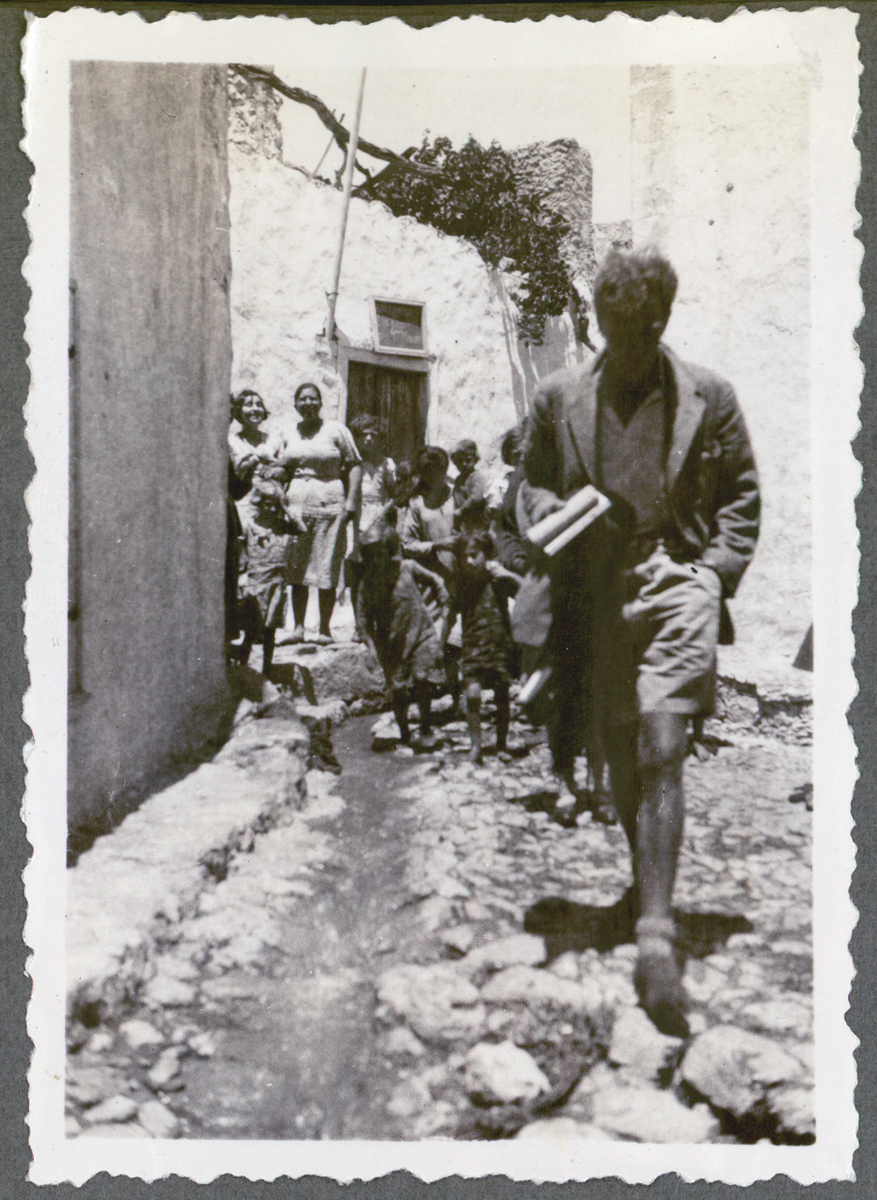
The John Pendlebury Family Papers cover the period from 1913 to 1964 and document the life of archaeologist and WWII hero John Devitt Stringfellow Pendlebury, his wife Hilda and their family.
Annotated envelope containing drawings which were reproduced as figure 18 in ‘Excavations in the Plain of Lasithi . I’.
Annotated envelope containing a drawing on tracing paper which was reproduced as figure 19 in ‘Excavations in the Plain of Lasithi. I”.
Notes of material to be added to page 11 [of ‘Excavations in the Plain of Lasithi. I’], folded and used as a label around drawings which were reproduced as figure 20 in ‘Excavations in the Plain of Lasithi. I’.
Annotated envelope containing drawings which were reproduced as figure 21 in ‘Excavations in the Plain of Lasithi. I”.
Annotated envelope containing a drawing which was reproduced as figure 22 in ‘Excavations in the Plain of Lasithi. I”.
Annotated envelope containing drawings which were reproduced as figure 25 in ‘Excavations in the Plain of Lasithi. I”.
Annotated envelope containing a drawing which was reproduced as figure 26 in ‘Excavations in the Plain of Lasithi. I”.
Annotated envelope containing photographs which were reproduced as Plate 6 in ‘Excavations in the Plain of Lasithi. I”. The photographs show “the Plain of Lasithi from Lagou”, “the Trapeza Plateau” and “Interior of the Trapeza Cave”.
Annotated envelope containing photographs which were reproduced as Plate 7 in ‘Excavations in the Plain of Lasithi. I”. The photographs show fragments of Neolithic and Trapeza Ware pottery.
An annotated envelope with original drawings which were reproduced as figure 10 in ‘Excavations in the Plain of Lasithi . II”.
An annotated envelope with original drawings which were reproduced as figure 11 in ‘Excavations in the Plain of Lasithi . II”.
An annotated envelope with original drawings which were reproduced as figure 12 in ‘Excavations in the Plain of Lasithi . II”.
An annotated envelope with original drawings which were reproduced as figure 13 in ‘Excavations in the Plain of Lasithi . II”.
An annotated envelope with original drawings which were reproduced as figure 14 in ‘Excavations in the Plain of Lasithi . II”.
An annotated envelope with original drawings which were reproduced as figure 15 in ‘Excavations in the Plain of Lasithi . II”.
An annotated envelope with original drawings which were reproduced as figure 16 in ‘Excavations in the Plain of Lasithi . II”.
An annotated envelope with original drawings which were reproduced as figure 18 in ‘Excavations in the Plain of Lasithi . II”.
An annotated envelope with an original drawing which was reproduced as figure 19 in ‘Excavations in the Plain of Lasithi . II”.
An annotated envelope with original drawings which were reproduced as figure 7 in ‘Excavations in the Plain of Lasithi. II”.
An annotated envelope with original drawings which were reproduced as figure 8 in ‘Excavations in the Plain of Lasithi . II”.
An annotated envelope with an original drawing which was reproduced as figure 9 in ‘Excavations in the Plain of Lasithi . II”.
An annotated envelope with an original drawing which was reproduced as figure 1 in ‘Excavations in the Plain of Lasithi . III: Karphi. A city of refuge of the early iron age in Crete’.
An annotated envelope with original drawings which were reproduced as figures 2 and 3 in ‘Excavations in the Plain of Lasithi . III: Karphi. A city of refuge of the early iron age in Crete’.

With drawings, general notes and a bibliography. At the reverse of the book there is another piece of writing entitled Royal Egyptian Sculpture, with references.
The notes are divided into places and are unfinished (in some sections John had just written the title of the site but nothing else). The notes reference books and articles by other authors.
Comprises notes about Andros, and made from ‘Palace of Minos’ by Arthur Evans. The first page of notes also lists notes on other topics, but these are not present. The notes reference books and articles.
The text is mainly about Knossos [the first lecture], and includes lists of images relating to Knossos and Amarna [shown at the lectures].
The notes have been made from various books and articles and are about Syros, Paros [Páros], Phylakopi (on Mílos), Thera and Knossos.
Also includes copied out hymns and carols. Notes about the Cyclades mainly relate to figurines and pottery.
Also contains notes of references; a list of people and publications [to send a copy of ‘The Archaeology of Crete’ to]; notes about Daedalic sculpture; a list of [Illustrated London News] articles about Amarna; and a copy of [David Pendlebury’s] school timetable (Autumn 1938). Additionally contains (in Hilda Pendlebury’s writing) a list of Punches (magazine) missing and a small hand drawn map.
Contains notes by John Pendlebury about: places including archaeological sites in Crete and objects found there; detailed travel itineraries for April 1934 and photographs taken. With a sketch plan of a small site. Also contains notes by Hilda Pendlebury taken from ‘Bronze‐ zeitliche u. früheisenzeitliche Chronologie’ by Nils Åberg (1930). Some pages have been cut-out.
With drawings [by John Pendlebury], written whilst he was a student at Winchester College (the notebook has a “D” on the front which was John’s house in Winchester).