

About the 1936 Exhibition Collection
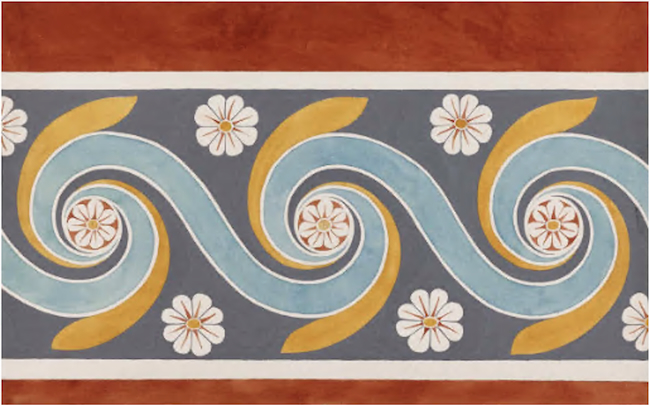
The British School at Athens celebrated its 50th anniversary in 1936 with a large public exhibition at Burlington House at the Royal Academy of Arts in London. The exhibition, British Archaeological Discoveries in Greece and Crete 1886-1936, consisted of a special display of Minoan culture related to the discoveries at Knossos by Sir Arthur Evans as well as the excavations of the School including: Phylakopi, Kamares Cave, Palaikastro, Mycenae, Sparta, Perachora, Thessaly, Macedonia, Lesbos, Cyprus, Ithaca, and Megalopolis (Arcadia). It also included displays of Travels and Studies in Greece and Asia Minor, the Genose in the Levant, Monasteries in Athos, Byzantine Music, Byzantine Architecture and Decorative Arts, Greek Island Embroideries, Special Studies of Greek Pottery and Sculpture, Restoration of Ancient Monuments, Studies of Modern Greek Life and the School buildings and officers.
Since original ancient artifacts could not be transported to the exhibition in London, the displays consisted of replicas of ancient artifacts, modern ethnographic artifacts and illustrative panels with original watercolour drawings, many of which were done by Émile Gilliéron and Piet de Jong, and photographs.
The 1936 Exhibition Collection contains the surviving panels with original artwork from this exhibition.
Card base with six ink illustrations attached, labelled beside the top left corners in pencil with the letters a-f. The number 182 is pasted in the lower left corner. The original description in the catalogue reads: "The Orthia goddess with attendants; she holds a pair of lions by their tails."
Card base with eleven ink illustrations attached, labelled beside the upper left corner in pencil with the letters a-k. The number 183 is pasted in the lower left corner. Some of the image have beside them later annotations in pencil, giving bibliographic references. The original description in the catalogue reads: "Pendants and ornaments: note the Double Axe, surviving as an amulet from Minoan times."
A black and white photograph looking down to an archaeological site in an bay of the sea with rocks on either side. A small amount of the original card base is visible at certain points along the edges. The original description in the catalogue reads: "General View of the Perachora Peninsula and the Corinthian Gulf, from the east."
A black and white photograph looking up at a wall partway up a hill, with rocks rising behind it. A small amount of the original card base is visible at certain points along the edges. The original description in the catalogue reads: "Acropolis wall, on the lighthouse rocks behind the temples."
Card base with one photograph attached. In the lower left corner the number 204 is pasted. Underneath the left corner of the photograph is a later annotation in pencil giving a bibliographic reference. The original description in the catalogue reads: "Hellenistic Cistern."
Three black and white prints. The original description in the catalogue reads: "205. The third temple of Hera Akraia, isometric drawing. b. Longitudinal section through the site. Left to right: lighthouse rocks, market place, temple of Hera Akraia, portico, cistern, Roman house walls, temple of Hera Limenia. c. Section of the great cistern."
Three card bases with black and white photographs attached. The original description in the catalogue reads: "209. a. Steps leading down to a cistern. b. Portico, with the chapel of St. John, built over the first (Geometric) temple of Hera Akraia. The chapel has since been removed and rebuilt on another site. c. Seventh-century inscription on one of the sides of the altar (212c), 'I am a drachma for Hera of the White Arms.' This stone originally supported an offering, perhaps a drachma or handful of iron spits (which were the earliest coinage) like those dedicated at the Argive Heraeum, and the Orthia Sanctuary (195)."
Card base with four black and white photographs attached, labelled with pasted letters a-d/ the number 212 is pasted in the lower left corner. The upper two images (1936/02/01/20/01 and 02) have a later caption in pencil below that says "can't find u/p". The other two each have a later caption in pencil giving bibliographic references. The original description in the catalogue reads: "a. Wall surrounding the sanctuary of Hera Limenia. b. Hellenistic drain: the cistern (204) is at the lower end. c. Altar inside the temple of Hera Limenia (7th century). Three sides are formed of inscribed stones which had already been used to support dedications (cf. 209c). d. Altar of the third temple of Hera Akraia: the triglyphs are very rarely set thus on ground level. In front, a column of the fourth-century portico."
Card base with two black and white photographs of potsherds attached, labelled with pasted letters a and b. The number 213 is pasted in the lower left corner. Each images has a later illustration in pencil beside it, giving bibliographic references. The original description in the catalogue reads: "a. Geometric bowl (750-700 B.C.). The spindly birds in panels are typical of this period. b. Protocorinthian sherd: sphinx and birds."
Card base with ten black and white photographs of potsherds attached. The number 214 is pasted in the lower left corner; there is a tear across it. Some of the images have letters written in pencil to the left of the top left corner: g and h are most visible, with the others having been mostly erased. Manny of the photographs have later annotations in pencil beside them, giving bibliographic references. The original description in the catalogue reads: "Protocorinthian pottery (725-650 B.C.). The animals, especially lions, birds, and fabulous monsters, are typical. The human figure and horseman are rarer. Note the hare-hunt (top row, second from left)."
Card base with eight black and white photographs of pottery and potsherds attached. The number 215 is pasted in the lower left corner. The letter a is pasted below the top centre image (1936/02/01/23/02) and the letter b is pasted below the bottom centre image (1936/02/01/23/07); the top five images have a 1-5 written in pencil near the upper left corner; the lower 3 have b 1-3. The images have beside them later annotations in pencil, giving bibliographic references. The original description in the catalogue reads: "a. Geometric Pottery. The bowl (middle) is Argive. Bowl supported on a tripod (top right), an imitation in clay of a shape common in bronze. b. Protocorinthian and Corinthian fragments: mainly cups."
Card base with six black and white photographs of potsherds attached, labelled with pasted letters a-f. The number 216 is pasted in the lower left corner. The images have beside them later annotations in pencil giving bibliographic references. The original description in the catalogue reads: "Corinthian Pottery (625-575 B.C.): Cups, with riders (a, b) fabulous monsters (e, f), reveller with a horse's tail (b, bottom left); drinking bowl with other revellers (d); scent vases (c)."
Card base with ten black and white photographs of pots and potsherds attached, labelled with the pasted letters a-i: the two images in the centre (1939/02/01/05 and 06) show the same item from different angles and are labelled together with a single e. The number 218 is pasted in the lower left corner. In the top left corner is written in pencil 'top 218'. Most of the images have later annotations in pencil beside them giving bibliographic references; items e have the caption "Can't find." The original description in the catalogue reads: "Attic Pottery (except (a) Laconian): (600-500 B.C.). Fragments of cups; (e) small flask (horseman pursuing fleeing warrior); (b) small jug (siren)."
Card base with four black and white photographs attached, with pasted labels a-d. The number 220 is pasted in the lower left corner. Items a and d (1936/02/01/26/01 and 04) have later annotations in pencil giving bibliographic references. To the left of item c (1936/02/01/26/03) is the later caption in pencil "can't find/couldn't be bothered". The original description in the catalogue reads: "(a) Statuettes in faïence and paste, of Egyptian manufacture. b, c. Scarabs from Egypt. d. Egyptian mirror, with hieroglyphic inscription: Scene in a temple with deity and votary: XXII-XXVI Dynasties (1000-690 B.C.)."
Card base with seven black and white photographs of pottery and potsherds attached, labelled with the pasted letters a-g. The number 221 is pasted in the lower left corner. Each image has beside it later annotations in pencil, giving bibliographic references. The original description in the catalogue reads: "Corinthian Pottery (625-575 B.C.): a, b. Clay tablets: (a) siren, and the prow of Odysseus's ship. c. Lid of a toilet-box. d, e. Scent-vases: (d) griffin. f. Flat handle-plate of a large bowl. g. Herakles and the hydra, from a cup."
Card base with eighteen photographs attached. The photographs are largely pairs of the same items taken from different angles, except for 1936/02/01/28/13 and 18, and are labelled with the pasted letters a-j. the number 222 is pasted in the lower left corner. Each photograph has a later annotation beside it in pencil, giving bibliographic references. The original description in the catalogue reads: "Terracotta figurines and vases: Protocorinthian and Corinthian. a. Before 700 B.C.; one of the earliest of Corinthian figures. b-d. Protocorinthian: note the painted patterns on the dresses. e-g. Corinthian. h. Vases in the shape of a pomegranate crowned by a lion's head (625-600 B.C.). i. Head of a plastic vase in the shape of a Siren (cf. 234): (600-575 B.C.). j. Top of a plastic vase in the shape of a snake (c. 650 B.C.)."
Card base with sixteen black and white photographs attached. They are organised in eight pairs, with each pair consisting of the same item photographed from two angles; the second of each pair has a 2 in pencil to the left of the upper left corner, some of the first of each pair have a 1 but some have been erased. Each pair of photographs is labelled with a pasted letter a-h; the letter b is missing but there is a pale space where it once was. The number 223 is pasted in the lower left corner. Each photograph has a later annotation beside it in pencil, giving bibliographic references. The original description in the catalogue reads: "Terracotta heads (except d): a-c. East Greek (600-500 B.C.). d. Vase in the shape of a sandalled foot (East Greek). e-h. Argive (600-500 B.C.)."
Card base with ten black and white images of pottery and potsherds, labelled with the pasted letters a-j. The number 224 is pasted in the lower left corner. Each photograph has beside it later annotations in pencil, giving bibliographic references. The original description in the catalogue reads: "Corinthian Pottery: d,f. Recomposed cups. g. Scent-vase. h. Lid of a toilet-box, with winged Daemon. i. One of the rare pieces of Corinthian red-figured pottery (c. 400 B.C.). j. Plate, with winged Daemon."
Card base with ten black and white images of pottery and potsherds, labelled with the pasted letters a-j; the letter g is missing but there is a pale space where it once was. The number 225 is pasted in the lower left corner; circles have been drawn around it in pencil and then erased. Each photograph has beside it later annotations in pencil, giving bibliographic references, and there are Greek words written in pencil below the lower left corner of the lower left image (1936/02/01/31/08). The original description in the catalogue reads: "Protocorinthian Pottery: in the lowest row, fragments of cups."
Card base with three images attached, labelled with pasted letters c, a and b. The number 301 is pasted in the lower left corner. "Marmariane" is written in ink in the lower right corner. Each image has beside it a later annotation in pencil giving bibliographic references. The original description in the catalogue reads: "a. Map of North-Eastern Thessaly from Larisa to the Gorge of Tempe. Marmariani lies on the foothills of Olympus, north-west of the gorge. B Marmariani, plan of the Magoúla (prehistoric mound), unto which have been intruded tombs I-V of later date."
Card base with one item attached, labelled with a pasted d to the left of the lower left corner. The number 302 is pasted in the lower left corner. "Marmariane" is written in ink in the lower right corner. Beneath and to the upper left of the image are later annotations in pencil giving bibliographic references. The original description in the catalogue reads: "Painted Pottery from Marmariani, black on red, with high handles; compare 301c."
Card base with two image attached, labelled with the pasted letters a and b. The number 303 is pasted in the lower left corner. "Vardaroftsa" is written in the lower right corner. Each image has to the right of is a later annotation in pencil giving bibliographic references. The original description in the catalogue reads: "Vardaroftsa: plan and view of the Magoúla, which is tabular, surmounted by a conical tumulus (toumba) of later date."
Card base with three images attached, labelled with the pasted letters a-c. The number 304 is pasted in the lower left corner. "H. Mamas" is written in ink in the lower right corner. Each image has beside it a later annotation in pencil, giving bibliographic references. The original description in the catalogue reads: "Map of part of the Chalcidic Peninsula, east of Salonica, showing Hagios Mámas, Molyvopyrgos, and other prehistoric sites. b. Hagios Mámas, view of the Magoúla, showing trial trenches on the slopes of the mound. c. Implements of hard stone, from the Neolithic layer at Hagios Mámas."
Card base with one image attached, with the pasted label d. The number 305 is pasted in the lower left corner. "Marmariane Serfridje" is written in ink in the lower right corner. To the lower right of the image is a later annotation in pencil giving a bibliographic reference. Below the image is a paler section, with a later annotation in pencil in the centre which reads "305e lent to CUP for WA Heurtley". The original description in the catalogue reads: "Trough-spouted jug (d), from Marmariani: compare the decoration of 301c, 302. e. Painted pot, from Serovinge (Servia), in Western Macedonia, in a quite different style."
Card base with six black and white photographs attached, labelled underneath with the pasted letters b, a, c-f. The number 306 is pasted in the lower left corner. "Chauchitza" is written in ink on a piece of paper that has been pasted in the centre of the upper edge. Each image has next to it a later annotation in pencil giving a bibliographic reference. The original description in the catalogue reads: "Excavations at Chauchitza, near Lake Doiran in Macedonia: a stratified settlement of the Bronze Age, with Early Iron Age grace on its slopes [Photographed by S. Casson.] a. Bronze Age pottery showing Anatolian influence. b. Iron Age bowl with painted geometrical decoration. c. Iron Age jugs showing survival of Bronze Age forms. d. Bead, gold mouthplate, and bronze amulet, from an Iron Age grave. e. Cist grave built of slabs, in the Early Iron Age cemetery. f. Drinking-cup of typical Iron Age form. g. The Iron Age cemetery, with the settlement mound behind. h. A Bronze Age house floor with store-jars (pithoi) in place." Items g and h described under 306 are actually on item 307 (1936/02/02/07) below.
Card base with six black and white photographs attached. The top two have above them the "Chauchitza" written in ink on a separate piece of paper pasted on, and the labels beneath them g and h; the lower four have above them the "Kilindir" written in ink on a separate piece of paper pasted on, and the labels j, i, k, and l and m both next to the final image. The number 307 is pasted in the lower left corner; about half way up on the left side is written in pencil 306. The lower four images have beside them later annotations in pencil giving bibliographic references. The original description in the catalogue reads: "Excavations at Kilindir, a stratified settlement-mound of the Bronze Age. [Photographed by S. Casson.] i. Typical Bronze Age jug, with globular body and trough-spout. j, k. Painted bowls with geometrical decoration. l. Bronze Age axe and (m) sickle of bronze." The descriptions for photos g and h are under the description of 306 (1936/02/02/06) above.
Card base with one map and three black and white photographs attached, labelled with pasted letters a-d. The number 308 is pasted in the lower left corner. "North Greece" is written in ink in the lower right corner. In the lower centre is written in ink "Actual height of vase 16"." Each image has beside it a later annotation in pencil giving a bibliographic reference. The original description in the catalogue reads: "Prehistoric Site at Zerélia (a) Map of North-eastern Greece, to illustrate early cultures in Thessaly. b. The stratified settlement mound at Zerélia, and its lake. c. Cist grave built of slabs, at Zerélia: of the Bronze Age. d. Bronze Age vessel from Zerélia."
Card base with four pages with water colour illustrations of sherds grouped in the centre. The number 309 is pasted in the lower left corner. "North Greece" is written in ink in the lower right corner. Beneath the lower left corner of the images is a later annotation in pencil giving a bibliographic reference. The original description in the catalogue reads: "Painted pottery, red on white, of the First Neolithic Age, from Zerélia."
Card base with five images of pottery attached, labelled with pasted letters a-e. The number 310 is pasted in the lower left corner. "North Greece" is written in ink in the lower right corner. Each image has beside it a later annotation in pencil giving a bibliographic reference. The original description in the catalogue reads: "Painted vase, (a) black on red, of the Second Neolithic age, from Rakhmáni near Tempe. b-e. Red on white, of the First Neolithic Age, from Thessalian Sites."
Card base with five black and white photographs and two colour illustrations attached, labelled a-d,f,e,g. The number 311 is pasted in the lower left corner, partly over the corner of image f (1936/02/02/11/05). "N. Greece" is written in ink in the lower right corner. Each image has beside it a later annotation in pencil giving a bibliographic reference. The original description in the catalogue reads: "Terracotta statuettes of the Bronze Age from various sites in Thessaly. b. A stone pestle and mortar. d, e, f. Statuettes of local type, with terracotta bodies and heads of painted stone."
Card base with one print map taking up most of it. The number 312 is pasted in the lower left corner of the image. Below the image is a later annotation in pencil giving a bibliographic reference. The original description in the catalogue reads: "Map of the fifth settlement: of Early Bronze Age, about 2400-2300 B.C., showing fortifications and house-foundations: the red disc shows the point from which the panorama 314d was taken." The panorama is in fact 313d.
Card bade with four black and white photographs of an archaeological site attached, labelled with the pasted letters a-d. The number 313 is pasted in the lower left corner. "Thermi" is written in ink in he lower right corner. Each image has beside it a later annotation in pencil giving a bibliographic reference. The original description in the catalogue reads: "a. A House-Hearth (Thermi V); with stone foundation covered with potsherds: beyond is an ash-dump. b. Fortifications of the Fifth Settlement: the wide inner masonry is supplemented with outer walls. c. Watch-tower by the north-western gate of the Fifth Settlement. d. Panorama of the Fifth Settlement, showing the southern streets and houses: the circular erections are house-hearths."
Card base with six black and white photographs attached. Two images (1936/02/02/14/01 and 04) have the letter A written in pencil to the left of the top left corner; the two images in the centre (1936/02/02/14/02 and 03) are one above the other with a pasted b below them; and the final two images have the pasted labels c and d. The number 314 is pasted in the lower left corner. "Thermi" and "Antissa" are written in ink in the lower right corner. There are later annotations in pencil giving bibliographic references for each image. The original description in the catalogue reads: "Bronze birds; from the First Settlement: about 3700-2800 B.C. … 314 b. Grey pottery from Antissa, developed from wares like the 'Minyan' fabric of the Late Bronze Age. c, d. The Apsidal Temples, superposed. The earlier (c. 1000-800 B.C.) had the apse at the east end. The later (c. 800-600 B.C.), on the same foundations, had the apse to the west, so that the combined plan appears oval."
Card base with three image attached, labelled with the pasted letters c, a and b. The number 315 is pasted in the lower left corner. "Plati" is written in ink in the lower right corner. Each image has beside it a later annotation in pencil, giving a bibliographic reference. The original description in the catalogue reads: "Plati… a. View of the excavation (a), with the peak of Mt. Dikte in the distance. b. Plan of the Late Minoan house. c. Late Minoan I vase (c. 1500 B.C.)."
Card base with seven black and white photographs of objects attached, labelled with pasted letters a, b, c, d, -, d, e. The number 316 is pasted in the lower left corner. Above this is written in ink "Actual height in inches a=3 3/4 b=1 4/5 c=2 1/3 d=1 e=2". "Trapeza" is written in ink in the lower right corner. There are later annotations in pencil giving bibliographic references for each image. The original description in the catalogue reads: "Objects from the Cave at Trapeza: (a) Anthropomorphic vase. b. Ivory seal in the shape of a seated monkey: probably Early Minoan II. c. Terracotta figure seated in chair. d. Ivory head with inlaid eyes: probably Early Minoan II. e. Inscribed base of a libation vase: Middle Minoan I."
Card base with five black and white photographs of objects attached; labelled with basted letters b, a, c-e. The number 317 is paster in the lower left corner. Diagonally up to the right of this is written in ink " Actual height a,b,c as scales d 1 1/2 in. e 3 in." "Trapeza" is written in ink in the lower right corner. here are later annotations in pencil giving bibliographic references for each image. The original description in the catalogue reads: "a, b, c, Ivory figurines, including a new type with split aprons: Early Minoan II. d. Stone vases: Early Minoan II and III. e. Vase of the new 'Trapeza Ware,' with modelled face."
Card base with eight black and white illustrations of objects attached, labelled with pasted letters b, a , c-h. The number 318 is pasted in the lower left corner. "Praesos' is written in ink in the lower right corner. Several of the images have beside them later annotations in pencil giving bibliographic references. The original description in the catalogue reads: "Praisos... a. Larnax (clay burial-chest) with spirited ornament of running spirals in dark red on a buff ground. b. Small amphora: the pairs of double handles are unusual in a vase only 12 inches high. c-g. Geometric pottery. c, d. Jug and bowl from a 'beehive' tomb: (c) is a good instance of the rich effect simply produced in geometric art. f. Probably an imitation of an Attic 'Dipylon' Vase. g. The rayed circles on the neck of the miniature amphora are unusual. h. Minoan gem, found adhering to the mortar of a Hellenistic bathroom. A bull lying in a forest is surprised by a hunter who seizes both its horns. The bull is admirably modelled in the grand Minoan style: by contrast the human figure seems a mere appendage. Drawn by M. Gillièron."
Card base with three black and white photographs and four black and white illustrations attached, labelled a, d, b, c, f, e, g. The number 319 is pasted in the lower left corner. "Praesos" is written in ink in the lower right corner. "The head is 26 in. high" is written in the upper right corner. All the images except g (1936/02/02/19/07) have beside them later annotations in pencil, giving bibliographic references. The original description in the catalogue reads: "Terracottas from the Altar Hill site. a. A male head, heroic or divine, modelled, not cast: it may be as late as the first part of the fifth century. The projection of the chin and its deep depression are unusual. The ears are conventional and, like the falling locks, reminiscent of wood carving. b. Lion, drawing: perhaps as early as the sixth century. c. Lion, photograph: probably mid-fifth century. The leaflike incised work of the body contrasts with the smoothness of the mask: a finely designed head of spirit and originality. d. Female figure (priestess?). e, f. Male figures. The male legs with apron (f) give some idea of the lost body of the 'Young God'. g. Hellenistic building (the 'Almond Tree House'), on the First (Classical) Acropolis. Its dimensions and masonry are large for a private house; probably a public building was subsequently turned into a farm and oil factory."
Card base with three black and white photographs attached, labelled with the pasted letters a-c. Between the lower two photos is a 23.2 x 11.4 cm hole with the pasted label d. The number 320 is pasted in the lower left corner. "Paphos" is written in ink in the lower right corner. The upper image and the hole have later annotations in pencil beside them, giving bibliographic references. The original description in the catalogue reads: "a. The Eros of Paphos: a charming head of a laughing boy, three-quarters life-size, now in the British Museum. Perhaps part of a group: c. 350 B.C. b, c. Views of the excavation in progress. d. Plated gold pin, 7 inches long. Finely modelled goats' heads support a large bead of Egyptian faïence surmounted by a peal, separated by cup-like acanthus leaves, flowers and doves. The shaft bears a dedication of Euboulê to Paphian Aphrodite."
Card base with one black and white photograph. The number 321 is pasted in the lower left corner. The original description in the catalogue reads: "Roman bronze coin of Paphos, very much enlarged, showing the façade of the Temple of the Paphian Goddess."
One black and white ink map, titled "Plan of the Site and Neighbourhood of Salamis". Below the title is a scale bar showing 11 inches = 1 mile. There is a border around the plan; outside the border in the lower left corer is pasted the number 322, and in the lower right corner is written in ink "J.A.R.Munro". In faint pencil along the bottom edge is the later annotation "can't find". There is a reinforced hole in each corner. The original description in the catalogue reads: "Map of Salamis, showing excavated areas."
Card base with seven colour illustrations, with the pasted labels -, c, b, c, d, c, e. Above is a 25.5 x 25.3 cm hole where an image has been removed, with the pasted label a. The number 323 is pasted in the lower left corner. "Salamis. Poli." is written in ink in the lower centre. To the left of the hole is written in ink "The bull capital is 3 feet high: The statuette is 2 feet.". Above this is a later annotation in pencil which reads "Can't find any of this". The original description in the catalogue reads: "a. Marble capital with projecting head of a winged bull, reminiscent of Persian palace-architecture, found in the Agora at Salamis, now in the British Museum. b. Statuette of painted terracotta, now in the British Museum. c. Fragments of larger statues, of the same fabric, with elaborately patterned robes. POLI... d. Aphrodite riding on a swan: Attic lekythos, about 440 B.C. attributed to the 'Achilles painter': found in a tomb at Poli. Now in the Ashmolean Museum, Oxford. e. Arming a warrior, on a white Attic lekythos. Found in the same tomb Now in the British Museum."
Card base with one print plan and eight black and white photographs attached, labelled with the pasted letters a-i. The number 324 is pasted in the lower left corner. "Ithaca" is written in ink in the lower right corner. Each item has beside it a later annotation in pencil giving a bibliographic reference. The original description in the catalogue reads: "Section of the Aëtos Sanctuary Site (a), showing earlier geometric stratum (before c. 750 B.C.), partly separated by an ancient wall and platform from the later, in which Corinthian influence modifies the peculiar local style. Characteristic vases of successive styles:- b, c. Corinthian imports, (b) geometric: before 800 B.C.: (c) late proto-Corinthian: c. 650B.C. d. Local style: 850-800 B.C. e. Imitation of Corinthian-geometric, but on a very large scale (c. 850 B.C) f. Sub-geometric local style (750-700 B.C.) g. Local fabric, but fine imitation of Corinthian decoration: c. 750 B.C. h. Black-figured technique imitated from proto-Corinthian, but giving totally different effect on so large a scale. i. Closely imitated vases from Afráti in Crete; perhaps a Cretan import: the shape is copied from metal: 700-650 B.C."
Card base with one print plan and eight black and white photographs attached, labelled with the pasted letters a-k: g-i are all beside a single image (1936/02/02/25/07), while k appear twice, once alongside j (1936/02/02/25/08) and once alone (1936/02/02/25/09). The number 325 is pasted in the lower left corner. "Ithaca" is written in ink in the lower right corner. Each item has beside it a later annotation in pencil giving a bibliographic reference. The original description in the catalogue reads: "(a) Plan of the site. b. Corinthian import, but on unparalleled scale: 750-700 B.C. c-e. Local ware: unique in shape and decoration; inspired by proto-Corinthian and early-orientalizing models: 750-700 B.C. f. Vase of unusual 'candlestick' shape, perforated throughout: the latest local fabric: signed by the maker, Kalikleas: 700-675 B.C. g-i. Ivories: c. 800-600 B.C.: (g) frog; (h) monkey with child; (i) couchant ram. Compare those from the Orthia Sanctuary at Sparta. j, k. Bronzes: (j) horse: 900-700 B.C.; (k) sphinx: very early orientalizing; the type with outspread wings is very rare in Greek art: c. 750-700 B.C."
Ink map titled "Megalopolis A General Plan of the Thersileion and of the Theatre" in the lower right. Beneath the title is a key for the different lines drawn on the map. In the lower left there is a compass, scale bars, and the names of the drawers. There is a border around the map; the number 326 is pasted in the lower left corner outside this border. In the upper right corner outside the border is a later annotation in pencil giving a bibliographic reference. The original description in the catalogue reads: "Map of the site of Megalopolis, showing the Walls, Theatre, Assembly Hall and other buildings."
Card base with two images attached, with the pasted labels b and c. Above is a space with pieces of card stuck around the edge, with "Returned to H-S" written sideways in blue pencil and the pasted letter a beneath. The number 327 is pasted in the lower left corner. "Megalopolis" is written in ink in the lower right corner. One of the images (1936/02/02/27/01) has beneath it a later annotation in pencil giving a bibliographic reference. The original description in the catalogue reads: "View of the theatre and assembly hall (Thersileion) (a) from the top of the auditorium. The colonnade of the Thersileion serves as background to the stage. Beyond the river is the Agora, with excavated foundations of the Colonnade of Philip of Macedon, and the sanctuary of Zeus the Saviour by the river bank. b, c. Plan and view of the Thersileion, its inner and outer ranges of columns are spaced radially, to give the assembly clear view of the speakers in the midst."
Card base with one coloured print attached, with the pasted label b. At the top of the base is a pasted a: the upper part of the original base has been removed. The number 327 is pasted in the lower left corner. "Megalopolis" is written in ink in the lower right corner. Beneath the image is a later annotation in pencil, giving a bibliographic reference. The original description in the catalogue reads: "View of the Theatre from the stage a, the first row of seats is provided with backs , on which are inscribed names of tribes and of the dedicator, Antiochos. b. Coloured cymatium moulding from the portico of the Thersileion, reconstructed; almost the only bit of ornament found."
Card base with ten black and white photographs of mosaics attached, labelled with the pasted letters b, a ,c-j. The number 329 is pasted in the lower left corner. The original description in the catalogue reads: "Mosaic with medallion heads of Pan, Silenus, Satyrs and (a) Maenads; with subsidiary designs (b) peacocks, (c) doves, (d) a cock, (e) parrots, and (f) fish. Mosaic with a central medallion of Dionysos and complementary designs: (g) a peacock, (h) flowers, and (i, j) dogs hunting goats."
Card base with one map attached. The number 330 is pasted in the lower left corner. "O. Davies" is written in ink in the lower right corner. The original description in the catalogue reads: "Map of ancient mines in the Aegean, compiled by Oliver Davies, Student of the School, 1926-30."
Card base with two black and white photographs attached. The number 332 is pasted in the lower left corner. "Scamander Valley Walter Leaf" is written in the lower right corner. There are erased later annotations giving bibliographic references partly visible to the top right of each image. The original description in the catalogue reads: "Scenes in the Skamander Valley: the lower near Karakeui showing Kotylos from the north. Photograph by the late Walter Leaf."