

About the 1936 Exhibition Collection
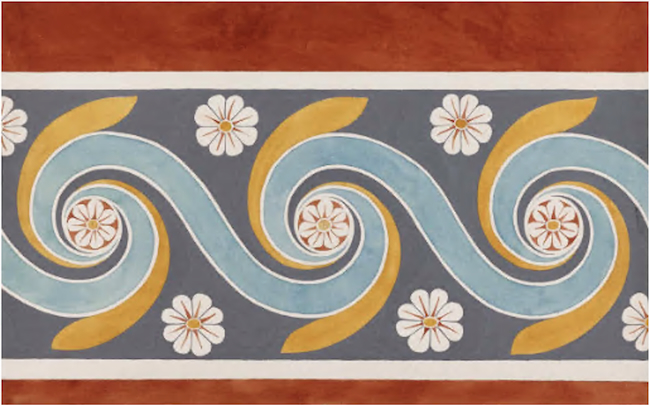
The British School at Athens celebrated its 50th anniversary in 1936 with a large public exhibition at Burlington House at the Royal Academy of Arts in London. The exhibition, British Archaeological Discoveries in Greece and Crete 1886-1936, consisted of a special display of Minoan culture related to the discoveries at Knossos by Sir Arthur Evans as well as the excavations of the School including: Phylakopi, Kamares Cave, Palaikastro, Mycenae, Sparta, Perachora, Thessaly, Macedonia, Lesbos, Cyprus, Ithaca, and Megalopolis (Arcadia). It also included displays of Travels and Studies in Greece and Asia Minor, the Genose in the Levant, Monasteries in Athos, Byzantine Music, Byzantine Architecture and Decorative Arts, Greek Island Embroideries, Special Studies of Greek Pottery and Sculpture, Restoration of Ancient Monuments, Studies of Modern Greek Life and the School buildings and officers.
Since original ancient artifacts could not be transported to the exhibition in London, the displays consisted of replicas of ancient artifacts, modern ethnographic artifacts and illustrative panels with original watercolour drawings, many of which were done by Émile Gilliéron and Piet de Jong, and photographs.
The 1936 Exhibition Collection contains the surviving panels with original artwork from this exhibition.
Card base with six black and white photographs attached, labelled with pasted letters a-f. The number 333 is pasted in the lower left corner. "D.G. Hogarth" and "J. A. R. Munro"are written in the lower right corner. Framed. The original description in the catalogue reads: "a. Roman bridge over the Euphrates, near Kiakhta. b. Geuksun, the ancient Cocussus, in Cappadocia, the place of St John Chrysostom's exile, A.D. 404-407. c. Palanga: lower half of draped statue with incised inscription: now in Constantinople Museum. d. Tokat, the ancient Dazimon, in Pontus, with Byzantine castle. e, f. Sivas, the ancient Sebasteia, formerly Pompey's colony Megalopolis, in Pontus. The 'Blue College' (e) and another college (f) were built under the later Seljuk rulers, about 1272 A.D. The beautiful decoration of the gates is in white marble and glazed brick, mostly blue."
Card base with three black and white photographs attached, labelled with the pasted letters a-c. The number 334 is pasted in the lower left corner. "Aezani F.W. Hasluck" is written in ink. The original description in the catalogue reads: "Temple of Zeus at Aezani, Phrygia, a great building of early imperial date, in Ionic style, on an imposing platform: (a) S.E. front; (b) S.W. colonnade; (c) isolated columns in S.W. colonnade."
Card base with seven black and white photographs attached, labelled with pasted letters a,b,d,c,f,e,g. The number 335 is pasted in the lower left corner. "Asia Minor. F.W. Hasluck" is written in ink in the lower right corner. To the right of image a is a later annotation in pencil giving a bibliographic reference. Framed. The original description in the catalogue reads: "(a) Bridge over the Aisepos; three and a half miles from its mouth on the Sea of Marmara; not recorded before. The central piers have lost their arches, but the abutments are well preserved. b. Bridges of Justinian over the Sangarios: a great structure of nine arches: the roadway is absolutely horizontal. In 1908 the bridge was passable though the roadway was in bad repair. The semi-circular defensive spurs should face up-stream, but when photograph (b) was taken the current was creeping the other way. c. In the second photograph the bed is dry. d. City gate of Cyzicus, in the N. wall near the amphitheatre. The figure in the archway is F.W.H. e. Afium Kara Hissar, Vilayet of Brusa. The citadel is an abrupt mass of rock 400 feet high: many prints from this negative were given during the war to families whose officer relatives were imprisoned in the castle. f. Adalia. A walled mediaeval town on the Caramanian coast, garrisoned for twelve years by the Frank Kings of Cyprus. g. Blessing with nets at the beginning of the fishing season in the Marmara Islands. The Black objects held up are the nets: the pappas (priest) is in the centre: the boats have remarkably graceful lines."
One black and white ink map titled "Survey of Cyzicus"; "survey of" has been written on a separate piece of paper that has been pasted on, and there is another pasted rectangle, blank, underneath the title. There is a compass in the upper right corner and a scale bar in the lower left corner. The creator and assistant's names are in the lower right corner. The number 336 is paster in the upper left corner; and is written and circled in pencil to the left of the compass. Along the lower left side there is a later annotation in pencil giving a bibliographic reference. There is a reinforced hole in each corner. The original description in the catalogue reads: "Plan of ancient Cyzicus, made by A.E. Henderson (student 1897-8), in connexion with Hasluck's exploration of this site."
Card base with six black and white photographs attached, labelled with pasted letters a-f. The number 337 is pasted in the lower left corner. "Asia Minor R.M. Dawkins" is written in ink in the lower right corner. Framed. The original description in the catalogue reads: "a. Rock-cut church, near Sinassos in Cappadocia. These and rock-cut dwellings are characteristic of this region. c. Rock-cut dwellings in the Soghanlu Valley in Cappadocia. b. The monastery of Panagia Soumela: the treasures of this deserted monastery are at Athens. d. The Monastery of St George Peristerona at Pharasa, a Greek village in the Taurus, where a curious dialect was spoken. There were in the village only a very few Turks. e, f. Threshing floor and Greek children."
Card base with two black and white photographs attached, labelled with the pasted letters a and b. The number 338 is pasted in the lower left corner; the same can faintly be seen written in pencil and circled above this. "Mesopotamian boats K. Frost" is written in ink in the lower right corner. To the right of each image is a later annotation written in pencil, giving a bibliographic reference. Below the upper annotation is the word "unpublished??" written and crossed out in pencil. The original description in the catalogue reads: "Boats on the Tigris and Euphrates. (a) The Kufa boats at Bagdad are circular, are made of skins, and are broken up at their journey's end; exactly as noted by Herodotus (I, 194) in the fifth century B.C. b. A Shahtor boat on the Euphrates. The figure in the boat is K. T. Frost.”
Card base with four black and white photographs and one map attached, labelled with pasted letters c,a,d,b,e. The number 345 is pasted in the lower left corner. "Chios F.W.Hasluck" is written in ink in the lower right corner. Beside the images are later annotations in pencil giving bibliographic references. The original description in the catalogue reads: "Monuments in Chios: a. Relief on lintel of church at Chalkios: the Entry into Jerusalem, flanked by the Giustiniani arms. b. Lower part of the same doorway. c. Armorial bearing in the Museum of Chios: the central shield is that of Genoa. d. S. George killing the dragon."
Card base with four black and white ink maps/plans attached, labelled with the pasted letters d,b,c,a. The number 346 is pasted in the lower left corner, "F.W.Hasluck" is written in ink in the lower right corner. Beside each image is a later annotation in pencil giving a bibliographic reference. The original description in the catalogue reads: "Maps and plans: a. Plan of the citadel of Chios. b. Mytilene, Castle of the Gattelusi. c. Aenos, superseded as a port by Alexandropolis (Dede-agatch) owing to change in the course of the river Maritza (Hebros). d. Smyrna, Castle of St. Peter: owned by the Knights of Rhodes till its destruction by Timur in 1399. The port has long since silted up."
Card base with eight black and white illustrations attached, seven in ink and one in pencil, labelled with pasted letters a-h. The number 347 is pasted in the lower left corner. "F.W.Hasluck" is written in ink in the lower left corner. Beside each image is a later annotation in pencil giving a bibliographic reference. The original description in the catalogue reads: "Armorial bearings and inscriptions: a. Chios: armorial bearings: Giustiniani, City of Genoa [erased], de Marchi. b. Amastra: Genoese arms. c. Smyrna: Arms: de Heridia, the Order of St. John (the cross defaced by Turks), the Papacy, d'Allemagna. d. Chios: Inscription, in Genoese dialect (as it applied to sailors and harbour-loafers), prohibiting the throwing of filth or ballast into the harbour. e. Smyrna: Arms; Papacy, d'Allemagna. f. Chios. Inscription respecting the ownership of a chapel by Genoese residents. g, h. Aenos; arms of the Gattelusi."
Card base with six black and white illustrations attached, 2 pencil and four ink, labelled with the pasted letters a-f. The number 348 is pasted in the lower left corner. "F.W.Hasluck" is written in ink in the lower right corner. Neat the centre of the left edge is written in faint pencil 348 in a circle, and to the right of this "add a letter d" with an arrow pointing to the lower right. Beside each image is a later annotation in pencil giving a bibliographic reference. The original description in the catalogue reads: "Armorial bearings, sarcophagus and marble capital: a. Chios: arms of Maruffo. b. Chios: part of a lintel relief: demi-angel (Giustiniani crest). c. Aenos: Acropolis (W. tower): Gattelusi arms. d. Chios: sarcophagus: Giustiniani arms. e. Galata: relief: arms of Doria, the City of Genoa, and de Merude. f. Chios: marble capital."
Card base with five black and white photographs attached, labelled with pasted letters a-e. The number 349 is pasted in the lower left corner. "Mt Athos F.W. Hasluck" is written in ink in the lower right corner. Beside each image is a later annotation in pencil, giving a bibliographic reference. Framed. The original description in the catalogue reads: "a. Chiliandari Monastery: well-house and church. b. Laura Monastery: well-house. c. Hagios Dionysios Monastery: from the seashore. d. Hagios Pavlos Monastery: from below. e. Vatopedi Monastery: court with bell-tower. Photographs by the late F. W. Hasluck."
Card base with nine black and white ink illustrations attached, with the letters a-i written in pencil to the top left corner. The number 350 is pasted in the lower left corner. "Theotokou J.P.Droop" is written in ink in the lower right corner. Each image has beside it later annotations in pencil, giving bibliographic references. The original description in the catalogue reads: "Mosaic pavements from a Byzantine church at Theotokou in Thessaly. These mosaics consist mainly of birds, flowers and geometrical designs. The patterning is good, and some of the birds, notably the hen correcting her chicken, are designed with point and humour. On the evidence of coins found in the course of the excavations the church cannot be later than 570 A.D. The mosaics, which are late Roman rather than early Christian in style, can be assigned to the 5th century (excavated by A.J.B. Wace and J.P Droop)."
Card base with one black and white print attached. The number 351 is pasted in the lower left corner. "Byzantine Neume H.J.W. Tillyard" is written in ink in the lower right corner. The original description in the catalogue reads: "A Byzantine musical manuscript at the Monastery of Grottaferrata, near Rome: Codex Cryptensis, E. L. II, f. 38b. It contains the Idiomela or Proper Hymns for the fixed days of the Calendar of the Greek Orthodox Church. The original MS. was written about 1280 in a well-formed, clear, but rather stiff, hand, with neumes of the best style of the Round or Middle Byzantine Notation. Afterwards the MS. fell to pieces and many leaves were lost. It was rebound in the 15th century and the missing leaves replaced by copies in a 15th century hand. The page here shown belongs to this second hand. A few variants to the music have been added, either by the same or by a somewhat later, but still 15th century, hand. (photograph by H.J.W. Tillyard)."
Card base with one ink transcription attached. The number 352 is written in ink on another piece of paper and pasted in the lower centre. Reinforced hole in each corner. The original description in the catalogue reads: "Transcription of the same page [item 351] (drawn by Miss G.R. Levy)."
Card base with four black and white and two colour illustrations of pottery attached, labelled with the pasted letters a,c,b,d-f. The number 353 is pasted in the lower left corner. "Knossian Geometric Vases. M. Hartley" is written in ink in the lower right corner. Each image has beside it a later annotation in pencil giving a bibliographic reference. The original description in the catalogue reads: "Early Greek vases from Crete: a. Geometric pitcher from Episkopi. b. Early orientalizing jug from Fortezza near Knossos. c-f. Other geometric jars. (Miss M. Hartley)."
Card base with four colour illustrations on thicker board attached, labelled with the pasted letters a,c,b,d. The number 354 is pasted in the lower left corner. "Naukratis E.A. Gardner D.G. Hogarth H.L. Lorimer" is written in ink in the lower right corner; "H.L. Lorimer" was written on a separate piece of paper and pasted on. The original description in the catalogue reads: "Naukratite vases in principle varieties of this style. a, b. External decoration with fine pale glaze and polychrome. c. Internal decoration of lotus pattern in white and red on black. d. The horsemen have been painted on a black ground bearing a red pattern. But an ample margin of unpatterned black has been left round each figure to prevent the colours running or flaking. This vase also bears a local dedication. (Miss H.L. Lorimer)."
Card base with five watercolour illustrations attached, labelled with the pasted letters a,b,c,c,d. The number 355 is pasted in the lower left corner. "Rhitsona R.M.Burrows P.Ure" is written in ink in the lower right corner. Beside each image is a later annotation in pencil giving a bibliographic reference. The original description in the catalogue reads: "a. Statuette of a goddess, gaily painted, with genial archaic features: 600-500 B.C. b. Cook, grating cheese: his carving knife lies on a rest beside him: 600-500 B.C. c. Polychrome cup: a chieftain mounts to his seat beside the charioteer. d. Naukratite vase, of imported fabric (cf. 354 above): farmyard scene: about 550 B.C. The late R. M. Burrows; Professor P. N. Ure."
Card base with three images attached, with a pasted letter a between the top tow and a pasted b beneath the lower one. The number 361 is pasted in the lower left corner. To the right of the lower image is a later annotation in pencil giving a bibliographic reference. The original description in the catalogue reads: "a. Bottom of a Proto-Corinthian Pyxis, from the Argive Heraeum; left, as originally put together; right, as reconstructed by Payne; water-colour by P. de Jong. b. Proto-Corinthian cup, at Ægina."
Card base with ten illustrations attached, labelled with the pasted letters a-i, with the final two images both having the single label i. The number 362 is pasted in the lower corner, Some of the images have beside them later annotations in pencil giving bibliographic references. The original description in the catalogue reads: "Drawings of lions. a,b. From Attic vases (c. 600 B.C.). c. From the Tomb of Menekrates at Corfu (c. 650 B.C). d,f. From Corinthian vases. g,i. Plastic vases in the form of lions. h. Stone lion from Nineveh."
Card base with eight images attached, with later labels in pencil to the left a-f: the final four images are in two pairs with one letter per pair. The number 364 is pasted to the lower left. Large amounts of the card has been removed; it is unclear how many images there were originally. There is a circled 3 written in pencil in the top left corner. Most of the images have later annotations in pencil beside them, giving bibliographic references. The original description in the catalogue reads: "Drawings of figures and ornaments on proto-Corinthian and Corinthian vases."
Card base with five illustrations and two black and white photographs attached in three columns; the two images in the leftmost column each have beside them a pasted label a, the two in the right column each have the pasted label b, and the centre three, which are on a different piece of card that has been attached to the base card, have beneath the the pasted labels c, d, and e. The number 374 is pasted in the lower left corner. "Acropolis Terracottas C.A. Hutton" is written in ink in the lower right corner. Beneath the lower right most image is a later annotation in pencil giving a bibliographic reference. The original description in the catalogue reads: "Athena Ergané (a): seated figure, spinning. Drawing and photograph. b. Athena Promachos mounting her war-chariot. Drawing and photograph. c. Heracles wrestling with the Nemean Lion. d. Head of the Gorgon from the shield of a figure of Athena Promachos. e. Lyre player, possibly Apollo: fragment of a relief."
Card base with four black and white photographs and one illustration attached, labelled with pasted letters b, a, c, e, d. The number 375 is pasted in the lower left corner. "Sculpture F.W. Hasluck A.J.B.Wace" is written in ink in the lower right corner. Some the of the images have beside them later annotations in pencil giving bibliographic references. The original description in the catalogue reads: "a. Archaic relief of Herakles, found near Cyzicus. Constantinople Museum, late sixth century. b. Funerary relief, from Angelona in Laconia: c. 470 B.C. A simple and dignified composition, some of the details are rather crude, the right hand is clumsy and the feet very long and flat (Photograph by A.J.B. Wace). c. Mourning youth, a funerary relief from Geraki in Laconia, sketchy in execution and not too well drawn, but full of feeling. d. Seated Hellenistic goddess, perhaps Kore Soteira, who was worshipped at Cyzicus, as her footstool is decorated with pomegranate. Found near Cyzicus. e. Marble statue base at Cyzicus. Between vertical tridents are dolphins and half-galleys. There are two inscriptions: the longer in prose appears in the drawing, a shorter one in verse is on the other side. Both commemorate the clearing of 'the long choked channels and lagoon,' probably between Cyzicus and the mainland, by Queen Antonia Tryphaena, descended through her mother from Mark Antony. (Photographs (a,c,d,e) by F.W.Hasluck)."
Card base with one illustration on a thick board attached. The number 376 is pasted in the lower left corner. In the lower right corner is a later annotation in pencil, giving a bibliographic reference. The original description in the catalogue reads: "Charioteer, from the Acropolis of Athens: an archaic relief of the pre-Persian period: the soft forms and elaborate detail are typical of Ionian art. (Illustration for Acropolis Catalogue Vol. I, by the late Guy Dickins, Student 1904-13)."
Card base with two black and white photographs and one illustration attached, labelled with pasted letters a-c. The number 377 is pasted in the lower left corner. "Relief to Asklepios G.P.Byzantinos" is written in in in the lower right corner; "The sandal is 22 in. high" is written in ink in a smaller size on the left side of the base. Each image has beside it a later annotation in pencil giving a bibliographic reference. The original description in the catalogue reads: "Votive relief of a sandal, dedicated by Silon to Askleipios: found near the Sanctuary of Asklepios at Athens: c. 300 B.C. a. The sandal. The curious sinkings probably represent the openings in the sandal for its straps. The relief may commemorate the cure of a foot disease. But, since is it the sandal, not the foot, that is represented, it may record an escape from snake-bite by the thickness of the sandal. (G.P. Byzantinos). b. The whole monument, showing the sandal, snake and inscription. c. The inscription: in this drawing the sandal has been removed from the plinth."
Card base with two black and white photographs attached, labelled with the pasted letter a and b. The number 378 is pasted in the lower left corner. "Kynosarges" is written in ink in the lower right corner, with a circled 7 in pencil below; "The relief is 21 in. high" is written in a smaller size on the left side of the base. The original description in the catalogue reads: "Kynosarges... a. Part of a mourning group on a tombstone from Kynosarges. The person commemorated is missing: he grasped the hand of the remaining male figure: about 400 B.C. b. Ionic capital from Kynosarges."
Card base with one illustration and two photographs attached; two are labelled with pasted letters a and b below them, while the third in the lower right corner has c written in pencil to the upper left. The number 380 is pasted in the lower left corner. To the right is written in ink "Aeginetan Marbles", while below the lower right image is written an 'x' in pencil and "Duncan Mackenzie" in ink. Beside images a and b are later annotations in pencil giving bibliographic references. The original description in the catalogue reads: "Reconstruction of the temple-sculptures at Aegina...a. Reconstruction of the East pediment, showing the figure of a fallen warrior, by Duncan Mackenzie, student 1895-99, and devoted associate of Sir Arthur Evans at Knossos. The drawing is by D. Theodore Fyfe, with minor alterations by Walter George. b. The torso of the Fallen Warrior. c. Duncan Mackenzie at work."
Card base with four black and white photographs attached, each labelled beneath with a pasted letter from a-d. The number 381 is pasted in the lower left corner. "Damophon G.Dickens" is written in ink in the lower right corner; above this is written in faint pencil " can't find [...] BSA or JHS." The original description in the catalogue reads: "Reconstruction of the group by Damophon at Lykosoura... Four fragments of sculpture from Lykosoura, already known in 1906. a. Head of the giant Anytos. b. Head of Demeter. c. Head of Artemis. d. Part of the embroidered veil of Despoina."
Card base with three printed illustrations and one photograph attached, each labelled beneath with pasted letters from a-d. The number 382 is pasted in the lower left corner. "Damophon G. Dickens" is written in ink in the lower right corner. Beside each image is a later annotation in pencil giving a bibliographic reference. The original description in the catalogue reads: "Restoration of the group by Damophon. a. Drawing of existing fragments of group indicating their position in the restoration. b. Drawing of part of embroidered veil of Despoina: the surface has been 'spread out' so as to show the details of its decoration. c. The restoration by the late Guy Dickins. (Drawings by F. Ogilvie) d. Coin of Megalopolis: on the reverse is a representation of the group by Damophon in the neighbouring sanctuary at Lykosoura."
Card base with four black and white photographs attached. The number 390 is pasted in the lower left corner. The original description in the catalogue reads: "The Villa Ariadne… Views of the Villa, Taverna, and Garden."
Black and white photograph of a man (Humfry Payne) sitting on a chair indoors. This item does not have a description in the catalogue, nor can it be seen in any of the images of the exhibition that we have.
Black and white photograph of a man (Alan Blakeway) standing holding his hat, with a landscape in the background. This item does not have a description in the catalogue
Card base with five black and white photographs attached, labelled with the pasted letters a,c,b,d,e. The number 294 is pasted in the lower left corner. "Cretan Life R. C. Bosanquet" is written in ink in the lower right corner. Framed. The original description in the catalogue reads: "Photographs by the late R.C. Bosanquet, Student 1892-7, and afterwards Director 1900-06. a. Potters at Pediadha in Crete. The master potter is finishing the rim of one of the huge shapely jars used for storage. His mate is seated slowly revolving the jar with a simple mechanism, clearly shown beneath the jar on the potter's right. At the potter's feet lies a mass of unworked clay. in the left-hand corner is one of the circular stands or turntables on which the pot revolves. The family and the mule stand by. b. General view of the kilns at Pediadha. c, d. Scenes from a village feast at Palaikastro in Crete. (c) The singer with hand on heart is improvising, to the accompaniment of viol and drum. (d) A wrestling bout between two workmen on the beach. e. Village feast at Praisos in Crete."
Card base with five ink illustrations attached, each labelled beneath with a pasted letter from a-r. The number 395 is pasted in the lower left corner. "Karpathos. R.M. Dawkins" is written in ink in the lower right corner. Each image has beside it a later annotation in pencil giving a bibliographic reference. The original description in the catalogue reads: "Karpathos was visited by R.M. Dawkins in 1903, and described, with its dialect, in two papers in the Annual. a. Sketch map of Karpathos, based on the British Admiralty Chart. b, c. Elymbos. (b) The village; (c) the approach from the sea. d. Wooden lock, of a type found in many Greek islands, though it is fast disappearing. e. Wooden olive-press and olive-mill: these presses are now everywhere superseded by iron screw-presses."
Card base with one black and white photograph and one black and white plan attached, each labelled beneath with [pasted letters a-b. The number 396 is pasted in the lower left corner. "Sikinos R.M. Dawkins" is written in ink in the lower right corner. Each image has beside it a later annotation in pencil giving a bibliographic reference. The original description in the catalogue reads: "The temple of Apollo in Sikinos is of Hellenic date and construction; but, by the addition of an apse and a belfry, the classical building has been adapted for use as a Greek church, and as such it is still occasionally used. A Greek temple has thus survived; partly, too, because of the extreme remoteness of the island. (Photograph and plan by R.M. Dawkins). a. View of the façade and entrance. b. Ground plan of the temple."
Card base with six black and white photographs attached, labelled with pasted letters a,c,b,e,d,f. The number 397 is pasted in the lower left corner. "Greek Islands A.J.B. Wace" is written in ink in the lower right corner. One later annotation in pencil giving a bibliographic reference. Framed. The original description in the catalogue reads: "Carved and gilt screens in the churches (a) of St. Athanasios in Skopelos (ancient Peparethos); (b) of the Panagia Portaritissa in Astypalaia. These richly-carved screens are common in Greek lands, especially in the islands and in the north, in the seventeenth and eighteenth centuries: these two examples belong to the latter. c. The town of Skopelos, from above, with the land-locked bay behind. d. The town and ports of Leros, from the Caste of the Knights of St. John from Rhodes. e. The acropolis of Telos; a double flight of steps within the gate. f. The gate in the Hellenic wall of Nisyros, like (e) a fine example of Greek military architecture. (Photographs by A.J.B. Wace)."
Card base with five black and white photographs and one ink illustration attached, labelled with pasted letter a-f. The number 398 is pasted in the lower left corner. "Mumming Plays A.J.B. Wace" is written in ink in the lower left corner. Beside each image is a later annotation in pencil giving a bibliographic reference, except beside image a where it is written "Can't find." Framed. The original description in the catalogue reads: "Scenes from Greek mumming plays, recorded in different places by A.J.B. Wace. a. Masquerade in the snow at Hagios Georgios, near Viza, Thrace. b. A mummer in Scyros. c-f. Mummers on May Day on Mount Pelion, Thessaly. Man, the Old Woman, and the Doctor. d. The Death of the Old Man. e. The Arrival of the Doctor. f. The Doctor at work, restoring the Old Man to life."

The items in this section of the exhibition were numbered 80-100
This section was made up of borrowed items, and therefore only one item, later donated to the BSA, is currently in the BSA's collection. These items had the numbers 501-628; the numbers 501-569 were duplicated, having also been used to denote drawings of Byzantine Churches, seen in the previous sub-series. There are some surviving photographs of items 520, 530, 583, and 590 exhibited in this section, see related records.
A painting showing a naval battle at the bottom with saints and angels above. The original description in the catalogue reads: "Painting on vellum, the Battle of Lepanto. Lent by Sir Arthur Evans." This is now part of the BSA Art Collection (BSA/AC/P/1/36). The painting is attributed to Dimitri Pelekasi. A copy of an orginal by Georgiou Klontza done in the 16th century.
BRF 02/01/07/048. One mounted black and white photograph of the exterior of a church. 108 is in the lower left corner. The reverse reads "St Panteleemon 2 Exterior from South-east." The original description in the catalogue reads: "The Church of St. Panteleëmon. - Photograph: Exterior: south-west."
Card base with seven illustrations of pots attached. The number 106 is painted in the lower left corner. The images are labelled a-g in pencil, except for f (1936/01/04/06/06), for which the number is pasted on. A section containing items 1936/01/04/06/03 and 04 (c and d) was previously cut out, and has been taped back in; these two images each have next to them a circled x with an arrow pointing to the image. Each of the images except those on the cut out panel have later annotations in biro beside them. giving bibliographic references. The original description in the catalogue reads: "Late Helladic I and II. From Kalkani Cemetery, Tombs 516 and 518, with characteristic designs of Late Helladic I (1600-1500 B.C.) except (f), which is Late Helladic II (1500-1400 B.C.)."
Card base with eight illustrations of pots attached. The number 109 is painted in the lower left corner. Beside or below each image is written in pencil the letters a-g. Beside each image except d and h (1936/01/04/09/04,08) are later annotations in biro giving bibliographic references. The original description in the catalogue reads: "Late Helladic I and II. From Kalkani Cemetery (515, 518, 529, 532); L.H. II (1500-1400 B.C.)."
Card base with 7 illustrations of pots attached. The number 110 painted in the lower left corner. The lower six images (1936/01/04/10/02-07) are labelled in pencil a-d, and each have a later annotation in biro giving bibliographic references. The original description in the catalogue reads: "Late Helladic I and II. From "Tomb of Aegisthus" and Kalkani Cemetery (518, 529): Late Helladic II (1500-1400 B.C.). "
Card base with five images of frescoes attached. The number 115 is pasted in the lower left corner. Three of the images (1936/01/04/15/01-03) are labelled with a pasted 'a', and the following two with 'b' and 'c'. A later annotation in biro with arrows pointing the the images labelled a gives a bibliographic reference. The original description in the catalogue reads: "Painted stucco from the hearth in the palace Megaron: and other fragments: all L.H. III (1400-1100 B.C.). a. Wave patterns: hearth, first, second, fifth, sixth layers. b. Step of painted stucco found near the Western Portal. c. Chariot, reconstructed from fragments of stucco, probably found in the Megaron."
A black and white photograph looking down into the bay and site, with the sea on the right. A small amount of the original card base is visible at certain points along the edges. The original description in the catalogue reads: "View of the site, looking East. In the foreground, the third temple of Hera Akraia. Beyond, the first temple and the fourth-century portico. Hellenistic buildings and the sanctuary of Hera Limenia, up the hill."
The items in this section of the exhibition were numbered 101-122. Items 101, 102, 117, 121 and 122 are missing from the BSA's collection
One photograph on mount board showing some excavated remains. The original description in the catalogue reads: "Actual state photographed from the north. On the ridge beyond can be seen the entrance to the 'Treasury of Atreus'. The plain and citadel of Argos lie in the distance."
A print of an illustration of a rectangle with scrolls at either end. The object is decorated by 3x16 squares with a repeated step pattern. The original description in the catalogue reads: "Ivory inlay from a wooden casket, from Tomb 518, L.H. II (1500-1400 B.C.)."
Five watercolour drawings of sherds which was the content of panel 105; the original base is no longer extant. The original description in the catalogue reads: "Early and Middle Helladic from grave circle and palace: the fragments at the top, 2800-2000 B.C., except (e) which is Middle Helladic, are Early Helladic. The patterned pieces were found by Stamatakes in 1877, rediscovered by the British School in the cellar of the Nauplia Museum, and identified by the Greek letters written on them in pencil. The piece of a bowl with a flight of birds is Middle Helladic, shortly before 1600 B.C. Three pieces below are Middle Helladic, but somewhat earlier."