

About the George Finlay Papers
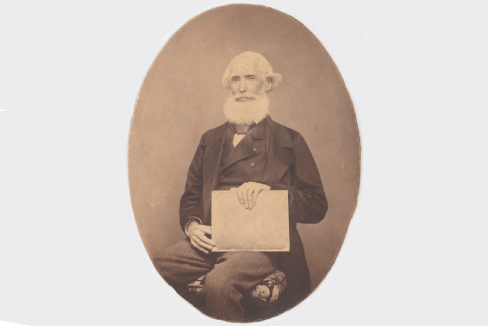
The George Finlay Papers contain materials created by and related to the British Historian and Philhellene George Finlay, his father John Finlay, Greek-American Philhellene George Jarvis, and British Philhellene Captain Frank Abney Hastings, dating from 1791 to 1949. Most of the collection consists of George Finlay’s meticulous records of his travels, personal and official correspondence, his personal expenditures, copious memoranda on strategy and on military and political organisation, journal entries, maps, facetiae, scrapbooks, personal notes on people—Greeks and others—and on revolutionary events, newspaper cuttings mainly on Greece and international affairs, as well as Finlay’s original manuscripts of the History of the Greek Revolution (1861) as well as corrected proofs of Finlay’s other published works.
Also included are the papers of Finlay’s father, John, two journals of Greek American philhellene, George Jarvis, and those of Finlay’s fellow British philhellene, Captain Frank Abney Hastings. The Hastings papers, which Finlay purchased in 1830, include personal and official correspondence, ship’s logs, notes that he took on board or ashore, as well as memoranda on strategy and on the naval organisation of the revolutionary forces. Collectively, these records reveal a great deal about the character, motivations, ideas, as well as the military and political judgements of these British individuals, as well as of many others, both British and Greek, with whom they interacted during the Greek War of Independence as well as many of Finlay's other interests, such as Classical and Byzantine history, natural history and politics.

Miscellaneous items from the Hastings Centenary 1928. Includes a manilla envelope.
Two notebooks of conservation notes for the George Finlay papers.
Black book bound in black plastic with 'Finlay Books' label on front cover. Entries from visitors signing out books from the Finlay Library and the Finlay Papers.
Finding aids by Malcolm Nicholson for the George Finlay catalogue. Arranged by subject, for example, 'Family life,' 'Finlay the Philhellene,' 'Army Career,' 'Finlay the Traveller.'
Offprint of "The Finlay Library" by William Miller
Correspondence and newspaper clippings from Hugh Ferguson on George Finlay, Kirkman Finlay, their family and the family's connection to Glasgow.
Photocopies of 4 letters or copies of one letter from George Finlay to Hodder Westropp, dated 2 March 1871, and of 3 letters from George Finlay to John Evans dated between March and November 1872, The originals are in the John Evans' collection at the Ashmolean Museum.
Letter from Sue Sherratt at the Ashmolean to Amalia Kakissis, Archivist at the British School at Athens, accompanying the copies of the letters.
1 note that A/6 (now FIN/GF/A/06) is missing (17 October 1984). Resolved November 2021.
1 note that FIN/GF/B/06/003 and FIN/GF/B/06/004 are missing (3 November 1987). Resolved November 2021.
Letter from Francis Noel-Baker to Dr E French, Director of the BSA, 22 February 1992. Terms of the loan of correspondence between George Finlay and Edward Noel.
Letter from Penelope Wilson, Deputy Librarian at the BSA, to Professor Joan Hussey, 10 March 1992. Notifies her of the loan of the Noel letters.
Letter from Professor Hussey to Penny (Penelope Wilson), 27 July 1992. Checks the availability of the Noel-Baker letters during her stay in Athens.
Letter from Professor Hussey to Penny Wilson, 6 April 1992. Offers to catalogue the Noel-Baker letters.
Letter from Björn Röe to David Blackman, 10 May 1999. Encloses information on George Finlay's purchases of Turkish land in Attiki.
Frank Stubbings to Jane, 10 July 1954. Encloses copy of a letter from the Lord Lyon, King of Arms, to F. H. Stubbings (15 June 1954). Lyon confirms that Finlay did not have a right to the shield he used.
John Prag, Hon. Professor in the Manchester Museum to Amalia Kakissis, Archivist at the BSA, 7 January 2008. Encloses photocopies of two versions of the catalogue of Finlay's ancient gems and stone implements, as well as assorted correspondence on the collections.
Notes in French. Probably post-1950.
Reply from the College of Arms to an enquiry about Hastings' coat of arms.
Oration at centenary commemoration of Hastings' death.
6 captions for an exhibition on Hastings
Order of Service for the Centenary Commemoration Service for Frank Hastings
Hastings Centenary Celebrations Official programme
Letter on exhibition of Hastings memorabilia from the Historical and Ethnological Society
Letter from Walter Abel Heurtley to Mr Pados, with description of objects relating to Frank Hastings in the British School.
List of Hastings' souvenirs at the Historical and National Museum
Two tickets in Greek to nautical games and demonstrations
Exhibition organised by the Historical and Archaeological Society of Greece and the Ministry of Naval Affairs
Manuscript notes. Miscellaneous, mostly on Byzantine Greece.
The collection contains John Finlay, Frank Hastings and George Jarvis’ personal papers as well as those of George Finlay, although George Finlay’s papers form the bulk of the collection.
The collection includes correspondence, newspaper clippings, commonplace books, catalogues of books, journals, drafts of Finlay’s History of the Greece, a sketchbook, log books, commonplace books and account books. Many of the letters are pasted or copied by Finlay into letter books. These records give an overview of the Greek War of Independence and especially the role of the British philhellenes, as well as many of Finlay's other interests, such as Classical and Byzantine history, natural history and politics. Finlay had a wide range of correspondents, both Greek and British.
The collection also contains the personal papers of Frank Abney Hastings, with Hastings' naval involvement in Greece heavily represented.
Greece was one of the last European countries to adopt the newer Gregorian calendar. For most of the nineteenth century, the Julian calendar was 12 days behind the Gregorian. British correspondents in the Finlay Collection tend to use the newer calendar. Letters with two dates 12 days apart, eg. 24 April / 6 May 1828, refer to both the Julian and Gregorian calendars.
Brown mottle boards, brown calf spine, 'MSS. George Finlay.' pasted on spine, handwritten, bound.
Various different MSS. bound together now numbered 1-22; 1 loose letter 20 June 1821 from Haldane, Glasgow, on the rules of the Institution in Glasgow for the encouragement of the Fine Arts.
(1) Observations on Heeren's Vermischte historische Schriften and Handbuch der Geschichte des europäischen Staatenssystems, written at Göttingen March 1823 (paginated 1-40).
(2) 'Notes written on my first visit to Greece in 1823 and 1824. My journal I wrote was lost and the memoranda I wrote in quarantine at Ancona must be in Glasgow with my cousin John Finlay' (3 sides unpaginated).
(3) Reflections on 'the present revolution in Greece' (42 sides unpaginated).
(4) 'Words composing the Cypher of the Sultan. The Emperor Sultan Mahmoud son of Sultan Mustapha ever victorious' (4 sides unpaginated).
(5) 'Journal of a Tour in Sicily and return through Italy to England 1825' (5 April- 6 July 1825, 36 sides unpaginated).
(6) On the state of Political Naval and Military affairs in Greece, written at Egina July 1827 (26 sides paginated 1-26).
(7) Observations on His Royal Highness Prince Leopold's Resignation of the Sovereignty of Greece by George Finlay Esqr. A note at the beginning runs: 'The following observations . . . are the fruits of a long devotion to the cause of Greece. Egina 12 July 1830' (paginated 1-28).
(8) Four letters. I. To Alex. Mavrocordatos Esqr, Secretary of State for Finance (7 sides). 15/27 June 1833, signed Προμηθεύς.
(9) II. [To the same.] (Seven sides.) Undated, signed Προμηθευς.
(10) III. [To the same]. (Ten sides.) Undated, unsigned.
(11) IV. To the Greek people. (Nine sides.) Undated, signed Prometheus.
(12) A further letter (14 sides). 'My dear Sir', ending 'Adieu' and unsigned.
(13) 'Letter on the State of the Plan of Athens, 28 May 1834. Sent to Messrs D'Eichthal Weissenberg and Masson'; written below is a note from George Finlay to Noel asking for his views on this.
(14) On need for social order in Greece (8 sides loose and paginated in part).
(15) Memorandum on the situation in Greece. Salona, April 1824 (21 sides un paginated).
(16) On the formation of regular troops in Greece. Ancona, 16 November 1826 (9 sides paginated in part).
(17) Printed notice (3 sides) : Institution in Glasgow for the encouragement of the Fine Arts, signed by George Finlay, Secretary, July 1821.
(18) Letter (loose) dated Glasgow, 20 June 1821, to George Finlay from J. Haldane [who became one of the Directors of the British School at Athens] protesting that the principles of management were not sufficiently liberal.
(19) 'On the Progress of Civil Liberty in Modern Europe' (25 sides paginated 1-25). Paper read in the Speculative Society of Glasgow, 26 March 1821.
(20) 'Some Observations on the commercial situation and policy of Great Britain' (24 sides paginated 1-24). Paper read in the Literary and Commercial Society of Glasgow, 18 April 1821.
(21) Notes on Roman Law (paginated 1-33).
(22) Notes on legal topics (6 sides unpaginated).
Mottle covers, red leather spine, enclosed in red cardboard case, paginated, pp. 1-74, some blank, bound.
George Finlay's sketch book, with pencil sketches and engravings pasted in, dated 1825 on inside cover, but dates and places range from Scotland (1820), Sicily (1825), Sardinia (1826), to Greece (1828).
Brown mottle notebook, green leather spine, handwritten, paginated, pp. 1-106, with 4 loose sheets.
Cash memorandum 1826-31.
Brown leather notebook, oblong with clasp, handwritten, book plate, pp. 1-80.
Memorandum Book, 'George Finlay in Egina or Athens
Memorandum Book. address London Messrs Finlay Hodgson & Coy
St Helens Place
Bishopsgate Street'.
This includes 'Journal of a Voyage from Athens to England 12 April to June 1832' [the entry begins on 8 April, see p. 13].
Red leather pocket book, handwritten, pp. 1-60, 61-4 are blank, bound. George Finlay's Journal 6 July-28 September 1832. [Liverpool, London, sea voyage to Athens].
Vellum, handwritten on spine 'June 1829 to April 1832', pp. 1-136+3 loose sheets of jottings.
George Finlay's Journal, 1 June 1829-10 April 1832.
Brown leather, gilt letters on spine 'Journal 3', pp. 1-260 (pp. 214-59 are blank). George Finlay's Journal, 1 January 1833-24 June 1848 [not a continuous diary; there are considerable gaps and pp. 113-15 ( = 28 May 1860) contain 'Anecdotes of George King of the Hellenes'. At the end of the book there is a note on Gordon and Church].
Red leather pocket book, handwritten, paginated, pp. 1-127. 'George Finlay's road book July 11. 1835' on inside cover. Travel notes on various journeys in Greece, scenery and route described and time taken for various parts of the journey noted.
See also FIN/GF/A/19 and George Finlay's notes in his copy of W. Gell, The Itinerary of Greece (now D. 57 in BSA Main Library).
Black-red mottle notebook, black calf spine, gilt lettering on spine 'Journal 1835', handwritten, paginated by George Finlay, pp. 1-296+some blank sheets. Loose, newspaper cutting, advertisement for Sketches of Modern Athens
Indexed by George Finlay thus:
'Statistical Questions. Journal of Expedition under the command of General Gordon against the brigands' (begins July 11, 1835).
Observations on the State of Northern Greece Geographical notes
Journal of a visit to Lioussia On the position of Aphidna
Itinerary of a ride round Hymettus
Letters from General Gordon relating to the Expedition [bound in at end]
(1) Thomas Gordon to George Finlay. Neopatra, 20 September 1835. Requesting lodging and containing news of defeat of robbers at Smochovo.
(2) Charles Soutzos [Suzzo] to George Finlay. Hypata, 15/27 September 1835. Concerning contagious fever in Athens, brigandage, and George Finlay's arrival (in French) .
(3) Thomas Gordon to George Finlay. Zeituni (Lamia), 29 September 1835.Concerning brigandage and theft and state of troops in northern Greece, illness of cousin, and expectation of recall.
(4) H. Robinson to George Finlay. Patras, 3 October 1835. Concerning brigandage and theft at Lidoriki.
(5) Thomas Gordon to George Finlay. Zeituni (Lamia), 4 October 1835. Request for arrangement of lodgings in Athens and a note concerning brigandage.
(6) Thomas Gordon to George Finlay. Livadia, 15 October 1835. Concerning ambush by brigands at Agia Marina. Expected arrival in Athens.
(7) Thomas Gordon to George Finlay. Argos, 23 May 1836. Departure, increase of brigandage in Peloponnese, and corruption in government. Remarks on brigandage in northern Greece.
(8) Thomas Gordon to George Finlay. Cairness, 27 August 1836. Letter introducing Mr. Neeld.
Brown mottle boards, calf spine, 'Journal 1837' on spine in gilt lettering, handwritten, pp. i-iv, 1-124, bound. Includes loose rough map of Amorgos.
Journal of a tour to several islands of the archipelago in August and September 1837. pp. i-iv. Memorandum. Subjects of inquiry in travelling.
pp. 1-76. Diary 14 August-23 September (each side paginated).
pp. 77-100. Inscriptions.
pp. 101-20. Extracts from MSS. in possession of Signor Delenda, British Consul at Santorin, including letter to Delenda (pp. 113-18) dated 17 September 1807 from Capt. John Stewart on behalf of Lord Collingwood to British Consul at Santorin -official notice stating intention of protecting the Cyclades from piracy and helping to restore order to local government.
pp. 121-4. The Greek compass [Greek terms].
6 handwritten, unbound quires. Memoranda relating to travels in Middle East
Memoranda of visits to the Wadi Tomlah and Canal of Suez and to the Fyoum [sic] and Lake Moeris [sic]', January, February 1846, pp. 1-12 and pp. 11 [Fayoum visit]. Loose pages at the end regarding a trip between Smyrna, Cairo and Alexandria in October 1845 as well as 2 pages (undated but possibly 1840) which appear to be written at a separate time and contain notes on Mr D.J. Mc Cauley American Consul at Tripoli which discuss the slave trade from Benghazi which includes Greek vessels which take slaves to Scios (Chios) and Smyrna.
'Cairo to Jerusalem. Jerusalem to Dead Sea and Beyrout', unpaginated, 136 pp.+ some loose.
'Memoranda' [random lists of travel requirements and notes on Egypt and Palestine+relevant bibliography] as well as notes on Syria
'Egypt. The social and political conditions of its inhabitants', pp. 1-41 + pp. 1-4 on the pyramids.
'Topography of Jerusalem', unpaginated, 46 pp.+some blanks; this also contains historical notes on Jerusalem and a hand drawn plan of the city
Resources of Syria'. Notes and observations and George Finlay's comments, unpaginated, 16 pp.
Handwritten, unbound. Miscellaneous notes. Includes a note, possibly by Hussey, indicating that was formerly Item 4 (Archaeological sites in Athens) has been removed to FIN/GF/C/9, and the rest have been renumbered.
Historical Memoir on the different races of mankind who have inhabited Greece in ancient and modern times by G. Finlay, K.R.C., Member of the American Antiquarian Society, and Corresponding Member of the Archaeological Institute at Rome (41 sides large quarto).