

About the George Finlay Papers
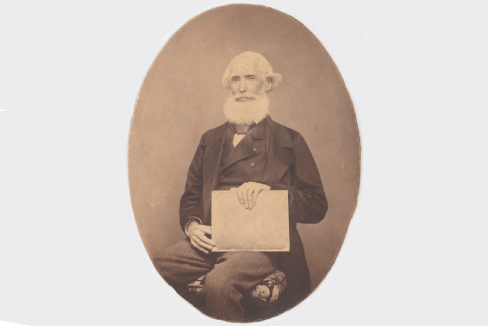
The George Finlay Papers contain materials created by and related to the British Historian and Philhellene George Finlay, his father John Finlay, Greek-American Philhellene George Jarvis, and British Philhellene Captain Frank Abney Hastings, dating from 1791 to 1949. Most of the collection consists of George Finlay’s meticulous records of his travels, personal and official correspondence, his personal expenditures, copious memoranda on strategy and on military and political organisation, journal entries, maps, facetiae, scrapbooks, personal notes on people—Greeks and others—and on revolutionary events, newspaper cuttings mainly on Greece and international affairs, as well as Finlay’s original manuscripts of the History of the Greek Revolution (1861) as well as corrected proofs of Finlay’s other published works.
Also included are the papers of Finlay’s father, John, two journals of Greek American philhellene, George Jarvis, and those of Finlay’s fellow British philhellene, Captain Frank Abney Hastings. The Hastings papers, which Finlay purchased in 1830, include personal and official correspondence, ship’s logs, notes that he took on board or ashore, as well as memoranda on strategy and on the naval organisation of the revolutionary forces. Collectively, these records reveal a great deal about the character, motivations, ideas, as well as the military and political judgements of these British individuals, as well as of many others, both British and Greek, with whom they interacted during the Greek War of Independence as well as many of Finlay's other interests, such as Classical and Byzantine history, natural history and politics.
Letter from H. D. Leeves to George Finlay (undated).
Invitation from M. and Mme. Photiades to Mr. and Mrs. George Finlay (13 September 1862).
Invitation from the Minister of War to George Finlay (15 December 1862).
Invitation to a lecture at the Archaeological Society, 28 May 1869
Miscellaneous Photographs (in envelope)
Ὲσπέρα Πέμπτης. Ο Αστιγξ προς τον τομπαζην

Long black circular tin case. Black tin case containing diploma conferring LL.D. Edinburgh on George Finlay 6 May 1854. In the cap of the cylinder is a red seal, that has subsequently broken into fragments. Around the edges of the seal reads "sigillum com.universit.edinb.sive coll.jac.vi.scot.reg". The diploma has blue ribbon attached to the bottom of it, part of which has torn off.
Loose sheets kept rolled up 62 cm long. Miscellaneous large prints from the Finlay Papers
View of the Great Exhibition Building-coloured lithograph (London, 1851).
The Palace of Westminster (Lithograph).
Portrait of Demetrios Mavromichalis (Lithograph). With an illegible handwritten note in French.
Portrait of ? Queen Amalia (Lithograph).
Ground plan of the actual state of the Temple of Minerva at Athens-by George Knowles 1846. With handwritten note: 'To George Finlay Esqr with GK's compts.'
[Antiquities of] Ionia, Part 3, Chapter 1, Plate II-the ancient city of Cnidus (from a sketch by Sir William Gell, etching by W. J. Cooke).
[Antiquities of] Ionia, Part 3, Chapter 1, Plate III-view taken from the upper theatre at Cnidus (etched by W. J. Cooke).
Document-'zur Erinnerung an die Wiedergeburt HELLAS und die Thronbesteigung Königs OTTO I'.
'HULDIGUNG an Seine Majestat Otto den Ersten ...von M. G. Saphir' (with portrait of Otho).
Notices of awards, visiting cards, letter
12 Visiting cards + 14 loose press cuttings.
Diploma of Membership of lnstituto di Corrispondenza Archeologica Roma (4 March 1838) (in Italian).
Notice of award of Croix d'Or for services rendered to Greece 'en votre qualité de Philhellène' by the King (Athens 3/15 June 1837) (in French).
Notice of award of Silver Cross for military service during the War of Revolution (Athens 14/26 February 1836) (in Greek).
Letter from the Ephor of the National Library and the Numismatic Museum of Greece thanking George Finlay for copy of B. Brue's journal on the campaign of Ali Pacha (Athens 21 March 1870) (in Greek).
Loose cuttings. Miscellaneous newspaper cuttings (mostly from The Times, 1852, 1854, 1856).
Green mottle boards, faded navy cloth spine, paginated, pp.1- 186, bound.
Newspaper cuttings pasted in+some loose more or less arranged under subjects but not indexed by George Finlay.
England, mostly reviews of historical works from The Times in the 60s.
Ireland, Canada, India.
Biographical works and obituary notices, e.g. Joseph Hume 1855, Sir James Brooke 1868.
Parliamentary reforms 1852, 1859, 1967 (Globe, The Times).
Alabama question (The Times).
Abyssinia, 1867, 1868.
See also FIN/GF/A/12/5 [R. 8.35] Modern Scraps.
Loose cuttings. Press cuttings (loose) relative to the Abyssinian campaign of 1867, affairs in Europe and Napoleon III. Also a written list.
Loose cuttings. Miscellaneous collection of press cuttings, dating from 1845 to 1873, covering a wide range, e.g. Scottish affairs, the Nile, the Navy, etc. Also 3 handwritten notes and 1 bill.
Black, worn black calf spine, printed book.
G. Finlay, The Communications between Europe and India through Egypt, considered in relation to the political and commercial interests of Great Britain and the policy of France (London, Smith Elder and Co., 65 Cornhill, 1846), pp. 1-73.
And some loose newspaper cuttings and handwritten jottings.
Vellum covers, broken spine, paginated, pp. 1-63+ 1-67, bound.
Commonplace Book
Poetical quotations at one end, some handwritten; some cuttings pasted in; some loose sheets with George Finlay's jottings+ loose press cuttings.
Extracts at the other end, including newspaper cuttings, anecdotes, etc., and material relating to Bentham.
First entry date January 1829 and the last 1874.
Rubbed purple mottle boards, worn leather spine and corners, 'Journal' on spine, bookplate inside cover 'John Finlay', with coat of arms and motto 'I'll be wary'. 'For Mrs MacGregor's Album' written on p. 2, paginated, pp. 1-210.
Commonplace Book
Excerpts pasted up (a kind of Readers' Digest containing information, pictures, poems, amusing anecdotes, some political pieces) ; the dates range from 1819, 1823, 1824, to 1825.
Rubbed green mottle boards, worn leather spine and corners, 'Journal' on spine, bound, paginated, pp. 1-223.
Commonplace Book
(As FIN/GF/A/31.)
Pasted on first leaf:
'Prize little things: nor think it ill / That men small things preserve.'
Green cloth. 'George Finlay' in gilt lettering on front cover, leather spine (now broken), bound and paginated, pp. 1-160.
A scrapbook containing inter alia:
(1) lithographs of buildings, scenes, and personages ranging from Scotland to the Tartars and Mehemet Ali
(2) cartoons from Punch
political lampoons
(3) a few water-colours
(4) stamps 7 Victorian 1 German 6 French + 1 torn French
(5) lithograph of Finlay on first flyleaf (portrait of Finlay as a young man)
(6) dinner invitations to George Finlay from Artin Bey on behalf of the Viceroy, Cairo, 26 October and 19 December 1848.
Green leather boards, gilt lettering 'CATALOGUE' on both spine and front cover, paginated by George Finlay as far as used ( = pp. 1-109), handwritten, bound.
'Catalogue of Books belonging to George Finlay, Athens, 1 January 1848' [arranged alphabetically].
Blue mottle board, brown leather spine and corners, on spine gilt lettering 'Catalogue of books', on front cover 'Catalogue of Books and Maps comprising the library of George Finlay', bound, handwritten, paginated 1-140 (pages written recto and verso).
Stuck inside front copy is a sheet headed: 'Books lent and not returned. I have forgotten to whom I lent them.'
Listed by George Finlay on recto of front flyleaf.
George Finlay's note:
Catalogue of Books and Maps belonging to George Finlay Athens Jany 1865 'That of which a man may be actually certain amounts to very little'.
Books in various languages, alphabetical order
in Modern Greek
Maps and Plans
Numismatic works
Newspapers
Pamphlets on Greece and Greek affairs
Pamphlets on the affairs of Turkey, Crete and Greece
Modern Greek books
Archaeological works
Prehistoric archaeology in Cabinet
Books of extreme rarity
Brown mottle boards, black leather spine and corners, bound, paginated per page (1-162) but often written recto and verso, handwritten, bound.
Catalogue of Books and Maps belonging to George Finlay, Athens, January 1865.
This appears to be a copy (not in George Finlay's hand) of FIN/GF/A/35 [S. 9.13(b)]. Though not an entirely exact copy, it gives each item as in FIN/GF/A/35.
Entry in front flysheet:
'NB. Many of the books in this catalogue, especially those relating to Greece, have valuable additions inserted.
Catalogue of Books and Maps belonging to George Finlay. Athens. Jan. 1865.'
This is followed by a list of contents, see FIN/GF/A/35 [S. 9.13(b)].
Two quarto typewritten obituary notices of George Finlay from The Times, 2 February and 8 February 1875. 2 pp; 3 pp
Blue cloth, printed.
(1) Sermon occasioned by the lamented death of the late Kirkman Finlay Esq. of Castle Toward [George Finlay's uncle], preached in Toward Chapel on Sabbath, 13 March 1842 by M. A. Mackay, Minister of Dunoon and Kilmun (Glasgow, John Smith and Son, 1842, pp. 1-40).
(2) Report of a public meeting held in Glasgow on 7 December 1842, at which it was resolved to erect a statue to the memory of the late Kirkman Finlay, Esq., of Castle Toward, Glasgow: printed in the Herald Office, pp. 1-20.
(3) loose press cuttings on various Finlays, e.g. 27 May 1873. 78th Foot. Capt. and Brevet Major John Finlay retires from the service, receiving the value of his commission.
Blue paper folder.
Press cuttings from Glasgow Herald, 10 August 1918 and 17 August 1918, and two letters from Alan Wace, 1 September 1918 and 30 September 1918. Wace refers to his letter of 8 August 1918 in The Times Literary Supplement proposing to delete Kirkman Finlay philhellene from the Dictionary of National Biography.
See FIN/A/38 [Q. 9.23] sermon on death of Kirkman Finlay of Castle Toward.
Offprint from Church Quarterly Review, 126 (1938), 68-82, presented by the author, William Miller; Article IV, 'The Centenary of the English Church in Athens'..
Printed pamphlet, pp. 1-27.
Funeral Orations pronounced at the Greek cemetery of Athens on 15/27 March 1873, over the tomb of the late General Sir Richard Church by the Hon. P. Chalkiopoulos, Minister of Justice, and Mr John Gennadius, Secretary of the Legation. Athens, Press of the Journal of Debates, 1873.
[Chalkiopoulos's oration was pronounced in Greek but is given here in an English translation by Gennadius.]
Dark-brown, gilt lettering on spine 'Col. Leake, Life and Correspondence', printed and handwritten, bound in a single volume.
(a) and (b) Two letters to George Finlay from J. H. Marsden pasted on front flyleaves, 9 February and 19 March 1864.
(c) A letter to his Grace the Duke of Devonshire, LL.D., F.R.S., Chancellor of the University of Cambridge [printed for private circulation], 18 September 1863, from 'A member of the Senate' [J. Hill], pp. 1-15 [on Leake].
(d) J. H. Marsden, A brief Memoir of the life and writings of the late Lieutenant-Colonel William Martin Leake D.C.L., F.R.S., etc., etc. (London, 1864). For private circulation only, pages 1-43 (printed).
(e) Typed copy (loose) of 'Finlay's letter to Leake sent by the latter to the Times' and printed on 3 December 1833 under the heading of Greece (it was on the proposed plans for the excavation of Athens). [This copy was sent on 24 February 1926 by R. Deakin to W. Miller, British Chamber of Commerce, Athens.]
(f) A considerable number of letters are bound up at the end of this volume. Unless otherwise stated they are from W. M. Leake to George Finlay.
(1) W. M. Leake to George Finlay. Nottingham Place, 6 August 1830. Mentions corrections to his map from George Finlay's information and remarks on ancient sites. Encloses prospectus for the Society for the Promotion of Geography. 4 pp.
(2) Near Ware, 8 September 1831. Remarks on the survey of Euboea, and his own travels in northern Greece. 3 pp.
(3) Nottingham Place, 11 April 1833. Discussion of ancient sites. Comment on the present situation in Greece. 4 pp.
(4) Nottingham Place, 1 January 1834. Plan for excavation of Athens and George Finlay's comment sent by Leake to The Times. The contemporary situation. Ancient place-names. The political situation in England. 4 pp.
(5) Nottingham Place, 3 March 1835. Lack of interest in England in the plans for the excavation of Athens. The con temporary situation and shortsightedness in refusing to allow copies of inscriptions. Comments on ancient sites and the boundaries of the kingdom. 4 pp.
(6) Colchester, 23 June 1835. Introducing Mr. Hamilton. Archaeological topography particularly in Aegina. Queries regarding sites. 4 pp.
(7) Nottingham Place, 30 October 1835. Comment on inscriptions and ancient topography. Discussion of the northern boundaries of Greece and the general situation in the Middle East. 4 pp.
(8) Nottingham Place, 29 January 1836. Topographical discussion on northern Greece. Lack of agricultural progress in modern Greece. 3 pp.
(9) Nottingham Place, 15 August 1836. Discussion of the topography of Aphidna. Flints and the inscriptions in Pittakys's book. The Greek political situation. 3 pp.
(10) 25 Nottingham Place, 25 November 1836. Thanks George Finlay for his pamphlets on banking, Argos, and the Hellenic Kingdom. English ignorance of the affairs of modern Greece. Approval of George Finlay's writings from the Chronicle. Discussion of George Finlay's paper on Aphidna. Thanks him for information on the six demes round Hymettus. Request for a map of Attica and a plan of Athens. Slavery in ancient Attica. 4 pp.
(11) Nottingham Place, 24 February 1837. Thanks George Finlay for the journal of his late tour. The political situation in Greece. Disapproval of the king's policy. Discussion of the sites and local divisions of ancient Attica. Remarks on Phaleron, Alimous, and the Vari Cave. Request for a copy of Ross's inscriptions. 4 pp.
(12) Nottingham Place, 26 April 1837. Discusses possibilities of publishing George Finlay's topographical work on Attica. Comments on inscriptions mentioned in George Finlay's work. Queries on the altitude of Athos, the mountains of Attica, and on George Finlay's essay 'The Battle of Marathon'. Comment on Pashley's book on Crete. Criticism on Armansperg's proceedings in the matter of the loan. Desire for English support for the liberal party in Greece. 3 pp.
(13) 26 Nottingham Place, 29 May 1837. Announcement to 'our Society' of George Finlay's unpublished inscriptions. Topographical observations on Rafina. Comments on the Long Walls found by Ross, and the inscriptions between Stavros and Charvati. Comments on various opinions as to the ancient roads of Attica. Criticism of Bulwer's History of Athens. Approval of George Finlay's agricultural efforts. 4 pp.
(14) Nottingham Place, 31 July 1837. Thanks for Pittakys's plan of Athens. Reference to George Finlay's essay on the battle of Marathon. Comment on L's plan of Athens. British indifference concerning Greece. 3 pp.
(15) Near Ware, 24 September 1837. Thanks for receipt of George Finlay's work on Amphiareion. Recommends appending it to George Finlay's essay on the battle of Marathon with addition offurther maps. Topographical comments on Amphiareion. Asks for a more complete plan of the Acropolis area. The news about Prytaneion and choregic monument. 3 pp.
(16) Nottingham Place, 27 December 1837. Hopes for publication of George Finlay's essay on the battle of Marathon. Requests a new plan of Athens, especially of Propylaea and the temple of Victory. Discusses the Prytaneion and the choregic monument. Thanks for copy of inscriptions from Euboea and other islands. Hopes that Boeckh will collect all Attic inscriptions in a corpus. Asks for information on the monument of Rome and Augustus, the western entrance of Acropolis, and Erechtheion. Refers to Greece and the western powers. 4 pp.
(17) Nottingham Place, 30 August 1838. Approves General Gordon's views on mount Callidromos. George Finlay's work on the battle of Marathon, Aphidna, Amphiareion about to be printed. Thanks for map of the Propylaea. News on Agrippa's pedestal and Phaleron Bay. Request to have a plan of the southern Long Walls, of Piraeus and Phaleron, and better map of Attica for his topography. Remarks on politics. 3 pp.
(18) 50 Queen Anne Street, 17 August 1839. Intends to visit Athens. George Finlay's two papers have been published by the R.S. of Literature. Hopes soon for a second edition of his own Topography of Athens and the demes. Requests a better map of Attica. More optimistic than George Finlay concerning future of Greece. Regrets failure to establish a bank in Athens as advocated by George Finlay. Discusses effect of political situation (England, Russia, Turkey) on the Greek position. 4 pp.
(19) 50 Queen Anne Street, 20 January 1840. Thanks for receipt of Aldenhoven's map and pamphlet on Diakria and Oropia. The new edition of his Topography of Athens to be printed in 2 volumes. Questions regarding plan of Athens, temple of Rome and Augustus, and position of temple of Aphrodite. Seeks information on new discoveries at Erechtheion and new plan of Acropolis. Requests further information on Pnyx, lion of Exomites, horse of Vari, and site of Merenda. Criticism of English policy towards Turkey. Is willing to contribute financially towards construction of the Greek University, but asks George Finlay's opinion. 4 pp.
(20) L. Ross to George Finlay. Athens, 20 March 1840. Answer to L's queries about Ross's plan of the Acropolis. Refers to temple of Rome and Augustus, Erechtheion, and temple of Victory. Desire to see L's topography of Attica. Preparation of the description of Acropolis by 'cet Anonymus Viennois' in Wiener Jahrbücher referring to temple of Artemis Brauronia. Insistence on the existence of temple of Ares (in French). 2 pp.
(21) W. M. Leake to George Finlay. 50 Queen Anne Street, 14 April 1840. Discusses his statement in first edition of his Topography on position of temple of Rome. Queries re inscription on Hadrian's Arch. Receipt of Ross's report in Wiener Jahrbücher on description of Acropolis by 'Anonymus' of Vienna. Doubt about the position of temple of Ares. Assumption regarding Theseion. Desires to find more inscriptions. English government's indifference concerning Greece. Reference to publication of George Finlay's 'memoir'. Remarks on statue of 'the sheep of Kochla' and inscription of temple of Augustus (Boeckh, no. 478). 5 pp.
(22) Richmond, Surrey, 16 July 1840. Satisfaction at Pennethorne's observations on north side of Parthenon in relation to height of Acropolis. Remarks on aesthetic aspects of Parthenon. Comment on temple of Rome and Augustus. 3 pp.
(23) E. Braun to George Finlay. Rome, 10 June 1870. Letter of introduction on behalf of architect Richter. 1 p.
(24) W. M. Leake to George Finlay. Ramsgate, 2 November 1840. Announces death of K. O. Muller. He has finished printing of second edition of his Topography of Athens and is preparing his Demes of Attica. Refers to topography and inscriptions relative to Attic demes. Wishes to purchase coins offered by Dragoumis. Request for information regarding Piraeus and theatre and stadion of Munychia. Remarks on Syria and Mehemet Ali. 4 pp.
(25) Queen Anne Street, 30 May 1841. Advice on assistance for Crete. Subject raised in Parliament, but English government remains indifferent. Hope for future English intervention on lines of resolution of conference of London 20 February 1830. Necessity for Allied intervention to secure more humane treatment by Turks. Comments on travel books on Egypt and Syria. Regret at General Gordon's death. 4 pp.
(26) Queen Anne Street, 21 May 1841. His own efforts on behalf of Crete. Submission of paper to Palmerston putting case for Crete with translation of Cretan proclamation; necessity for measures to help Crete in accordance with resolution of the Conference of London (1830). Regret at Greek political situation. 4 pp.
(27) Queen Anne Street, 5 June 1841. Satisfaction at Palmerston's promise to intervene with Turkey on behalf of Greek population of Crete but Palmerston disclaims knowledge of allied resolution of 20 February 1830. Cretans should be recommended to maintain their present attitude until they have written pledge to secure their future. 4 pp.
(28) 7 July 1842. Encourages George Finlay's plan to write on modern Greece. 3 pp.
(29) Queen Anne Street, 14 August 1842. Announces dispatch of parcel with copies of his own papers. George Finlay's unpublished inscription will be presented to the Society [Royal Society for Literature]. 2 pp.
(30) Tunbridge Wells, 25 July 1842. Hopes letter will reach George Finlay before he leaves for Scotland. Asks to borrow George Finlay's copy of Thiersch's 'Tzakonika'. Comments on George Finlay's information about columns of Heraion of Argos. Remarks on topography of Asterion. 4 pp.
(31) Tunbridge Wells, 5 August 1842. Has sent George Finlay a copy of the Transactions [of the Royal Society for Literature] containing George Finlay's papers; his own work on unpublished inscriptions is in the press. Comment on W. J. Hamilton's Researches in Asia Minor [signature cut from letter]. 3 pp.
(32) Tunbridge Wells, 10 September 1842. Addition of Peloponnesiaca as supplement to Travels in the Morea. Additions to map of Laconia. 3 pp.
(33) George Finlay to W. M. Leake. 7 East Circus Place, Edinburgh, 14 September 1842. Dispatch of Thiersch's book to L. Undertaking to send notes on Laconia and maps of Roman period. 4 pp.
(34) W. M. Leake to George Finlay. Tunbridge Wells, 16 September 1842. Thanks George Finlay for loan of Thiersch's book. 2 pp.
(35) Tunbridge Wells, 24 October 1842. Remarks on Thiersch's book lent him by George Finlay. 2 pp.
(36) [29 Regency Square], Brighton, 29 January 1843. Regret at Greek political situation. Query on inscription said to have been found at temple of Athena on Aegina. 4 pp.
(37) Queen Anne Street, 18 February 1843. Dispatch of copies of his books Journal of a Tour in Asia Minor and Outline of the Greek Revolution. Remarks on Ulrichs' work on Piraeus and Long Walls, on temple of Ocha (?) in Euboea, and on Delphic inscriptions. Comments on Greek political situation. 4 pp.
(38) Queen Anne Street, 13 December 1843. Thanks for gift of George Finlay's work on Greece under the Romans. Remarks on political situation in Greece. Discussion of inscriptions from Delphi sent to W. J. Hamilton. 3 pp.
(39) Queen Anne Street, 5 January 1844. Thanks to George Finlay and Pittakys for copies of [Greek] Archaeological Journal containing L's inscriptions. England now more interested in Greek political situation. Expression of doubt about payment of Greek debt. 3 pp.
(40) Queen Anne Street, 6 March 1844. Discussion of inscriptions. His desire to assist Athenian University. Remarks on friezes of Magnesia on Maeander and on Lycian friezes. 3 pp.
(41) Queen Anne Street, 15 May 1844. Discusses difficulty of obtaining his Topography of Athens in Greece. Efforts of Greeks in London to form society for education of Greeks in England, with assistance of philhellenes and of Greek merchants. English political situation. 4 pp.
(42) Ponwell, Isle of Wight, 22 August 1846. To introduce his nephew George Middleton who is touring Egypt and the Holy Land, a journey recently made by George Finlay. He sends 'a pamphlet' on Greek affairs, and his Peloponnesiaca. 4 pp.
(43) Sandgate, 26 August 1846. Comments on George Finlay's travels in Egypt, Syria, Holy Lands. Topographical and historical discussion of Holy Sepulchre. Mention of Penrose's visit to Athens to study its monuments. Thanks for dispatch of Tzakonian grammar. Difficulty in arranging for sale of his books in Athens. A new ministry in England and 'the inevitable Palmerston'. Is glad that George Finlay has not abandoned Greece under the Byzantines. Hopes to see Halicarnassus marbles. 7 pp.
(44) Queen Anne Street, 1 December 1847. On the misgovernment of Greece. Remarks on Hughes' map in his [L's] Peloponnesiaca. Satisfaction at George Finlay's undertaking a history of Greece in the Middle Ages. Agreement as to importance of Slav conquest. Comments on German historiography. Discussion of Egyptian antiquities and of ancient utensils found at Marathon, Liossia, etc. Remarks on feasibility of ship canal at Suez. Comments on Palmerston and English political situation. 7 pp.
(45) Queen Anne Street, 3 July 1848. re possibility of printing George Finlay's 'paper' by the R.S. of Literature. Insecurity of Attica prevents visit to ancient sites. Criticism of English policy towards Greece. Middleton's travels in Egypt, Syria, and Palestine. Comments on Thiersch's paper on vase-handles found in Athens. 4 pp.
(46) Leamington, 19 October 1849. Sends copies of his papers on Syracuse and inscriptions on coins. Comments on Russia's policy towards Turkey. 2 pp.
(47) 50 Queen Anne Street, 16 February 1850. Remarks on English policy concerning the annexation of two islands [Sapienza and Cervi] by Ionian Septinsular Republic. Misinterpretation of the terms of treaty of 1800. Russian policy towards Ionian Islands. Concern at internal situation of Greece. 4 pp.
(48) 50 Queen Anne Street, 6 March 1850. Reference to the Blue Book with all papers relating to Ionian Islands. Mention of his own letters to Daily News on Russian misinterpretation of treaty of 1800. Suggests giving publicity in Athens to his letters if George Finlay thinks this desirable. Can government extricate itself without throwing Palmerston overboard which would be 'a good riddance'? 4 pp.
(49) Queen Anne Street, 19 March 1850. Regrets England's 'hypocritical interference' in affairs of Greece. Flattered by dedication to be made by George Finlay in his proposed history and hopes he will touch on 'recent history, of which something may be added to the Thucydidean history of Gordon'. Sir J. Hobhouse shares his views on Greece but has been 'bribed to silence' and follows Palmerston. Answer to George Finlay's question on the value of Byzantine money. Criticism of Grote's history and doubt about the accuracy of his information. Comment on ancient arrowheads. 4 pp.
(50) 21 March 1850. Palmerston's arbitrary reply to Glarakis's letter. Blue Book's reference to incident at Piraeus and Ionian claims. Hopes that George Finlay's claim will be paid in full. Don Pacifico's claims are at present unreasonable. 4 pp.
(51) Queen Anne Street, 12 May 1850. Refers to editorial criticism of George Finlay's claims in The Times. But supplement to Blue Book supports him. Criticism of Palmerston's conduct in Don Pacifico affair. Inquires whether casts of the western frieze of the Parthenon are still for disposal and discusses whether they could be deposited in Manchester. 4 pp.
(52) C. Hansen to George Finlay. Athens, 11/23June 1850. He agrees to sell the casts of western frieze of the Parthenon to L. 1 p.
(53) W. M. Leake to George Finlay. Catherington, Hants, 15 September 1850. Anxiety about the transference of the Parthenon casts to Manchester after Hansen's departure from Athens. Caustic analysis of Palmerston's handling of Don Pacifico affair. Last three volumes of Grote 'far preferable to the preceding ones', though L from first-hand knowledge will take issue with Grote on various points, e.g. topography of Navarino. 4 pp.
(54) Leamington, 24 October 1850. Discussion of his 'new mode of illustrating numismatics'. Announces George Finlay's election as honorary member of Royal Society of Literature. 4 pp.
(55) Worthing, 22 November 1850. Modifications in exhibition of casts of western frieze of the Parthenon in museum at Manchester. Discussion on internal situation of Greece. Difficult relations between Greek and Turkish population. L thinks that Ionian islands other than Corfu should be handed over to Greece. Praises Mure's book and thinks it time that the German school of Greek criticism should be overthrown. L's views on composition of the Iliad and on battle of Pharsala. Comments on Don Pacifico who has 'been in England incog.'. L is cataloguing his Greek coins 'in such a manner as to show the value of monumental history'. 5 pp.
(56) Worthing, 6 January 1851. On prices and purchases of Athenian coins. Deplores misgovernment in Greece as described by George Finlay. 4 pp.
(57) Queen Anne Street, 28 February 1851. Acknowledges receipt of the Philopatris. He proposes to send George Finlay his pamphlet entitled 'Greece at the end of 23 years protection'. Tricoupi objects to L's contention (based on George Finlay's information) that the land of Greece is now less productive than it was before the war. Comments on Greek economic situation. Asks for exact weight in grains of Troy of the 'decadrachmon of Athens'. In England 'the Whigs are defunct as a party'. The Crystal Palace. 4 pp.
(58) Glarakis to W. M. Leake. Athens, 5 June 1851. Circular of Greek Archaeological Society to European scholars referring to need of research on ancient Athens and publication of inscriptions related to the ancient Bouleuterion. 2 pp.
(59) W. M. Leake to George Finlay. Queen Anne Street, 27 June 1851.
Greets George Finlay's arrival in England and is glad that his work on medieval Greece is so far advanced. Inquires whether George Finlay intends visiting London and 'the wonders of the Hyalodomus'. 3 pp.
(60) 10 July 1851. L has just received a letter from Glarakis of the Archaeological Society at Athens on recent discoveries of inscriptions, some of which refer to Bouleuterion. These inscriptions were reported by Pittakys, Khoraemis and Eustratiades. 3 pp.
(61) 50 Queen Anne Street, 14July 1851. L has forwarded George Finlay's paper to the Athenaeum and awaits its publication. Notes that George Finlay intends to be in town by the 20th. 2 pp.
(62) Queen Anne Street, 1 July 1853. The crisis in Levantine affairs. Criticism of Palmerston and Lord John Russell. L's suggested policy towards Turkey. Observations on Erechtheum and on Olympieum. Reference to favourable English reviews of George Finlay's work. L has been cataloguing his collection of Greek coins. Criticism of Grote whose twelfth (and last) volume is now announced. 4 pp.
(63) Teddington, 14 September 1853. Hopes to meet George Finlay before he leaves England and invites him to stay. 2 pp.
(64) Teddington, 24 September [1853]. Invitation to George Finlay to spend the night with L. 1 p.
(65) Teddington, [September 1853]. L sends copies of his paper on Pharsala to George Finlay to take to Athens. 1 p.
(66) Teddington, 26 September 1853. L sends times of trains to Hampton Court. 2 pp.
(67) Tunbridge Wells, 7 November 1853. Analysis of English foreign policy; deplores russophobia which has meant English indifference to the fate of Christian population of Turkey. 'Fortunately our affairs are now in the hands of Ab[erdeen] and Cl[arendon] instead of R[ussell] and P[almerston].' George Finlay's 'last work' commended as filling gaps in Gibbon's History. L's catalogue of coins not yet completed. Critical remarks regarding Greece's claims on Constantinople 'as their capital of state comprehending European Turkey'. 4 pp.
(68) Queen Anne Street, 17 April 1854. Criticizes Russell's view that insurrection was to be attributed entirely to Greek government. Bad frontier given to Greek kingdom inevitably caused trouble. 4 pp.
(69) Martin Leake to George Finlay. 50 Queen Anne Street, 4 June 1854.
Sends message from Col. Leake saying that Mr. Hamilton will be pleased to meet George Finlay 'here' at dinner. 1 p.
(70) W. M. Leake to George Finlay. 50 Queen Anne Street, 13 June 1854. Criticism of British neglect of Greek cause. Publication of Blue Book purposely postponed. English indifference towards persecutions of Greeks in Constantinople and eastern and western Greece. British failure to intervene to stop Albanian cruelties. Professor Felton's sound views in condemning Lord Stratford's vicious boundary line as basic cause of Greek insurrection; his report on the progress of the Greek nation. Folly of trying to bolster up Ottoman Empire. Regrets that George Finlay has not been able to visit him. Has kept almost all George Finlay's letters, though he usually burns his private correspondence.
(71) 50 Queen Anne Street, 24 July 1854. Congratulates George Finlay on his second volume on Byzantine Greece. Discusses the problem of co-existence of Greeks and Turks in Greece itself and outside. Difficulties caused by Albanians. Regrets that the Russians did not beat Turks and advance to Adrianople before our army arrived. 4 pp.
(72) Tunbridge Wells, 29 November 1854. Acquisition of coins not in L's catalogue. Criticism of pro-Turkish policy of English ambassador. Criticism of Crimea expedition. Sebastopol siege a political failure. Change in Turkish attitude towards Greeks in Constantinople essential. 4 pp.
(73) 50 Queen Anne Street, 25 April 1855. Desirability of reform of Greek army by English in Athens. Bitter criticism of conduct of Crimean war. Discussion of a coin of Termessus in the B.M. 4 pp.
(74) 50 Queen Anne Street, 10 May 1856. Acknowledges receipt of two volumes of inscriptions from Mr. Rangabe of Athens. Unfortunately both copies of second volume, or is one copy meant for Royal Society of Literature? Comments on outcome of war, 'the Greek kingdom is the great difficulty'. 4 pp.
(75) Dover, 25 November 1857. Apologizes for delay in reply, has been engaged in enlightening public on 'the abominable conduct of the Ministry in the War Department . . . infinitely worse since Lord Palmerston became Premier'. [L is referring to disasters in India.] Harbour-works in Dover. Rumania's new government. L's view that 'our old India' is 'lost for ever'. Comments on George Finlay's information on the discovery of shells in Odeion of Herodes Atticus. L notes that George Finlay is preparing his record of Greek revolution. 4 pp.
. (76) Brighton, 24 December 1858. L is sorry to hear of George Finlay's illness. He asks further information about Gladstone's visit to Athens. Important that Gladstone should visit Mycenae. L's conviction that Trojan war 'was a reality and the Iliad a historical poem. What are all the dreams of the Germans in the face of monumental proofS?' L lists his publications which should have reached George Finlay, but fears that 'the wonders of the Electric Telegraph have damaged the accuracy of the Post Office'. L hears that Greece is still misgoverned in spite of some improvement and deplores a government of England worse than that of Greece as a result of 'the fatal combination of a female reign, a senseless consort, and a wicked minister'. Should anything be retained in Asia beyond the three Presidencies? L asks George Finlay's opinion on his identification of Skopelos with Halonnesos and Khilidromia with Peparethus, as proposed in his Travels and Numismatics. 4 pp.
(77) 50 Queen Anne Street, 23 February 1859. Thanks George Finlay for two coins. L's catalogue of about 2,000 coins is nearly complete. Request for information on coin of Arcesirte. L considers British policy towards the Greeks to have been hostile and pro-Turkish and cites instances. Does not understand Gladstone's mission but hopes that he has 'some ulterior object charitable to the Greek nation beyond that which he stated to you . . .'. English policy towards Ionian Islands. England has no right to impose a constitution on the Septinsular state. 3 pp.
(78) 50 Queen Anne Street, London, 22 January 1859. Lists titles of L's political books. Ironical comments on Gladstone's mission in Greece, and criticism of British policy towards Greece since independence. L's approval of union of Ionian Islands other than Corfu with Greece. Discussion of coins of Peparethus and Pallene. Criticism of Clark's rejection of identification of treasuries of Mycenae in his Peloponnesus. 5 pp.
(79) 57 Upper Brunswick Place, Brighton, 13 December 1859. L sends George Finlay his Numismata Hellenica. L has exchanged this with Tricoupi for his History of the Greek Revolution. Hope that discussion in House of Commons re the Sultan's policy will be advantageous to Greece. 4 pp.
(80) G. Middleton (L's nephew) to George Finlay. 25 Maddox Street, Regent Street, 11 January 1860. Announcement of his uncle Col. L's death on 6 January 1860 from chill followed by paralytic seizure from which he did not recover consciousness. 4 pp.
(81) S. Tricoupis to George Finlay. London, 28/29 February 1860. T sends George Finlay books as requested. He praises L as 'an ardent Philhellene'. 2 pp.
(82) Mrs. Martin Leake to George Finlay. Brighton, 16 February 1860. Thanks George Finlay for his condolences and asks whether he wishes to receive back his correspondence with her husband. She intends to sell L's coins and vases to the Fitzwilliam Museum and hopes to write a memoir of him. 4 pp.
(83) Mrs. Martin Leake to George Finlay. 9 Queen Anne Street, London, 7 February 1861. Refers to errors in obituary notices of L. Anxiety about disposal of L's books, coins, etc. under terms of his will, 'the universities being so poor'. Hopes to see George Finlay when he visits London in early summer. 4 pp.
(g) Obituary of W. M. Leake in Greek (pages 1-3 by K. Phrearites). Translation of an address to Royal Society, London. See also Section B for further correspondence with Leake.
Two letters, from archives of Kallas family of Corfu and presented by Pericles Kallas, 12 September 1949.
William M. Leake to Plato Petrides, 54 Charlotte Street, Portland Place, London. 4 February n.y. Sends P a copy of his reply in Classical Journal to the Revd. Blomfield's criticism of his book in Quarterly Review. Request for geographical information on Corfu, Paxos, and Ste Maura. L's remarks on Korais and problems of modern Greek.
William M. Leake, Thorpe, to P. Petrides. Friday morning, 23 September n.y. Remarks re topography of Peloponnese coast opposite Zante. Request for information about districts of Oleva and Nalla, and the villages of Mount Olovos and about a tablet found at Olympia which speaks of a people (the ΕΥΦΑΘΙΟΙ) who must have been a tribe.
News clipping on 'The State of the Continent', no date. Probably found loose in one of George Finlay's books.
News clipping on 'Lord Broughton's Italy', no date. Probably found loose in one of George Finlay's books.
News clipping on John Ruskin's Stones of Venice, Vol II, The Times, 24 September, 1853. Probably found loose in one of George Finlay's books.
News clipping on 'Wine of the Ancients,' The Athenaeum. Probably found loose in one of George Finlay's books.
Clipping on 'The Periclean age of Grecian Decorative Art' and 'The History of Ecclesiastical Architecture in England,' The Builder, 10 March, 1849. Probably found loose in one of George Finlay's books.