

About the 1936 Exhibition Collection
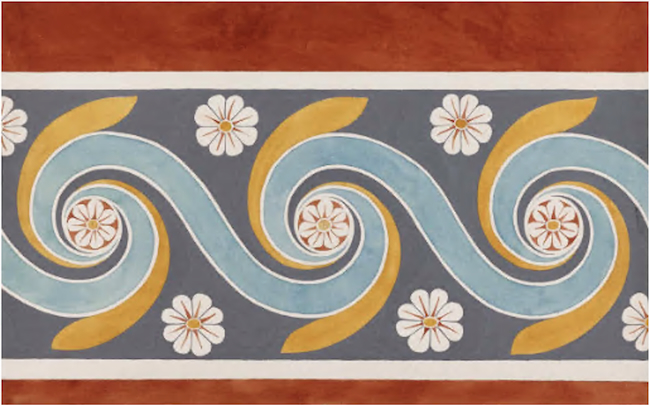
The British School at Athens celebrated its 50th anniversary in 1936 with a large public exhibition at Burlington House at the Royal Academy of Arts in London. The exhibition, British Archaeological Discoveries in Greece and Crete 1886-1936, consisted of a special display of Minoan culture related to the discoveries at Knossos by Sir Arthur Evans as well as the excavations of the School including: Phylakopi, Kamares Cave, Palaikastro, Mycenae, Sparta, Perachora, Thessaly, Macedonia, Lesbos, Cyprus, Ithaca, and Megalopolis (Arcadia). It also included displays of Travels and Studies in Greece and Asia Minor, the Genose in the Levant, Monasteries in Athos, Byzantine Music, Byzantine Architecture and Decorative Arts, Greek Island Embroideries, Special Studies of Greek Pottery and Sculpture, Restoration of Ancient Monuments, Studies of Modern Greek Life and the School buildings and officers.
Since original ancient artifacts could not be transported to the exhibition in London, the displays consisted of replicas of ancient artifacts, modern ethnographic artifacts and illustrative panels with original watercolour drawings, many of which were done by Émile Gilliéron and Piet de Jong, and photographs.
The 1936 Exhibition Collection contains the surviving panels with original artwork from this exhibition.

BRF 01/01/04/163. Watercolour painting of a mosaic of the head and upper torso of a saint, pasted onto a board. The board has a Byzantine Research Fund copyright stamp in the lower right, with the original archive number written in, and further annotation in pencil including description at bottom and instructions for constructing a plate. The original description in the catalogue reads: "Mosaics. Head of St. Cyril."
BRF 01/01/04/164. Watercolour painting of a mosaic of the head of a saint, pasted onto a board. The board has a Byzantine Research Fund copyright stamp in the lower right corner, with the original archive number written in. The original description in the catalogue reads: "Mosaics. Head of St. Luke."
BRF 01/01/04/156. Watercolour painting of a mosaic of the head and shoulders of a saint, pasted onto a board. The painting has a Byzantine Research Fund copyright stamp in the lower right corner, with the original archive number written in. The board has some annotations in pencil. The original description in the catalogue reads: "Mosaics. Head of David, from scene in the south lunette of the east wall of the Narthex, erroneously labelled by the artist "The Resurrection," actually the "Harrowing of Hell"."
BRF 01/01/04/170. Watercolour painting showing four saints, two 'standing' on each short edge with their heads in the centre, with descriptors naming them painted beside them. There is a later brown card frame around the image, with a Byzantine Research Fund copyright stamp, with the original archive number written in, in the lower right corner. The frame has come detached, revealing some pencil annotations on the image and the board it is attached to, as well as another stamp in the centre of the lower edge. The original description in the catalogue reads: "Mosaics. In vault of arch to Prothesis: SS. Cyril, Ignatius, Gregory of Nysa, Theophilos, and Dionysios the Areopagite."
BRF 01/01/04/171. Watercolour painting of four saints, two 'standing' on each short edge with their heads in the centre, with descriptors naming them painted beside them. There is a later brown card frame around the image, with a Byzantine Research Fund copyright stamp, with the original archive number written in, in the lower right corner. The original description in the catalogue reads: "In vault of arch to Diakonikon: SS. Hierotheos, Gregory of Nysa, Theophilos, and Dionysios the Areopagite."
BRF 01/01/04/196. Ink illustration of a plan of two connected churches. Titled in upper left corner "Monastery of St. Luke of Stiris: Phocis: Greece" and in the centre right " A plan of the two churches." Beneath the right-hand title is a compass, and then two scale bars, one of feet and one of metres. Several of the rooms of the plan are identified in ink. The original description in the catalogue reads: "Plan of the two churches."
BRF 01/01/04/197. Ink illustration of a plan of a church, with a plan of a dome in the upper left corner. Titled at the top "Monastery of St. Luke of Stiris: Phocis" and then slightly smaller "A plan of galleries etc." There is a scale of feet at the bottom. Several of the rooms of the plan are identified in ink. The original description in the catalogue reads: "Plan of the galleries."
BRF 01/01/04/201. Ink illustration of an isometric section of a church. Title in lower left corner reads " Monastery of Saint Luke: Phocis: Greece." There is a three dimensional scale of feet in the lower centre. The original description in the catalogue reads: "Isometric Section of the two churches."
BRF 01/01/04/172. Base with two colour illustrations attached. Byzantine Research Fund copyright stamp, with the original archive number written in, in the lower left, and a second one without the number written in in the top centre, partly overlapping one of the images. "Mosaics on North and South Walls of Diaconicon" written in pencil on lower edge. Other annotations in pencil relating to use as plate. The remains of a brown card frame are stuck in corners and centre of left and right edges. The original description in the catalogue reads: "Mosaics in lunettes on north and south walls of Diakonikon; north, Daniel in the lion's den; south, the three children saved from the fiery furnace. These two subjects are regularly found together."
BRF 01/01/04/172. Watercolour painting depicting a man with two lions at his feet, with words painted beside him. Caption in pencil below "N. Wall The Holy Prophet Daniel". The original description in the catalogue reads: "Mosaics in lunettes on north and south walls of Diakonikon; north, Daniel in the lion's den."
BRF 01/01/04/172. Watercolour painting depicting three figures praying stood behind a burning wall, and an angel above them, with words painted beside them. Caption in pencil below " S. Wall: The Three Holy Boys Children" - the word "boys" has been crossed out, and "children" added in another hand. The original description in the catalogue reads: "Mosaics in lunettes on north and south walls of Diakonikon... south, the three children saved from the fiery furnace."
BRF 01/01/04/152. Watercolour illustration showing an arched area with two window holes, with three full-sized saints and three heads and upper torsos of saint, each with words painted beside them. Title painted in window holes reads "Mosaics over north window" and "west side of Narthex"; the same is written in pencil on the card base under the image. Some further annotations in pencil. Byzantine Research Fund copyright stamp, with the original archive number written in, in the lower right partly overlapping the image. Some traces of original brown card frame visible on right side. The original description in the catalogue reads: "Mosaics in lunettes over north and south windows in west wall of narthex; north, full-length, SS. Irene, Catherine, Barbara; medallions, SS. Euphemia, Marina, Juliana; south, full-length, Agatha; below SS. Anastasia, Febronia, Eugenia. The north and south walls of the narthex each have one lunette; the east and west, each three; a detail from one of the east wall scenes is illustrated, 425 above."
BRF 01/01/04/153. Watercolour illustration showing an arched area with two window holes, with two full-sized saints and five heads and upper torsos of saint, each with words painted beside them. Title painted in window holes reads "Mosaics over south window" and "west side of Narthex"; the same is written in pencil on the card base under the image. Some further annotations in pencil. Byzantine Research Fund copyright stamp, with the original archive number written in, in the lower right partly overlapping the image. Some traces of original brown"Mosaics in lunettes over north and south windows in west wall of narthex; north, full-length, SS. Irene, Catherine, Barbara; medallions, SS. Euphemia, Marina, Juliana; south, full-length, Agatha; below SS. Anastasia, Febronia, Eugenia. The north and south walls of the narthex each have one lunette; the east and west, each three; a detail from one of the east wall scenes is illustrated, 425 above."
BRF 01/01/04/037. Ink illustration of the elevation titled in the upper left corner "Monastery of St Luke of Stiris: Phocis West Elevation of the two churches." In the lower right corner there is a Byzantine Research Fund copyright stamp, with the original archive number written in. Scale bar at bottom. The original description in the catalogue reads: "West elevation of the two churches."
BRF 01/01/04/022. Ink illustration showing a cross section with iconography titled in the upper left corner "Monastery of St Luke of Stiris: Phocis: Cross section looking east through great church and crypt and exo-narthex of small church." In the lower left corner there is a Byzantine Research Fund copyright stamp, with the original archive number written in. Scale bar to lower left The original description in the catalogue reads: "Cross-Section through the Great Church and Crypt, looking east."
BRF 01/01/04/199. Watercolour illustration showing a cross section of a church. The original description in the catalogue reads: "Coloured section."
BRF 01/01/04/155. Watercolour painting of a mosaic of St Luke, identified by the mosaic itself, and some panelling underneath. In the upper right corner there is a Byzantine Research Fund copyright stamp, with the original archive number written in. The original description in the catalogue reads: "Mosaic: St. Luke, from west wall of north transept, opposite the shrine."
BRF 01/01/04/158. Watercolour painting showing a mosaic at the top and marble panelling below, titled at the bottom "East wall of north transept with shrine of St Luke." In the upper right corner there is a Byzantine Research Fund copyright stamp, with the original archive number written in. The original description in the catalogue reads: "Mosaic: Shrine of St. Luke, in east wall of north transept."
BRF 01/01/04/151. Watercolour painting showing a mosaic at the top and marble panelling below, titled at the bottom "East wall of north transept with shrine of St Luke." In the upper right corner there is a Byzantine Research Fund copyright stamp, with the original archive number written in. The original description in the catalogue reads: "Coloured Section."
BRF 01/01/04/038. Ink illustration of the elevation titled in the upper right "Monastery of St Luke of Stiris: Phocis East Elevation of the two churches." In the lower right corner there is a Byzantine Research Fund copyright stamp, with the original archive number written in. Scale bar to lower right. The original description in the catalogue reads: "East elevation of Great Church."
BRF 01/01/04/039. Ink illustration of the elevation titled in the upper left "Monastery of St Luke of Stiris: Phocis South Elevation of the Great Church." In the lower right corner there is a Byzantine Research Fund copyright stamp, with the original archive number written in. Scale bar to lower left. The original description in the catalogue reads: "South elevation of Great Church."
BRF 01/01/04/157. Watercolour painting of a wall, including mosaic and panelling. The top portion has been outlined in ink and scribbled out in pencil. There are annotations in pencil around the edges. In the lower left corner there is a Byzantine Research Fund copyright stamp, with the original archive number written in. Scale bar at bottom. The remains of a brown card frame are visible in the upper corners The original description in the catalogue reads: "Lower stage interior of west wall showing great doorway."
BRF 01/01/04/161. Base with two watercolour illustrations of saints attached. Pencil annotation at top regarding instructions for publication. There are remains of former brown card frame in the upper right and lower corners. The original description in the catalogue reads: "Mosaics: St. Gregory the Wonder-worker, St. Basil, St. Nicholas, St. John Chrysostom."
BRF 01/01/04/161. Watercolour illustration of a mosaic of the head and torso of a saint. Beneath the image is written in pencil "1. St Gregory the wonder-worker". In the upper right corner there is a Byzantine Research Fund copyright stamp, with the original archive number written in. The original description in the catalogue reads: "Mosaics: St. Gregory the Wonder-worker, St. Basil, St. Nicholas, St. John Chrysostom."
BRF 01/01/04/161. Watercolour illustration of a mosaic of the head and torso of a saint. Beneath the image is written in pencil "2 St Basil". In the upper right corner there is a Byzantine Research Fund copyright stamp, with the original archive number written in. The original description in the catalogue reads: "Mosaics: St. Gregory the Wonder-worker, St. Basil, St. Nicholas, St. John Chrysostom."
BRF 01/01/04/162. Base with two watercolour illustrations of saints attached. Pencil annotation at top regarding instructions for publication. There are remains of former brown card frame in all four corners. The original description in the catalogue reads: "Mosaics: St. Gregory the Wonder-worker, St. Basil, St. Nicholas, St. John Chrysostom."
BRF 01/01/04/162. Watercolour illustration of a mosaic of the head and torso of a saint. Beneath the image is written in pencil "3. St Nicholas". In the upper right corner there is a Byzantine Research Fund copyright stamp, with the original archive number written in. The original description in the catalogue reads: "Mosaics: St. Gregory the Wonder-worker, St. Basil, St. Nicholas, St. John Chrysostom."
BRF 01/01/04/162. Watercolour illustration of a mosaic of the head and torso of a saint. Beneath the image is written in pencil "4 St John Chrysostom". In the upper right corner there is a Byzantine Research Fund copyright stamp, with the original archive number written in. The original description in the catalogue reads: "Mosaics: St. Gregory the Wonder-worker, St. Basil, St. Nicholas, St. John Chrysostom."
BRF 01/01/04/174. Watercolour illustration of a circle with twelve haloed men, their heads towards the centre. In the lower left corner is the title in pencil "Dome over Bema in Church of St Luke of Stiris, Greece". There are further pencil annotations regarding to publication. In the upper left there is a Byzantine Research Fund copyright stamp. The remains of a former brown card frame are visible in the left corners. The original description in the catalogue reads: "Dome over bema."
BRF 01/01/04/175. Watercolour illustration of part of the walls and ceiling of a church, including mosaics and marble panelling. In the lower left corner is the title in pencil " Eastern apse + Semi Dome Church of Saint luke of Stiris Greece". In the lower right corner there is a Byzantine Research Fund copyright stamp, with the original archive number written in. The original description in the catalogue reads: "East apse and semi-dome."
BRF 01/01/04/168. Base with two watercolour illustrations attached. Between them a strip of paper has been pasted; at the bottom of this is a Byzantine Research Fund copyright stamp with the original archive number written in. The original description in the catalogue reads: "Mosaics: Archangel Gabriel; Theodore the Recruit."
BRF 01/01/04/168. Watercolour illustration of an angel holding a sign, named above and with bands of patterned decoration below. The original description in the catalogue reads: "Mosaics: Archangel Gabriel; Theodore the Recruit."
BRF 01/01/04/168. Watercolour illustration of a haloed man holding a spear, named above and with bands of patterned decoration below. The original description in the catalogue reads: "Mosaics: Archangel Gabriel; Theodore the Recruit."
BRF 01/01/04/166. Watercolour illustration of a haloed man holding a sword, named above and with bands of patterned decoration below. In the lower right corner is a Byzantine Research Fund copyright stamp with the original archive number written in. Some pencil annotation in the lower left. The remains of former brown card frame are visible in the lower left corner. The original description in the catalogue reads: "Mosaics: Saint Mercurius; Archangel Michael."
BRF 01/01/04/167. Watercolour illustration of an angel holding a sign, named above and with bands of patterned decoration below. The head, top of wings and torso of the angel are painted, but the rest of the body is sketched in pencil. In the lower right corner is a Byzantine Research Fund copyright stamp with the original archive number written in. Some pencil annotation in the lower left. The remains of former brown card frame are visible in the upper and right hand corners. The original description in the catalogue reads: "Mosaics: Saint Mercurius; Archangel Michael."
BRF 01/01/04/144. Watercolour illustration showing the ground plan of the church with floor decorations. In the lower right corner is a Byzantine Research Fund copyright stamp with the original archive number written in. There are some pencil annotations relating to publication. Pasted on a brown baseboard. The original description in the catalogue reads: "Pavement of the Great Church."
BRF 01/01/04/145. Watercolour illustration of a patterned section of floor. The main section is pasted in the middle of a brown baseboard, while further parts have been attached to the top and bottom with stickers. In the lower right corner is a Byzantine Research Fund copyright stamp with the original archive number written in. There are some pencil annotations relating to publication. The original description in the catalogue reads: "450-2. Pavement details."
BRF 01/01/04/146. Watercolour illustration of a patterned section of floor, pasted on a brown baseboard. In the lower right corner is a Byzantine Research Fund copyright stamp with the original archive number written in. There are some pencil annotations relating to publication. The original description in the catalogue reads: "450-2. Pavement details."
BRF 01/01/04/149. Watercolour illustration of a patterned section of floor, pasted on a brown baseboard. In the lower right corner is a Byzantine Research Fund copyright stamp with the original archive number written in. There are some pencil annotations relating to publication. The original description in the catalogue reads: "450-2. Pavement details."
BRF 01/01/04/122. Ink illustration showing various parts of iconostasis, each labelled with where they are from. Title at the top reads "Monastery of St. Luke of Stiris: Phocis"; title at the bottom reads "Details of iconostasis of Great Church." There is a scale bar in the upper left corner. In the lower right corner is a Byzantine Research Fund copyright stamp with the original archive number written in. The original description in the catalogue reads: "Iconostasis of the Great Church."
BRF 01/01/04/110. Ink illustration showing various parts of iconstasis, each labelled with where they are from. Title at the top reads "Monastery of St. Luke of Stiris: Phocis"; title at the bottom reads "Details of iconostasis of Great Church." There is a scale bar ito the centre right. In the lower right corner is a Byzantine Research Fund copyright stamp with the original archive number written in. The original description in the catalogue reads: "Iconostasis of the Small Church."
BRF 01/01/04/204. Watercolour illustration showing details of a floor, titled "Monastery of St. Luke of Stiris: Phocis" in the upper left and "Detail of central portion of pavement in small church" in upper right. In the lower centre is a scale of feet. There are marks in the corners and lower centre indicating it was once attached to something. The original description in the catalogue reads: "Pavement of the Small Church."
BRF 01/01/04/027. Ink illustration of patterned brickwork. Title at the top reads "Monastery of St. Luke of Stiris: Phocis"; title at the bottom reads "Details of brick ornamentation on external walls of small church." There is a scale bar to the lower left. In the lower right corner is a Byzantine Research Fund copyright stamp with the original archive number written in. The original description in the catalogue reads: "Details of brick work."
BRF 01/01/04/108. Ink illustration showing architectural details. Title at the top reads "Monastery of St. Luke of Stiris: Phocis"; title at the bottom reads "A detail of picture frames on piers dividing iconostasis of small church." In the lower right corner is a Byzantine Research Fund copyright stamp with the original archive number written in. The original description in the catalogue reads: "Picture frames on piers dividing iconostasis in the Small Church."
BRF 01/01/04/090. Ink illustration showing architectural details. Title at the top reads "Monastery of St. Luke of Stiris: Phocis"; title at the bottom reads "Detail of Tympanum of west doorway of great church." In the lower right corner is a Byzantine Research Fund copyright stamp with the original archive number written in. The original description in the catalogue reads: "Tympanum of west doorway of the Great Church."
BRF 02/01/04/044. One mounted black and white photograph of the exterior of a church. The reverse reads "St Luke of Stiris in Phocis two churches ext. from East." The original description in the catalogue reads: "Photographs of the monastery: exterior views: Great church, interior, looking north-west; interior, looking north-east; interior, from gallery, looking east. Mosaics in south-east pendentive; Birth of Christ. Mosaics in south-west pendentive; Purification. Small Church, exterior, south; interior, looking east."
BRF 02/01/04/047. One mounted black and white photograph of the exterior of two connected churches. The reverse reads "Two churches Ext from East." The original description in the catalogue reads: "Photographs of the monastery: exterior views: Great church, interior, looking north-west; interior, looking north-east; interior, from gallery, looking east. Mosaics in south-east pendentive; Birth of Christ. Mosaics in south-west pendentive; Purification. Small Church, exterior, south; interior, looking east."
BRF 02/01/04/056. One mounted black and white photograph of the interior of a church. The reverse reads "Great Church Int looking N/W." The original description in the catalogue reads: "Photographs of the monastery: exterior views: Great church, interior, looking north-west; interior, looking north-east; interior, from gallery, looking east. Mosaics in south-east pendentive; Birth of Christ. Mosaics in south-west pendentive; Purification. Small Church, exterior, south; interior, looking east."
BRF 02/01/04/059. One mounted black and white photograph of the interior of a church. The reverse reads "Great church Int looking N/E." The original description in the catalogue reads: "Photographs of the monastery: exterior views: Great church, interior, looking north-west; interior, looking north-east; interior, from gallery, looking east. Mosaics in south-east pendentive; Birth of Christ. Mosaics in south-west pendentive; Purification. Small Church, exterior, south; interior, looking east."
BRF 02/01/04/068. One mounted black and white photograph of the interior of a church, focusing on a mosaic. The reverse reads "Great Church Mosaic in S/E pendentive Birth of Christ." The original description in the catalogue reads: "Photographs of the monastery: exterior views: Great church, interior, looking north-west; interior, looking north-east; interior, from gallery, looking east. Mosaics in south-east pendentive; Birth of Christ. Mosaics in south-west pendentive; Purification. Small Church, exterior, south; interior, looking east."